Dinner night · Afghanistan
Weeknight Kabuli Pulao
Afghanistan's national rice dish: lamb simmered in a caramel-darkened broth, basmati cooked in that broth, and sweet carrots and raisins piled on top, shortened to about 90 minutes without losing what makes it special.

- Prep
- 20 min
- Cook
- 70 min
- Total
- 90 min
- Serves
- 2 adults + 1 child, with enough rice for lunch the next day
- Budget
- $22–$34
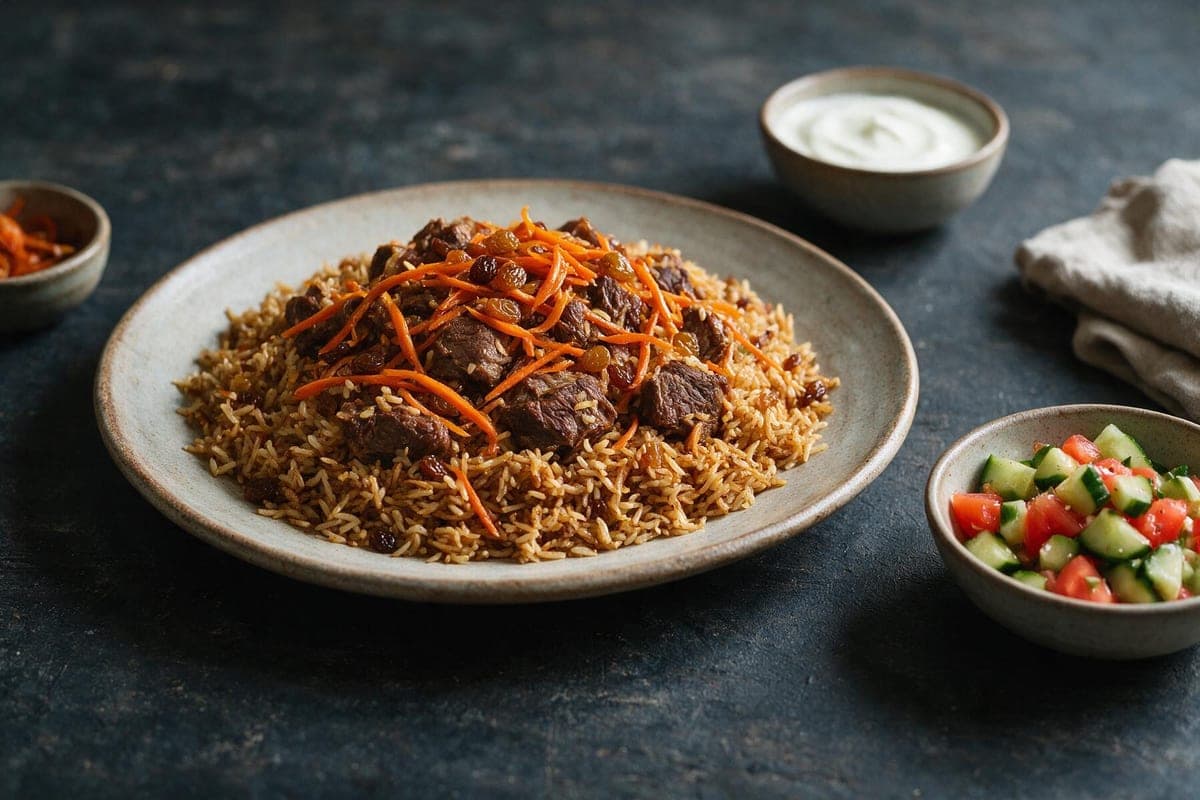
Kabuli pulao is the dish Afghans put at the center of the table for guests: basmati tinted amber by a broth darkened with caramelized sugar, cooked over tender chunks of lamb, and crowned with sweet fried carrot matchsticks, plumped raisins and slivered almonds. It is fragrant with cardamom and cumin but not hot, and sweet-savory in a way that makes it an easy sell at a family table. A proper pulao is a long project; this version cuts the lamb small so it braises in under an hour, cooks the rice by absorption in the lamb broth, and steams everything together for a final ten minutes.
Why it's on our list
Afghan food is on our map mostly because of this dish, which friends describe as the best rice they have ever eaten. The technique I want to learn is the caramel: sugar cooked to a dark amber and dissolved into the lamb broth, which gives the rice its color and a faint bittersweet depth; I have never cooked rice that way. It is weeknight-feasible only in the generous sense, at about ninety minutes, but most of that is unattended simmering, and there is no chile anywhere, so my son's plate is the same as ours. Lamb is also a protein we rarely cook.
Field notes · Origin & culture
Kabuli pulao (also spelled qabili palaw) is widely regarded as the national dish of Afghanistan, served at weddings, holidays and ordinary Friday lunches alike. Despite the name, it is not necessarily from Kabul; one common explanation is that qabili comes from a Persian word for "capable," a dish only a skilled cook could manage, and the pilaf tradition it belongs to stretches north into Uzbekistan and Tajikistan, where close cousins are called osh or palov. Afghan cooks typically parboil the rice, then steam it over the meat in a sealed pot (dam), seasoned with char masala, usually cumin, cardamom, cinnamon and cloves. The caramelized-sugar broth, the carrot-and-raisin topping and the nuts mark the Kabuli style specifically. Recipes vary by family and region; this is one workable home version.
Noteworthy ingredients
- Lamb shoulder or leg: Boneless, cut into 1 1/2-inch pieces so it braises in 45 minutes. Bone-in shanks are more traditional but need twice the time; beef chuck or chicken thighs are accepted substitutes in Afghan kitchens too.
- Basmati: Long-grain basmati, rinsed and soaked, is non-negotiable for separate, fluffy grains. "Aged" or "extra-long" on the bag is a plus.
- Char masala or its parts: Green cardamom, cumin, cinnamon and cloves. Whole pods and seeds give the clearest aroma; ground is fine.
- Sugar for caramel: Cooked in the dry pot until dark amber, it is for color and depth, not sweetness; the sweetness comes from the carrots and raisins.
Prep — 20 min
- Rinse the basmati until the water runs clear, then cover with cold water and soak 30 minutes while the lamb cooks. Drain just before using.
- Pat the lamb dry and season with salt and pepper. Halve and slice the onion thin. Smash the garlic.
- Cut the carrots into matchsticks about 2 inches long and 1/8 inch thick. Rinse the raisins.
- Lightly crush the cardamom pods. Toast 1 teaspoon of the cumin seeds in a dry skillet 1 minute and crush them; keep the rest whole.
- Dice the cucumber and tomatoes for the salad and dress with salt and a squeeze of lemon.
Cook — 70 min
- Heat 2 tablespoons oil in the Dutch oven over medium-high heat. Brown the lamb in batches, 3–4 minutes per side, and set aside. Add the onion and cook 5–6 minutes until golden, then the garlic for 1 minute.
- Push the onions aside, add the sugar to the cleared spot and let it melt and darken to deep amber, 2–3 minutes. Immediately pour in 4 cups water; it will hiss and the caramel will dissolve into a brown broth.
- Return the lamb, add the cardamom, whole cumin seeds, cloves, cinnamon and 1 1/2 teaspoons salt. Bring to a boil, cover, and simmer gently 45 minutes, until tender.
- Meanwhile, heat 2 tablespoons oil in the small skillet over medium heat. Fry the carrots 4–5 minutes until softened and lightly caramelized, add the raisins and a pinch of sugar, stir 1 minute until they puff, and set aside. Toast the almonds in the same skillet 2 minutes.
- Lift the lamb out. Strain the broth and measure 3 cups, topping up with water or boiling down as needed. Taste for salt; it should be well seasoned, since the rice absorbs it.
- Return the broth to the pot with the crushed toasted cumin and bring to a boil. Add the drained rice, stir once, and boil uncovered 5–6 minutes, until the liquid drops below the surface and the grains are almost tender.
- Nestle the lamb into the rice, spread half the carrot-raisin mixture on top, lay a clean kitchen towel over the pot and press the lid on tightly. Cook on the lowest heat 10 minutes, then rest off the heat, still covered, 10 minutes.
Serving
Spoon the rice onto a large platter, fluffing it gently, and arrange the lamb over the top with the rest of the carrots and raisins and the toasted almonds scattered across everything; Afghan tables serve pulao on one big platter to share. Put the cucumber-tomato salad and a bowl of plain yogurt alongside. There is no heat to manage, so my son's helping is the same as ours, with extra raisins if he asks. Leftovers keep three days and reheat well in a covered dish at 325°F with a splash of water.