Dinner night · Belgium
Chicken Waterzooi
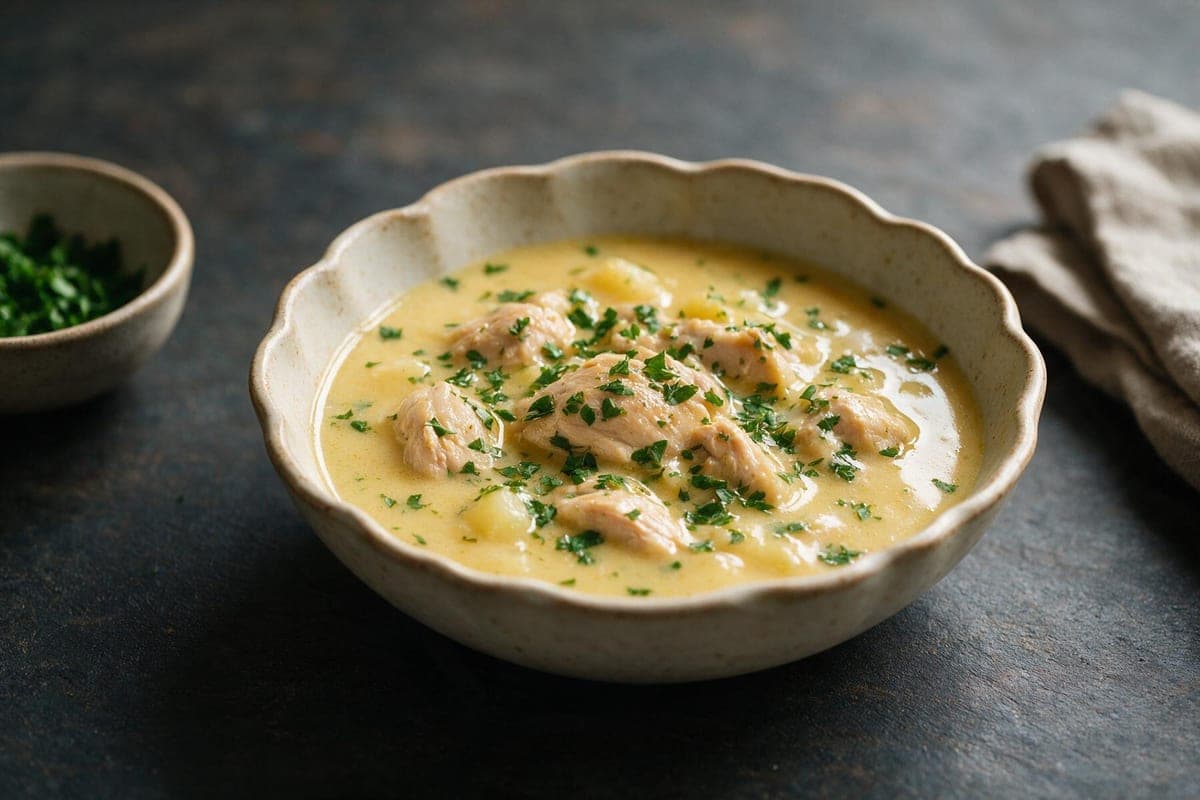
Ghent's velvety chicken-and-vegetable stew, thickened with egg yolk and cream and spooned over potatoes or bread: gentle, elegant, done in an hour.

- Prep
- 20 min
- Cook
- 40 min
- Total
- 60 min
- Serves
- 2 adults + 1 child, with a bowl left over
- Budget
- $18–$26
Waterzooi is a Flemish stew that sits somewhere between a soup and a cream sauce: chicken simmered with leeks, carrots, celery and potatoes in stock, then finished with egg yolks and cream so the broth turns pale gold and silky. It is subtle food, seasoned with little more than thyme, bay, white pepper and a squeeze of lemon, and it is eaten from a deep plate with a spoon and plenty of good bread. The whole thing cooks in one pot.
Why it's on our list
Belgium gets talked about for fries, waffles, chocolate and beer, so I want a real sit-down Belgian dish on our map, and waterzooi is the one Ghent claims as its own. The technique I want to learn is the egg-yolk-and-cream liaison, the classic way of thickening a broth without flour, added off the heat so it does not scramble: a small skill with a big payoff. It is weeknight-feasible because the chicken and vegetables simmer together while the prep is just slicing, and the finish takes two minutes. It is also mild enough that I expect my son to eat it without negotiation.
Field notes · Origin & culture
Waterzooi comes from Ghent in East Flanders; the name joins water with a Middle Dutch word for boiling or simmering, and the stew is often called Gentse waterzooi. The original was made with freshwater fish from the Leie and Scheldt rivers that run through the city, and a fish version (viszooitje) is still cooked. The chicken version became dominant in the nineteenth and twentieth centuries; a common explanation is that river pollution thinned the fish supply, though that is a popular account rather than a documented one. Local lore also holds that Charles V, the Holy Roman Emperor born in Ghent in 1500, was fond of the dish. Today Ghent's tourist office promotes waterzooi as the city's signature plate, and it appears on brasserie menus across Flanders, usually with bread or boiled potatoes.
Noteworthy ingredients
- Leeks: They are the backbone of the flavor, sweeter and gentler than onion. Slice them and rinse well in a bowl of water; grit hides between the layers.
- Bone-in chicken thighs: They make a richer broth than boneless and stay moist. Skin-on is traditional; I would remove the skin after cooking so the stew is not greasy.
- Egg yolks and heavy cream: The liaison that gives waterzooi its texture. Whisk them together, temper with a ladle of hot broth, then stir into the pot off the heat.
- White pepper and nutmeg: The traditional seasoning, used lightly. Black pepper works if that is what you have. Because the seasoning is so plain, use a stock you like; boxed low-sodium is fine.
Prep — 20 min
- Trim the leeks, slice the white and pale-green parts into 1/4-inch rounds, and swish them in a bowl of cold water; lift them out and drain.
- Peel the carrots and cut into thin coins or short batons. Slice the celery thin. Dice the onion. Peel the potatoes and cut into 3/4-inch chunks, keeping them in water until needed.
- Pat the chicken dry and season with salt and white pepper.
- Whisk the egg yolks and cream together in a small bowl and keep near the stove. Chop the parsley. Cut the lemon in half.
Cook — 40 min
- Melt the butter in a Dutch oven over medium heat. Add the chicken thighs skin-side down and cook 5–6 minutes until the skin is golden; you are rendering fat and building flavor, not cooking through. Turn and cook 2 minutes more, then move to a plate.
- Spoon off all but 2 tablespoons of the fat. Add the leeks, onion, carrots and celery with a pinch of salt and cook 6–8 minutes, stirring, until softened but not browned.
- Add the wine if using and let it bubble for a minute. Add the stock, bay leaves, thyme and the chicken, pushing the thighs down into the liquid. Bring to a gentle simmer, cover partially, and cook 20 minutes.
- Add the potatoes and simmer 15 minutes more, until the potatoes are tender and the chicken reaches 165°F. Remove the chicken to a board, discard the skin and bones, and tear the meat into large pieces. Return the meat to the pot. Fish out the bay leaves and thyme stems.
- Take the pot off the heat and wait 1 minute so it stops boiling. Whisk a ladle of hot broth slowly into the yolk-and-cream bowl, then stir the warmed mixture back into the pot. The broth will turn creamy and pale. Return to the lowest heat for 2–3 minutes if needed to thicken slightly, but do not let it boil.
- Season with salt, white pepper, a small grating of nutmeg and a squeeze of lemon. Stir in most of the parsley.
Serving
Ladle the waterzooi into deep plates or wide bowls, making sure everyone gets chicken, potatoes and plenty of broth, and scatter parsley on top. Put the bread and a dish of butter in the middle of the table; dipping is the point. There is no heat to manage, so my son's bowl is the same as ours, perhaps with the lemon on the side so he can decide. Leftovers keep for two days in the fridge; reheat slowly over low heat and never boil, or the egg will curdle. A splash of stock loosens it.