Dinner night · Benin
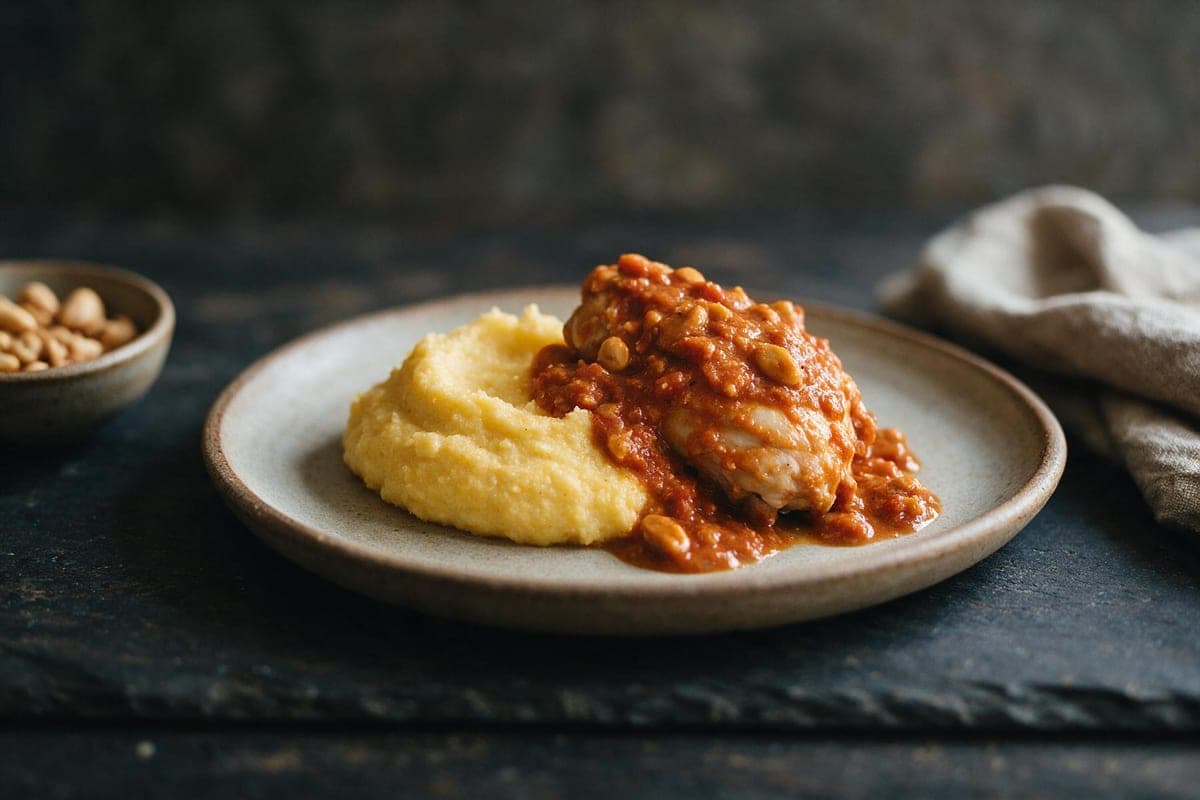
Sauce Arachide with Chicken and Pâte
Benin's everyday peanut-tomato sauce with chicken, served the Beninese way with pâte, a soft cornmeal mash for scooping: humble ingredients, deep flavor.

- Prep
- 20 min
- Cook
- 45 min
- Total
- 65 min
- Serves
- 2 adults + 1 child, with sauce left over
- Budget
- $15–$23
Sauce arachide is the peanut sauce of Benin and its neighbors: onion, tomato and a little chile cooked down with peanut butter and stock into a thick, savory, rust-colored stew, here with bone-in chicken thighs simmered until tender. It is served with pâte (pronounced "pot"), a smooth, firm cornmeal porridge that is shaped into mounds and used in place of a fork; you pull off a piece, dip it into the sauce and eat it with a bit of chicken. The flavor is nutty and tomato-rich with a gentle warmth. If polenta is familiar, pâte will be too.
Why it's on our list
Benin is on our map because its food is almost unknown here and the national staple, pâte with a sauce, is one of the most everyday meals in West Africa. I want to learn two things: how a peanut sauce is built from the pantry without tasting like dessert, and how to cook cornmeal into pâte that holds its shape and can be eaten by hand, a skill that opens a door to dozens of West African dinners. It is weeknight-feasible because the sauce is a single pot that simmers mostly on its own, the pâte takes fifteen minutes at the end, and it costs very little. The hands-on eating is the part I expect my son to enjoy most.
Field notes · Origin & culture
In Benin, a meal is usually a starch and a sauce. The starch in the south is most often pâte (in Fon, wɔ̌), a stiff cornmeal porridge, with regional alternatives like akassa (fermented corn dough) and amiwo (cornmeal cooked in tomato sauce); in the north, millet and sorghum porridges and yam-based igname pilée are more common. The sauce is where the variety lives: tomato-based nùsúnnú, okra févi, and peanut sauce arachide, which is eaten across the country and across West Africa generally. Peanuts came to the region from South America by way of Portuguese traders in the sixteenth century and became a staple crop in Benin's center and north. Sauce arachide is made with chicken, beef, fish or smoked fish depending on the household and the budget, and it is daily food rather than a feast dish.
Noteworthy ingredients
- Natural peanut butter: Unsweetened, peanuts-and-salt only (Smucker's Natural, Whole Foods 365). Sweetened brands throw the sauce off. In Benin the peanuts are often roasted and ground at the market.
- Fine or medium cornmeal: For the pâte. Plain yellow or white cornmeal (Quaker, Bob's Red Mill, or a Latin-aisle "harina de maíz," not lime-treated "masa harina") all work. Instant polenta is the fastest shortcut.
- Bone-in chicken thighs: They enrich the sauce as they cook. Drumsticks are also good and a child-friendly shape.
- Tomato paste plus fresh tomato: The paste gives color and depth; the fresh tomato gives acidity to balance the peanut.
- Chile: A whole habanero in the pot for aroma, or a pinch of cayenne. Beninese cooks often use more; this version keeps the heat at the table.
Prep — 20 min
- Pat the chicken dry, pull off the skin if you want a leaner sauce (Beninese cooks usually keep it), and season with 1 teaspoon salt and black pepper.
- Dice the onion. Mince the garlic and grate the ginger. Core and chop the tomatoes.
- Stir the peanut butter with 1 cup of the stock until smooth.
- Measure the cornmeal and have 4 1/2 cups water ready for the pâte.
Cook — 45 min
- Heat the oil in a Dutch oven over medium-high. Brown the chicken 4 minutes per side until golden; move to a plate.
- Lower the heat to medium. Add the onion with a pinch of salt and cook 5 minutes. Add the garlic, ginger and tomato paste; stir 1 minute. Add the tomatoes and cook 4 minutes until they soften and the oil starts to separate.
- Return the chicken to the pot with the remaining 1 1/2 cups stock and the whole chile. Bring to a simmer, cover, and cook 15 minutes.
- Stir in the thinned peanut butter. Simmer uncovered 15 minutes more, stirring from the bottom every few minutes so it does not scorch, until the chicken reaches 165°F and the sauce is thick and glossy, with a little peanut oil pooling on top. Taste and salt. Remove the chile.
- While the sauce finishes, make the pâte: bring 4 1/2 cups water and 1 teaspoon salt to a boil in a medium saucepan. Whisk 1/2 cup of the cornmeal into 1/2 cup cold water, then whisk this slurry into the boiling water. Lower the heat and add the remaining cornmeal in a steady stream, stirring hard with a wooden spoon. Cook 10–12 minutes, stirring often, until it is very thick, pulls away from the sides, and a spoonful holds its shape. (Instant polenta: follow the package, using about 25 percent less water so it sets firm.)
- Scoop the pâte with a wet ladle or ice cream scoop into smooth mounds, one per plate.
Serving
Set a mound of pâte on each plate with a piece of chicken beside it and a generous spoonful of sauce over both. The traditional way to eat is with the right hand: pinch off a piece of pâte, press a dent into it with your thumb, and scoop sauce. Forks are allowed. The sauce is mild as written; adults can add cayenne or hot sauce, and a squeeze of lime brightens it. My son's plate stays as it comes from the pot. Leftover sauce keeps three days; loosen with water when reheating. Leftover pâte firms up in the fridge and can be sliced and pan-fried until crisp, a good breakfast.