Dinner night · Bolivia — Cochabamba
Silpancho
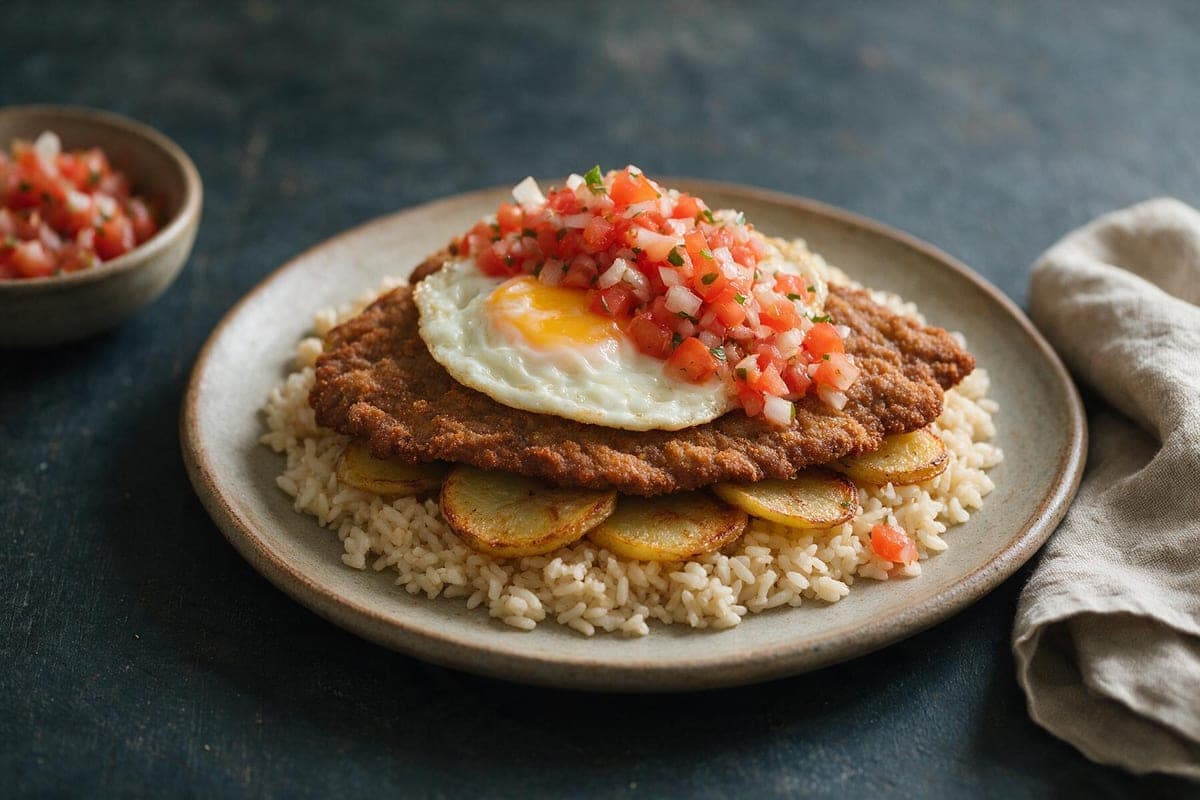
Cochabamba's layered plate: rice, pan-crisped potato slices, a huge thin breaded beef cutlet, a fried egg and a bright tomato-onion salad on top.

- Prep
- 25 min
- Cook
- 35 min
- Total
- 60 min
- Serves
- 2 adults + 1 child
- Budget
- $16–$24
Silpancho is built in layers on a wide plate: a bed of white rice, then slices of boiled potato browned in a skillet, then a beef cutlet pounded so thin and wide that it drapes over everything, then a fried egg, and finally a spoonful of sarza, a raw salad of diced tomato, onion, parsley and a little locoto chile with vinegar or lime. The cutlet is pressed into breadcrumbs as it is pounded, so the crumbs become part of the meat rather than a coating, and it fries in a couple of minutes. It is a filling, cheerful plate with nothing difficult in it.
Why it's on our list
Bolivian food barely registers in the US, and silpancho is the dish Bolivians abroad talk about missing. I want to learn the pounding-into-breadcrumbs technique, which is different from the usual flour-egg-crumb routine and promises a thinner, crisper cutlet, and I like that the plate uses two starches on purpose: rice and potato together is normal in the Andes, where the potato is native. It is weeknight-feasible because each element is simple and they overlap: the rice and potatoes cook while I pound the meat, and the frying takes ten minutes at the end. The chile is only in the sarza, which I can make in two bowls, so my son gets the full plate without the heat.
Field notes · Origin & culture
Silpancho comes from Cochabamba, the city in Bolivia's central valleys often called the country's culinary capital. The name derives from Quechua (sillp'anchu), and the dish is often associated with a mid-twentieth-century Cochabamba cook, Doña Celia la Fuente, though that attribution is repeated in local accounts rather than firmly documented. It is served at lunch counters, market stalls and dedicated silpancherías, and it has a famous street-food offspring: the trancapecho, the entire silpancho, rice and egg included, stuffed into a bread roll. The layering of rice, potato and meat reflects the Andean valley pantry, where potatoes are native and rice and wheat arrived with the Spanish. The sarza's locoto is a thick-walled Andean chile; recipes vary in how much goes on top, and some cooks add beet to the salad for color.
Noteworthy ingredients
- Thin beef for pounding: Top round or sirloin cut 1/4 inch thick ("milanesa cut" at many supermarkets) pounds easily. Each cutlet should end up about 1/8 inch thick and as wide as a dinner plate.
- Dried breadcrumbs: Plain, fine dried crumbs, not panko, are pressed into the meat during pounding. You will use more than you expect.
- Locoto (rocoto): Fruity and hot. Jalapeño or serrano stands in, kept to the adult sarza; a little red bell pepper gives color with no heat for the other bowl.
- Potatoes: Yukon Golds hold their slices when boiled and browned; russets fall apart.
Prep — 25 min
- Start the rice: rinse 1 1/2 cups rice, cook with 2 1/4 cups water and 1/2 teaspoon salt by your usual method, and keep warm.
- Peel the potatoes, cut into 1/3-inch rounds, and boil in salted water 10–12 minutes until just tender. Drain and let them steam dry.
- Season the beef on both sides with salt, pepper and cumin. Spread a thick layer of breadcrumbs on a cutting board, lay a piece of meat on it, sprinkle more crumbs over the top, and pound with a mallet or heavy pan, working outward from the center, until the cutlet is about 1/8 inch thick and very wide. Flip once or twice and add crumbs as the meat absorbs them. Repeat; they will look enormous.
- Make the sarza: dice the tomatoes and onion small, chop the parsley, and toss with the vinegar, the juice of half the lime, a pinch of salt and a little oil. Divide into two bowls and add finely diced chile to one of them.
Cook — 35 min
- Heat 2 tablespoons oil in a large skillet over medium-high heat. Brown the potato slices in a single layer, 3–4 minutes per side, until golden and crisp at the edges. Season with salt and keep warm on a plate.
- Wipe the skillet if needed and add 1/4 inch of oil. When shimmering, lay in one cutlet (a 12-inch pan fits one at a time). Fry 2 minutes per side until the crumbs are deep golden and the meat is cooked through; it is so thin this happens fast. Drain on paper towels and repeat, adding oil as needed.
- In a second skillet, or in the same one with most of the oil poured off, fry the eggs over medium heat 2–3 minutes until the whites are set and the yolks still soft. Season with salt.
Serving
On each plate, spread a layer of rice, lay potato slices over it, drape the cutlet across the whole thing, set a fried egg on top and spoon a generous mound of sarza over the egg. My son's plate gets the chile-free sarza and his egg cooked firmer if he wants; otherwise it is the same as ours, maybe with a smaller cutlet. Bolivians add llajua, a hot salsa of tomato and locoto, from a bowl on the table; a jar of chile-tomato salsa does that job for the adults. Leftover cutlets reheat in a hot skillet and, stuffed into a roll with rice, egg and sarza, become a trancapecho for lunch.