Dinner night · Bosnia and Herzegovina
Sarajevo-style Ćevapi
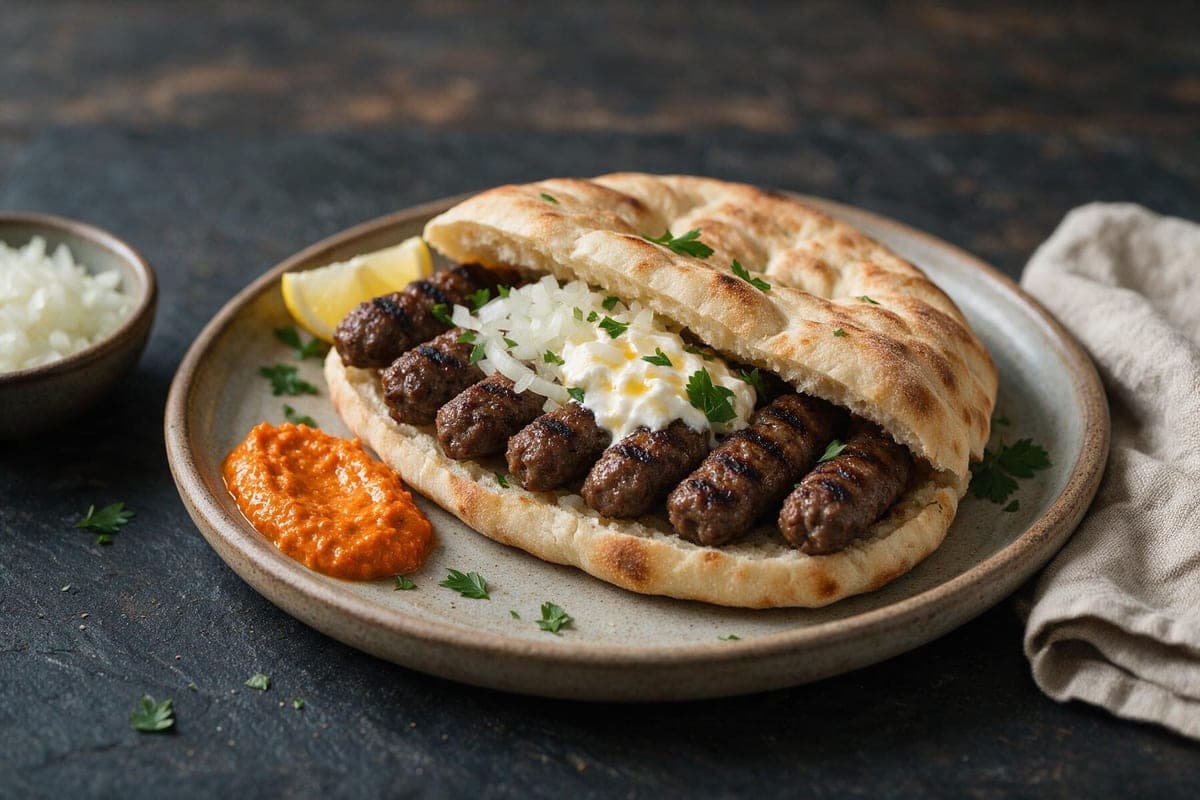
Bosnia's little grilled beef sausages, cooked in a cast-iron pan and tucked into warm flatbread with raw onion, ajvar and a kajmak-style cream.

- Prep
- 20 min
- Cook
- 15 min
- Total
- 35 min
- Serves
- 2 adults + 1 child, about 7 ćevapi each
- Budget
- $18–$26
Ćevapi (CHEH-vah-pee) are finger-length skinless sausages of minced beef, seasoned with little more than salt, garlic and sometimes a pinch of baking soda for tenderness, grilled over coals and served by the half-dozen inside a pillowy flatbread called somun, with a heap of chopped raw onion. In Sarajevo the bread is split, dipped in the meat juices and often spread with kajmak, a thick, slightly sour clotted cream; a spoon of ajvar, roasted red pepper relish, is a common addition. This is the pan version: the sausages sear in a very hot cast-iron skillet, the bread warms in the oven, and dinner is 15 minutes from fridge to table.
Why it's on our list
Ćevapi are the most-loved street food in a country most Americans know only from the news, and they are also one of the easiest grilled-meat dinners there is: no skewers, no marinade, no sauce to make. I want to learn whether the famous springy texture really comes from working the meat hard and resting it overnight the way Sarajevo's ćevabdžinice do, and I want to taste ajvar and kajmak together. It is beef, for once, instead of chicken, and it is a hand-held dinner, which is the kind my son eats most of.
Field notes · Origin & culture
Ćevapi descend from the Ottoman kebab, which arrived in Bosnia with the empire around 1500; the word comes from the Turkish kebap. Today they are a daily food across the former Yugoslavia, with regional styles that people defend fiercely. Sarajevo-style ćevapi are beef only, small (a few inches long), served in somun, a soft, round, slightly chewy flatbread, with raw onion and often kajmak; Banja Luka-style are pressed into a joined block of four. The shops that serve them are called ćevabdžinice, and Sarajevo's Baščaršija bazaar is full of them, where the customary drink alongside is a glass of cold yogurt. Ajvar, the roasted pepper relish, is a southern Balkan staple whose exact origin is claimed by several countries.
Noteworthy ingredients
- Ground beef, 80/20: The fat matters for juiciness. Many Bosnian cooks use a mix of beef cuts (chuck and neck) and some add a little lamb; this version is all beef, as in Sarajevo. Have the butcher grind chuck fresh if possible.
- Flatbread: Somun or lepinja is a thick, soft, pocketless round. The closest supermarket matches are thick Greek-style pita (not the thin pocket kind) or plain store-bought naan; a Balkan or Turkish grocer may sell real somun.
- Ajvar: Sold in jars at many supermarkets and all Eastern European grocers (Podravka, Vitaminka and Macedonian brands are common); choose "mild" for a child. Roasted red pepper spread or a drained jar of roasted peppers blended with a little oil and garlic is a reasonable stand-in.
- Kajmak substitute: Real kajmak is a fresh, tangy clotted cream. Blend 4 oz cream cheese with 1/4 cup sour cream and 2 tablespoons softened butter and a pinch of salt; it is close enough to understand the idea. Some Balkan grocers sell imported kajmak.
Prep — 20 min
- Grate 2 garlic cloves on a microplane (or mince to a paste). In a mixing bowl combine the beef, garlic, 1 1/2 teaspoons salt, 1/2 teaspoon pepper, the paprika, the baking soda dissolved in 2 tablespoons cold water, and knead vigorously by hand for 3–4 minutes until the mixture turns sticky and uniform. This kneading is what gives ćevapi their bounce.
- Cover and refrigerate at least 30 minutes; overnight is better.
- Make the kajmak-style spread: beat the cream cheese, sour cream, butter and a pinch of salt until smooth. Refrigerate.
- Finely dice the onions. (Soak them in cold water for 10 minutes and drain if you want them milder.) Cut the lemon into wedges.
- Shape the ćevapi: with wet hands, roll the chilled meat into logs about 3 inches long and 3/4 inch thick, roughly 20 pieces. Lay them on a baking sheet. They can wait in the refrigerator for a few hours.
- Heat the oven to 350°F and wrap the flatbreads in foil.
Cook — 15 min
- Put the foil-wrapped breads in the oven to warm for 10 minutes while the pan heats.
- Heat the cast-iron skillet or grill pan over high heat until it is very hot; brush with the oil.
- Lay in half the ćevapi without crowding and cook, turning every minute or so with tongs, for 6–7 minutes total, until browned on all sides and just cooked through (160°F). Move to a plate and cook the second batch. (On an outdoor grill, cook over high direct heat for the same time.)
- Split or tear the warm breads and, if you like, press the cut sides briefly into the hot pan to pick up the meat drippings.
Serving
The Sarajevo way is to pile 5 to 10 ćevapi inside a split somun with a big spoon of raw onion, and to spread kajmak on the bread or eat it from the side; ajvar goes on the plate for dipping. I'll build mine fully loaded and give my son a bread with ćevapi and a smear of the cream, with onion and ajvar on the side so he can add them or not; nothing here is hot-spiced, since even mild ajvar is sweet and smoky rather than fiery. A squeeze of lemon and a little parsley are not traditional but are welcome. Leftover ćevapi keep three days and reheat well in a hot pan or sliced into a frittata.