Dinner night · Botswana
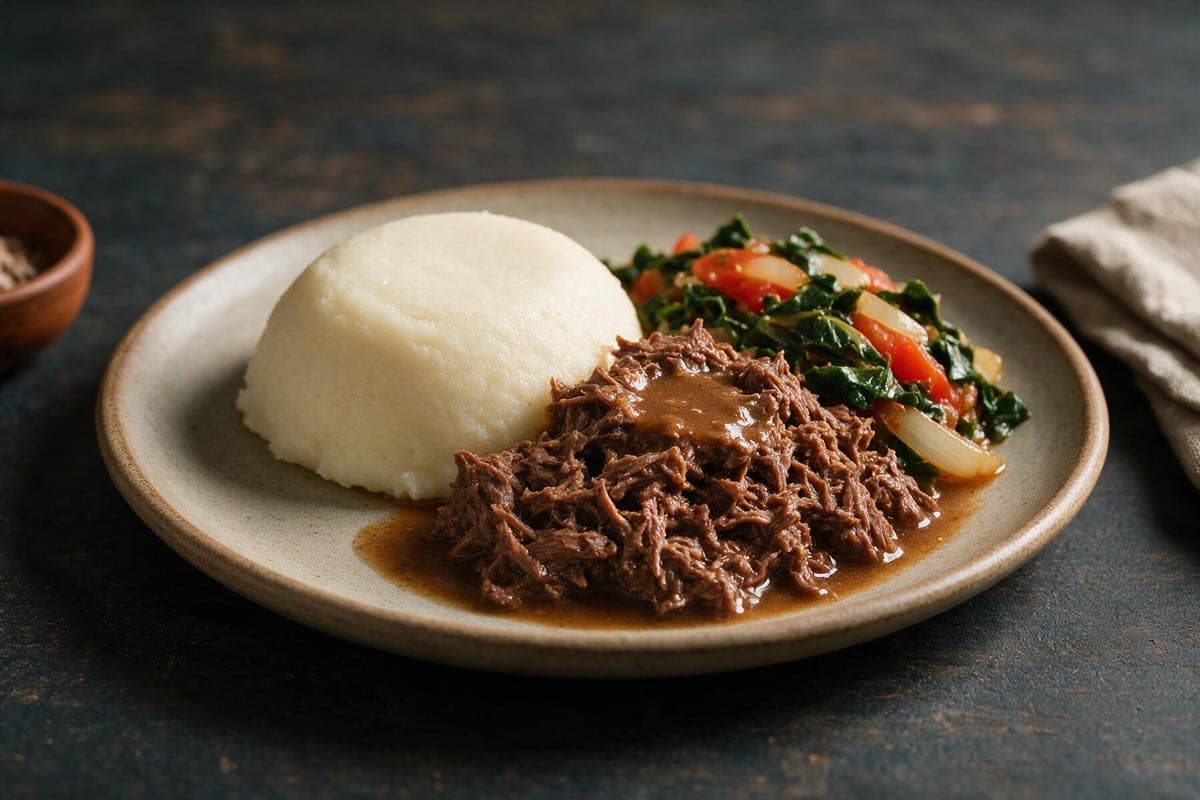
Weeknight Seswaa with Pap
Botswana's national dish of slow-simmered, pounded beef seasoned with nothing but salt, served with maize pap and tomato-onion greens, in a 90-minute version.

- Prep
- 10 min
- Cook
- 80 min
- Total
- 90 min
- Serves
- 2 adults + 1 child, with beef left over for sandwiches
- Budget
- $16–$26
Seswaa is beef, water and salt. Tough cuts are simmered in a heavy pot until the meat falls apart, the liquid is cooked down, and the beef is pounded or shredded in the pot until it becomes a soft, fibrous, intensely savory mass, somewhere between pulled beef and a coarse pâté. It is served with pap (also called bogobe or phaletshe), the stiff maize porridge of the region, and morogo, greens cooked with onion and tomato. There are no spices and no sauce in the usual sense; the point is how much flavor plain beef develops cooked this way.
Why it's on our list
Seswaa is the dish Botswana names as its own, and I want to understand how a recipe with three ingredients earned that status. What I expect to learn is restraint: no onion, no garlic, no pepper in the meat, and whether that is boring or revelatory. The honest adaptation is time. Traditional seswaa is cooked for hours in a three-legged iron pot over a fire for a wedding or a funeral; our version uses chuck cut small so it is tender in 70 minutes on the stove, or 35 in a pressure cooker, a long weeknight rather than a weekend. It is completely mild, so my son's plate is the same as ours, and leftover seswaa is supposed to be excellent on bread.
Field notes · Origin & culture
Seswaa (called loswao in some southern parts of the country, and chotlho when made with the whole animal) is the celebration meat of Botswana, cooked for weddings, funerals and national holidays, including Independence Day on September 30. Beef is central to Batswana life and economy; cattle are wealth and status, and a feast means a cow. The traditional method is to boil the tougher cuts, including bone, in a cast-iron three-legged pot with salt and water until the meat is soft, then pound it with a wooden spoon or paddle until shredded, a job customarily done by men at large gatherings. It is eaten with bogobe (sorghum or maize porridge; pap or phaletshe when made from maize), sometimes with ting, a sour fermented version, and with morogo greens or a tomato-onion relish. Our version is a small home pot, not a feast.
Noteworthy ingredients
- Beef chuck: Traditional seswaa uses tough, bony cuts because the long boil tenderizes them and the bones add body. Boneless chuck cut into 1 1/2-inch cubes gets there in 70 minutes; adding a beef soup bone or a bone-in short rib is a worthwhile extra. Brisket also works.
- Salt, and only salt: Season generously, and nothing else goes in the pot. Resist adding pepper until it is on your own plate.
- White maize meal: For pap, look for "mealie meal" at African groceries or online; fine white cornmeal works with a slightly grainier result.
- Greens for morogo: Spinach, chard or collards; in Botswana morogo covers wild greens, cowpea leaves (morogo wa dinawa) and pumpkin leaves.
Prep — 10 min
- Cut the chuck into 1 1/2-inch cubes, trimming only the largest pieces of fat; some fat should stay, since it makes the pounded meat soft.
- Dice the onion and tomatoes. Wash the greens, remove thick stems and chop roughly.
- Put 4 cups water and 1 teaspoon salt in a heavy saucepan for the pap, and measure the maize meal.
Cook — 80 min
- Seswaa, stovetop: Put the beef and bone in a Dutch oven with 1 1/2 teaspoons salt and enough water to just cover (about 3 cups). Bring to a boil, skim any foam, then cover and simmer gently 60–70 minutes until the meat is very tender and falling apart. Uncover, raise the heat and cook 10 minutes more until most of the liquid has cooked away and only a few spoonfuls of concentrated broth remain. Pressure-cooker alternative: cook the beef, bone, salt and 1 1/2 cups water on high pressure for 35 minutes, release, then boil off excess liquid in the open pot for 5–8 minutes.
- Remove the bone. Pound the beef in the pot with a wooden spoon or potato masher, or shred it with two forks, working in the remaining broth, until it is a soft, fibrous mass with no large chunks. Taste and add salt; it should be well seasoned. Keep warm, covered.
- Pap: About 25 minutes before serving, bring the salted water to a boil. Whisk 1 cup of the maize meal into the water in a slow stream, stirring constantly, and cook 5 minutes until it thickens to a smooth porridge. Add the second cup and beat hard with a wooden spoon until the pap is stiff and pulls away from the pot, 3–4 minutes. Lower the heat to the minimum, cover and steam 10–15 minutes, stirring once.
- Morogo: Heat the oil in a skillet over medium. Cook the onion 4 minutes, add the tomatoes and cook 3 minutes until saucy, then add the greens with a pinch of salt and 1/4 cup water; cover and cook 6–8 minutes for spinach or 15 for collards until tender. Season and add a squeeze of lemon.
Serving
Shape a mound of pap onto each plate with a wet spoon, put a generous heap of seswaa beside it and the greens alongside; spoon any remaining broth over the meat. Pepper goes on the table, not in the pot. Eat with the right hand if you like, pinching pap and pressing it into the meat, which is how it is done at a Botswana wedding. There is nothing to adjust for my son. Leftover seswaa keeps three days and is good cold or warm in a bread roll; it also freezes well.