Dinner night · Brunei
Nasi Katok
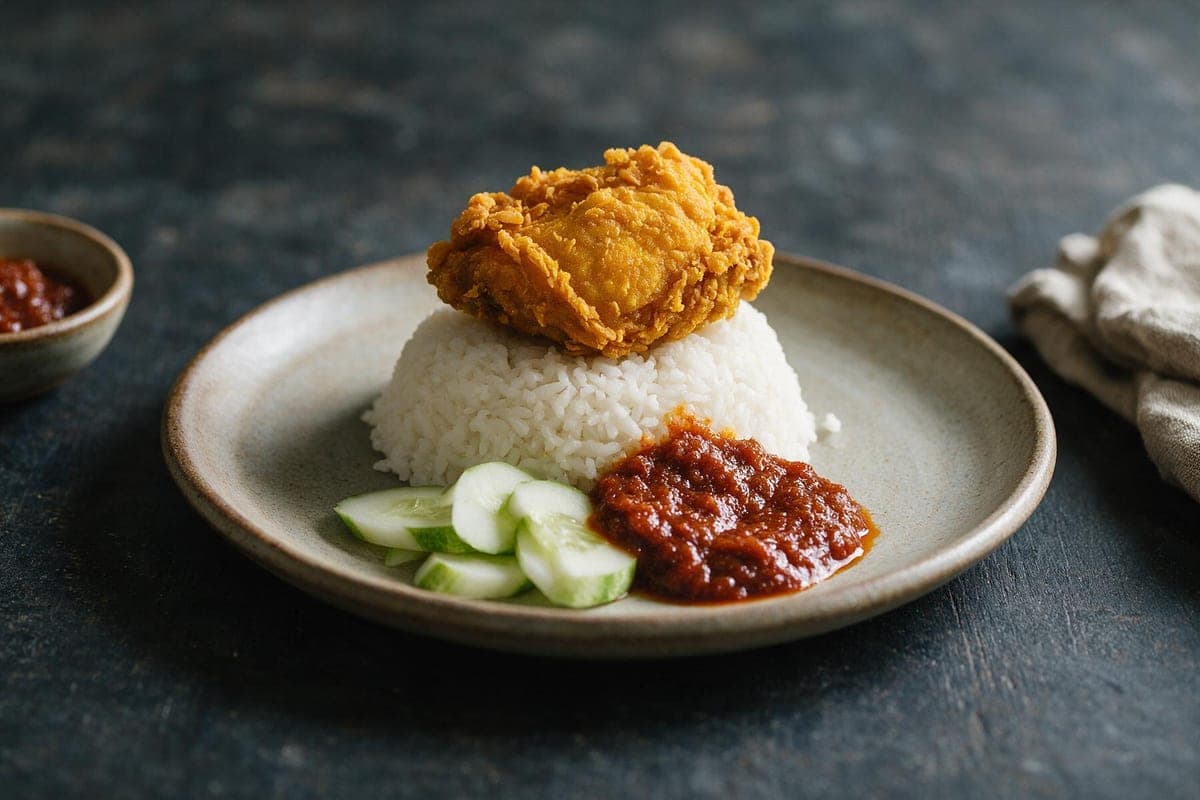
Brunei's dollar dinner: crisp turmeric fried chicken, steamed rice and a spoonful of sweet-hot sambal, wrapped up and eaten anywhere.

- Prep
- 20 min
- Cook
- 30 min
- Total
- 50 min
- Serves
- 2 adults + 1 child, with a piece of chicken left over
- Budget
- $13–$20
Nasi katok is the plainest dish on our map and one of the most loved: a scoop of steamed white rice, a piece of fried chicken, and a spoonful of sambal, a cooked chile-shallot paste that is sweet, salty and hot all at once. That is the whole thing. The chicken is marinated in turmeric, garlic and salt, dusted in seasoned flour and fried until crackling; the sambal is where the cook shows off. In Brunei it is wrapped in brown paper and sold for about a dollar at any hour. At home it is a 50-minute dinner where the sambal does the heavy lifting.
Why it's on our list
Brunei rarely comes up in food conversations, and I like that its national fast food is something this simple and honest. What I want to learn is a proper Malay-style sambal: how shallots, garlic, dried chiles and a little sugar cook down in oil into a paste that keeps for a week and makes plain rice exciting. Fried chicken is a known quantity; I'll shallow-fry in a heavy pot rather than deep-fry. It is weeknight-feasible because the rice and sambal cook while the chicken marinates, and everything is on the plate in under an hour. The sambal is the only heat and sits in its own bowl, so my son's plate is rice and chicken with a dab if he wants to try it.
Field notes · Origin & culture
Nasi katok is Bruneian Malay for "knock rice": the usual story is that customers in the 1980s would knock on the door or window of a home vendor to buy a packet of rice, fried chicken and sambal at any hour, and the name stuck. One account traces it to a family in the Mabohai area of the capital, but that is popular lore rather than documented history. By the late 2000s it had become the country's homegrown fast food, sold from roadside stalls, 24-hour shops and franchise chains for a flat B$1, a price many vendors still hold to, and it has spread into neighboring East Malaysia. The classic packet is chicken and sambal, though beef rendang and other versions exist. Brunei shares most of its pantry with Malaysia and Indonesia, and nasi katok is a close relative of their nasi lemak and ayam goreng.
Noteworthy ingredients
- Bone-in chicken thighs or drumsticks: Nasi katok chicken is usually a bone-in piece fried crisp. Cut deep slashes so the marinade and heat get in.
- Dried red chiles: The body of the sambal. Any mild-to-medium dried red chile from the Latin or Asian aisle works (guajillo for mild, chiles de árbol for hot). Soak them in hot water first. In a pinch, 3 tablespoons sambal oelek, cooked with the shallots, is a sound shortcut.
- Shallots: Milder and sweeter than onion and the traditional base; a small red onion works.
- Belacan (dried shrimp paste): A small amount gives a Malay sambal its savory depth. Asian groceries carry it. Leave it out for a lighter sambal, or use 1 teaspoon fish sauce.
- Ground turmeric: Colors and flavors the marinade; a Malay fried-chicken signature.
Prep — 20 min
- Slash each chicken piece two or three times to the bone. Rub with 1 teaspoon turmeric, 2 minced garlic cloves, 1 teaspoon salt, the coriander and pepper. Set aside 30 minutes if you have the time, or move straight on.
- Snip the stems off the dried chiles, shake out most of the seeds, and soak in hot water for 15 minutes. Peel the shallots and remaining garlic.
- Rinse the rice until the water runs mostly clear and start it: 1 1/2 cups rice, 1 3/4 cups water, a pinch of salt, cover, simmer on low 15 minutes, rest 10 off the heat.
- Drain the chiles and blend with the shallots, garlic, belacan if using and 2–3 tablespoons water into a coarse paste.
- Mix the flour, cornstarch, remaining 1/2 teaspoon turmeric and 1 teaspoon salt in a shallow dish. Slice the cucumber.
Cook — 30 min
- Make the sambal: heat 3 tablespoons oil in a small saucepan over medium heat and add the chile paste. Cook, stirring often, 10–12 minutes until it darkens, thickens and the oil separates at the edges; this slow fry (tumis) takes the raw edge off. Stir in the tomato paste, sugar, 1/2 teaspoon salt and 1/4 cup water and simmer 3 minutes more. It should taste sweet, salty and hot. Finish with a squeeze of lime.
- Pour 2 cups oil into a heavy skillet or Dutch oven (about 3/4 inch deep) and heat to 350°F over medium-high; a pinch of flour should sizzle at once.
- Dredge the chicken in the seasoned flour, pressing it into the slashes, and shake off the excess.
- Fry in a single layer without crowding, 6–7 minutes per side, lowering the heat if the coating darkens too fast, until deep golden and the thickest part reads 165°F; drumsticks take a few minutes longer. Work in two batches if needed.
- Drain on a rack or paper towels and salt lightly while hot.
Serving
The traditional presentation is a mound of rice with the chicken on top and a generous spoon of sambal to one side, wrapped in paper; at home, plate it the same way and add cucumber slices for cool crunch. Put the sambal in a bowl on the table so adults can take more. My son gets rice and chicken with a pea-sized taste of sambal if he is curious. The fried chicken is best within the hour, but leftover sambal keeps a week in the fridge and is wonderful on eggs; leftover rice and chicken make a good next-day lunch, with the chicken crisped in a hot oven for 10 minutes.