Dinner night · Bulgaria
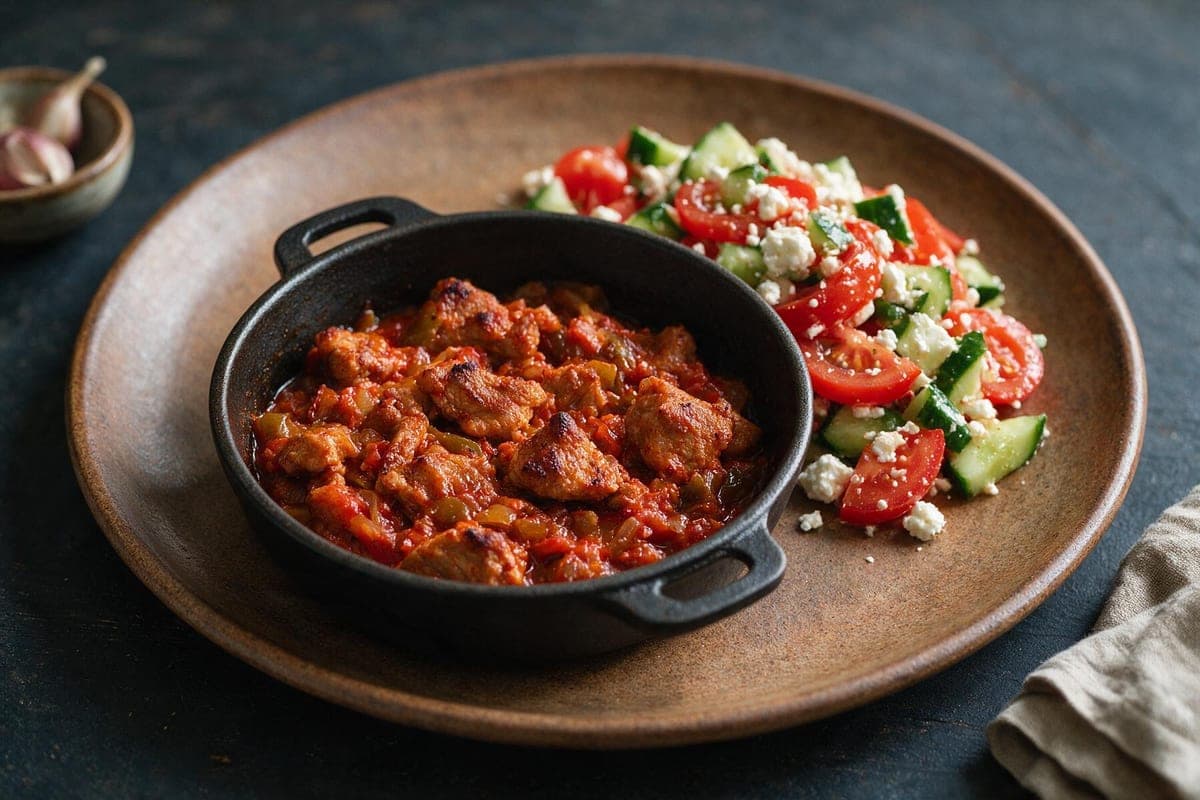
Pork Kavarma with Shopska Salad
Bulgaria's paprika-stained pork, pepper and onion stew, cooked in one pot instead of clay, with the red-white-and-green salad that goes with everything.

- Prep
- 20 min
- Cook
- 50 min
- Total
- 70 min
- Serves
- 2 adults + 1 child, with a bowl left for lunch
- Budget
- $20–$30
Kavarma is a Bulgarian stew of pork, onions, peppers, tomato and mushrooms, cooked slowly with sweet paprika until the meat is tender and the vegetables have melted into a thick, glossy sauce. Traditionally it bakes in small individual clay pots, sometimes with an egg cracked on top at the end. Beside it goes shopska salad: chopped tomatoes, cucumber, pepper and onion under a snowfall of grated brined white cheese. Warm crusty bread catches the sauce.
Why it's on our list
Most of our European nights so far have been chicken, and this is a chance to cook pork shoulder properly, with time. I am curious how much work paprika does when it is the main spice rather than a background one, and about the Balkan combination of hot stew and cold, sharp salad on the same plate. It fits a weeknight because the stew looks after itself once it is simmering; the active cooking is about 20 minutes, and the salad takes ten while the pot bubbles. Bulgaria is also a country my son knows nothing about, so we will find it on the map between Greece and Romania while dinner cooks.
Field notes · Origin & culture
Kavarma (каварма) is one of Bulgaria's best-known home dishes, and its name comes from the Turkish kavurma, "roasted" or "fried meat," a reminder of the five centuries of Ottoman rule that shaped the Bulgarian kitchen. Pork and chicken versions are both common, and the stew is classically baked in a lidded clay pot called a gyuveche, which is also the name of the finished dish when it is served that way. Recipes vary by region and household, so this is one home version rather than the definitive one. Shopska salad is named for the Shopi people of the region around Sofia, though many sources note the salad as we know it was promoted in the 1950s by the state tourism agency Balkanturist, with its red, white and green echoing the Bulgarian flag. Today it is served across the Balkans and is a point of national pride in Bulgaria.
Noteworthy ingredients
- Pork shoulder (Boston butt): It has enough fat to stay juicy through a long simmer. Boneless country-style ribs are the same cut sold in strips.
- Sweet paprika: This is the dominant flavor, so use a fresh jar. Hungarian sweet paprika from the spice aisle is right; smoked paprika will change the dish, so avoid it. A pinch of hot paprika or cayenne is optional for the adult bowls.
- Sirene (Bulgarian white cheese): Brined sheep's or cow's milk cheese, crumbly and salty. Bulgarian or Greek feta from the deli counter is the standard substitute; look for a block in brine rather than pre-crumbled.
- Chubritsa (summer savory): The Bulgarian herb for stews. Dried savory is sometimes in the spice aisle; if not, use a half-and-half mix of dried thyme and oregano.
Prep — 20 min
- Cut the pork into 1-inch cubes, pat dry, and season generously with salt and pepper.
- Dice the onions. Cut the red peppers into 1/2-inch strips. Quarter the mushrooms. Mince the garlic. Dice one tomato for the stew.
- For the salad, chop the remaining tomatoes and the cucumber into 1/2-inch pieces, dice the green pepper and red onion, and chop a handful of parsley. Keep everything in a bowl in the fridge, undressed, until serving.
- Measure the paprika, savory and tomato paste next to the stove so they go in quickly without scorching.
Cook — 50 min
- Heat 2 tablespoons oil in a Dutch oven over medium-high. Brown the pork in two batches, 3–4 minutes per batch, until well colored on at least two sides. Move to a plate.
- Lower the heat to medium. Add the remaining oil and the onions with a pinch of salt; cook 6–8 minutes until soft and golden. Add the peppers and mushrooms and cook another 5 minutes until the mushrooms release their liquid.
- Stir in the garlic, tomato paste, paprika and savory and cook 1 minute, stirring constantly; paprika burns easily, so keep it moving.
- Add the wine, scrape up the browned bits, then add the diced tomato, the pork and its juices, and 1 cup water. The liquid should come about two-thirds of the way up the meat. Bring to a simmer.
- Cover and simmer gently over low heat for 40 minutes, stirring once or twice, until the pork is fork-tender and the sauce is thick enough to coat the vegetables. If it is thin, simmer uncovered for the last 10 minutes.
- Optional egg finish: make three shallow dips in the stew, crack an egg into each, cover and cook 4–5 minutes until the whites set. This mimics the clay-pot gyuveche presentation.
- Taste and adjust salt. Add a pinch of hot paprika to the adult portions if you want warmth.
- Dress the salad: toss the vegetables with the vinegar, 1 tablespoon oil, salt and pepper, then pile it in a mound and grate the feta over the top with a box grater so it falls like snow. Scatter parsley.
Serving
Ladle the kavarma into warm bowls, egg on top if you made them, and set the shopska salad and bread in the middle of the table. My son's bowl stays as written (sweet paprika is gentle); hot paprika goes only on the adult bowls. Leftover stew is better on day two; refrigerate up to three days and reheat gently with a splash of water. Dress only the salad you will eat.