Dinner night · Burkina Faso
Poulet Bicyclette-style Grilled Chicken
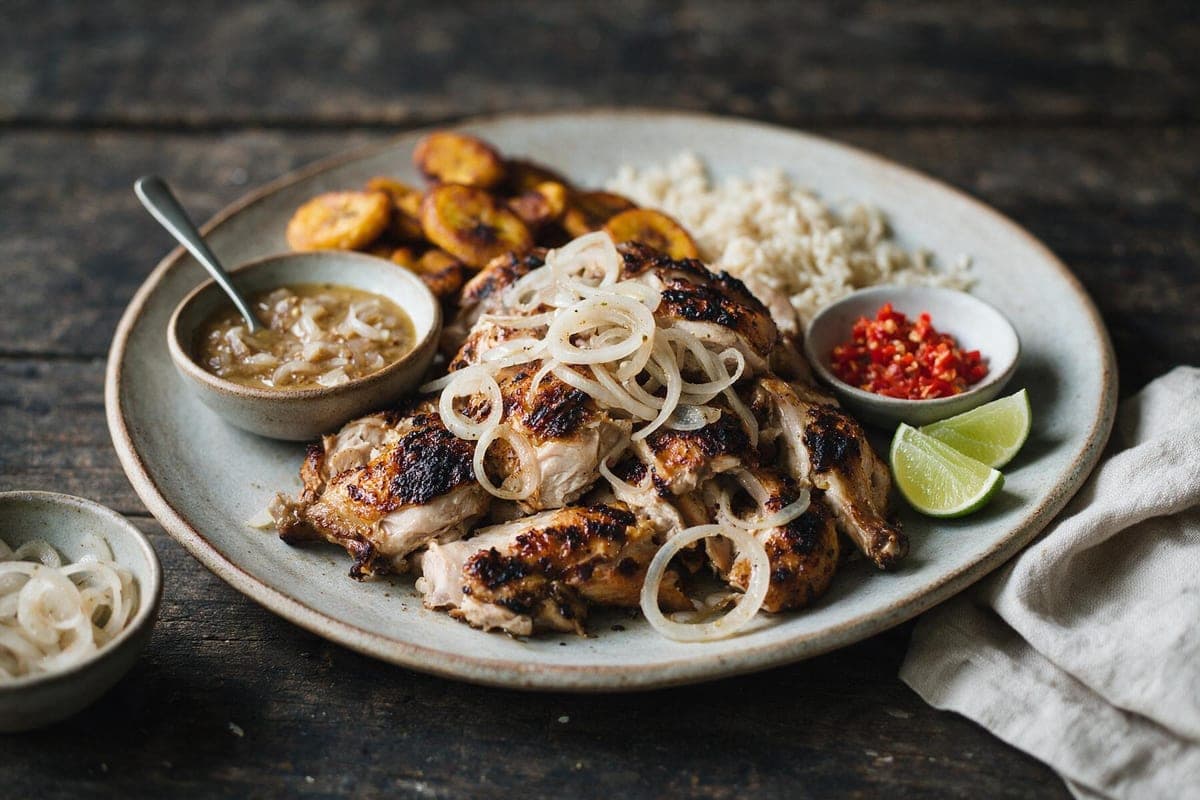
Ouagadougou's street-grill chicken, salt-and-oil simple with charred skin, served with mustard-onion sauce, fried plantain and rice; done under the broiler.
- Prep
- 15 min
- Cook
- 40 min
- Total
- 55 min
- Serves
- 2 adults + 1 child
- Budget
- $15–$22
Poulet bicyclette, "bicycle chicken," is what Burkinabè call the lean, free-ranging village chicken that vendors carry to market strapped to their bikes, and by extension the grilled chicken made from it that is sold at roadside stands all over Ouagadougou. The classic preparation is almost austere: the bird split flat, rubbed with salt and oil, grilled over charcoal until the skin blisters, then chopped and served with raw sliced onion, a sharp mustard-and-onion sauce, chile, and a starch such as fried plantain, attiéké, fries or rice. This version uses supermarket thighs and drumsticks under a hot broiler, with rice and fried plantain alongside.
Why it's on our list
I want a Burkinabè night that is honest about the country's food rather than borrowing from its neighbors, and grilled chicken is what Ouagadougou is genuinely known for: French Wikipedia puts the city's consumption of poulet bicyclette at tens of thousands of birds a day. The lesson for me is restraint. Most of our grilled-chicken recipes bury the meat in marinade; this one asks for salt, oil, high heat and good condiments, and I expect to learn how much flavor comes from char and sauce rather than rub. It is weeknight-feasible because the broiler does the grill's job in half an hour, the plantains fry in ten minutes, and the mustard sauce is a bowl and a spoon. Nothing is hot until you add chile, so my son's plate is a drumstick, plantain and rice.
Field notes · Origin & culture
Poulet bicyclette is first a chicken breed, a hardy farm bird raised across West Africa and prized in Burkina Faso, Côte d'Ivoire, Senegal and Benin for firm, flavorful meat; the name is usually explained by the bicycles that carry live birds to market, though some say it is the bird's rolling gait. French Wikipedia describes two signature Burkinabè treatments: poulet flambé, cooked with only salt and oil and finished in flame, and poulet au rabilé, simmered in a spiced sauce with soumbala, the fermented locust-bean seasoning of the Sahel. Grilled chicken is urban street food, eaten in the evening with cold beer at open-air stands. Burkina's everyday staple is tô, a stiff millet or sorghum porridge served with sauces, alongside riz gras and ragoût d'igname. Condiments and sides vary by vendor, so this plate is one common arrangement rather than a fixed recipe.
Noteworthy ingredients
- Bone-in chicken thighs and drumsticks: Village chicken is lean and chewy in a way supermarket birds are not; dark meat on the bone is the closest match and takes the broiler's heat without drying out.
- Dijon or yellow mustard: Prepared mustard is a standard condiment at Francophone West African grill stands. Dijon is closer to what Ouagadougou sells; yellow is milder for a child's plate.
- Plantains: Yellow with black spots for frying; green ones are starchy and need double frying. Most supermarkets and every Latin or African market carry them.
- Soumbala (optional): The fermented locust-bean seasoning in poulet au rabilé, sold at African markets as soumbala, dawadawa or iru; a pinch in the mustard sauce adds savory depth. Skip it if you cannot find it.
- Bouillon cube: Crumbled into the salt rub, as most Burkinabè cooks would.
Prep — 15 min
- Pat the chicken dry. Crumble the bouillon cube and mix with 1 teaspoon salt and 1 teaspoon black pepper. Rub the chicken with 2 tablespoons oil, then with the seasoning. Let it sit while the oven heats.
- Set a rack in a sheet pan about 6 inches below the broiler. Preheat the oven to 450°F.
- Slice one red onion into thin rings and soak in cold water with the juice of half a lime for 10 minutes; drain. This is the raw onion for the table.
- Make the mustard sauce: finely dice the second onion and mince the garlic. Stir together the mustard, half the diced onion, the garlic, the juice of 1 lime, 2 tablespoons water, a pinch of salt and the soumbala if using. Mince the chile and keep it separate.
- Peel the plantains and slice on a diagonal 1/2 inch thick.
- Start the rice: rinse 1 1/2 cups rice and cook with 2 1/4 cups water and a pinch of salt by the package timing.
Cook — 40 min
- Arrange the chicken skin-side down on the hot rack and roast at 450°F for 20 minutes.
- Turn the pieces skin-side up and switch the oven to broil. Broil 8–12 minutes, watching closely, until the skin is deeply browned and blistered in spots and the thickest thigh reads 175°F. If you have a grill, cook over medium-high direct heat for 30–35 minutes instead, turning often; that is the real method.
- While the chicken broils, heat 1/2 cup oil in a skillet over medium-high heat. Fry the plantain slices in a single layer 2–3 minutes per side until golden at the edges. Drain on paper towels and salt lightly.
- Rest the chicken 5 minutes. For the street-stand look, chop the thighs in half through the bone with a heavy knife.
- Toss the drained onion rings with a pinch of salt and chopped parsley.
Serving
Pile the chopped chicken on a platter, scatter the lime-soaked onion rings over the top and put the mustard sauce, minced chile and lime wedges in small bowls beside it, with the plantain and rice on the side so everyone builds their own plate; in Ouagadougou it would come wrapped in brown paper. My son gets a drumstick, plantain and rice with a dab of yellow mustard; the adults add chile to the mustard sauce. Leftover chicken keeps three days and is good cold or shredded into a rice bowl; plantains are best the day they are fried.