Dinner night · Burundi
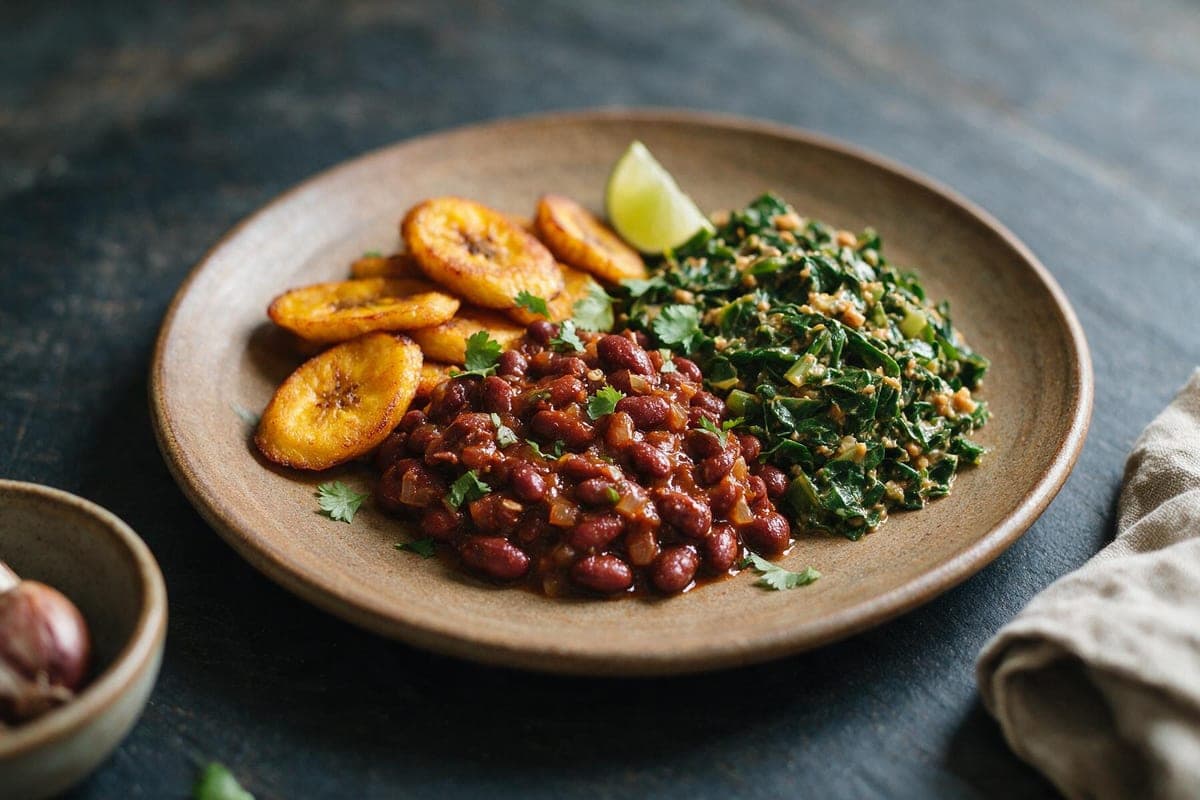
Ibiharage with Fried Plantains and Peanut Greens
Burundi's daily plate, vegetarian and filling: red beans fried with onion and garlic, golden plantain slices, and chard simmered with ground peanut.
- Prep
- 15 min
- Cook
- 30 min
- Total
- 45 min
- Serves
- 2 adults + 1 child, with beans left over
- Budget
- $10–$16
Ibiharage are Burundian beans: red kidney beans cooked soft, then fried in oil with plenty of onion, garlic and a little chile until some of them break down and the rest are coated in a glossy, savory sauce. On the plate next to them go slices of plantain fried in oil until golden, and a bowl of greens cooked with ground peanuts, the Burundian way with sweet-potato or cassava leaves. It is a vegetarian dinner that does not feel like one: starchy, nutty, salty and sweet in turns, with a wedge of lime to pull it together. Canned beans make it a 45-minute meal.
Why it's on our list
Beans are the staple of Burundian cooking, and I want a dinner on our map where beans are the main event, cooked the way a whole country cooks them rather than as a stand-in for meat. The technique I want to learn is frying cooked beans in seasoned oil so they pick up flavor and a bit of crust instead of just stewing. Plantains are something my son likes already, and this is a chance to show him they can be dinner. It is weeknight-feasible because canned kidney beans are already cooked, plantains fry in ten minutes, and the greens take fifteen; three pans, no oven, and a shopping bill under twenty dollars.
Field notes · Origin & culture
Burundi is a small, hilly, densely farmed country on Lake Tanganyika, and its food is built on what the hills grow: beans above all, plus bananas and plantains, sweet potatoes, cassava, peas and maize. Ibiharage, beans fried with onion, is a typical dish, and most Burundian meals are stews of vegetables and herbs around a starchy staple, usually a maize or cassava porridge called bugali. Plantain slices fried in palm oil are a side or snack, and greens such as lenga lenga are cooked with peanut. Meat is for special occasions; goat brochettes are the common restaurant food, and bananas also become urwarwa, the homemade banana beer of celebrations. Documentation of Burundian cooking is thin and spellings vary between Kirundi, French and Swahili, so this is one honest version of a family of everyday plates rather than a fixed recipe.
Noteworthy ingredients
- Red kidney beans: Two cans, drained and rinsed. If you cook dried beans, 1 cup dried gives about the same; soak overnight and simmer 60–90 minutes. Pinto or small red beans also work.
- Ripe plantains: Yellow with black patches, firm but not hard. Green plantains fry up starchy like potatoes; for this plate the sweeter ripe ones are the better contrast to the beans.
- Swiss chard or spinach: Stand-ins for sweet-potato leaves and cassava leaves. Chard stems add a nice crunch; slice them thin and cook them with the leaves.
- Natural peanut butter or ground peanuts: Peanut thickens and enriches the greens; use unsweetened peanut butter or pulse raw peanuts to a coarse flour.
- Red palm oil (optional): Traditional for frying the plantains and gives a beautiful orange color and nutty taste. Neutral oil is fine.
Prep — 15 min
- Drain and rinse the beans. Dice both onions and the tomatoes. Mince the garlic. Slice the chile, seeds out for less heat.
- Peel the plantains: cut off both ends, score the skin lengthwise and pull it away. Slice on a diagonal into 1/2-inch ovals.
- Strip and slice the chard leaves into ribbons; slice the stems thin. Rinse and drain.
- If using whole peanuts, pulse them to a coarse flour. If serving rice, start it now with 1 3/4 cups water and a pinch of salt.
Cook — 30 min
- Greens. Warm 1 tablespoon oil in the medium saucepan over medium heat. Cook half of one onion 3 minutes, add the chard stems and cook 2 minutes, then add the leaves and 1/3 cup water. Cover and cook 8 minutes until tender. Stir in the peanut butter (or ground peanuts) and a pinch of salt and cook 3 minutes uncovered until the sauce clings. Set aside, covered.
- Beans (ibiharage). Heat 2 tablespoons oil in the large skillet over medium heat. Add the remaining onion with 1/2 teaspoon salt and cook 8 minutes until golden and soft; this long onion cook is the heart of the dish. Add the garlic, the cumin and as much chile as you want in the base (I would hold most of it back), and stir 1 minute. Add the tomatoes and cook 3 minutes. Add the beans and 1/2 cup water (or water with the crumbled bouillon) and cook 10 minutes, stirring, mashing a few beans against the pan so the sauce thickens, until the liquid has mostly cooked off and the beans are glossy. Season with salt, pepper and the juice of half a lime.
- Plantains. In the second skillet, heat the remaining oil over medium-high until it shimmers. Lay in the plantain slices in a single layer and fry 2–3 minutes per side until deep golden with browned edges. Drain on a paper towel and sprinkle with a little salt.
Serving
Put a big spoonful of beans in the middle of each plate, fan plantain slices along one side and heap greens on the other, with a lime wedge and a scatter of cilantro. Everything is eaten together: a bean-and-plantain mouthful, then greens to reset. The chile is minimal in the beans as written, so my son's plate is the same as ours and the extra sliced jalapeño sits in a saucer for the adults. Rice alongside makes it stretch to four. Leftover beans keep four days and are excellent folded into a tortilla with a fried egg; plantains are best hot from the pan.