Dinner night · Cameroon
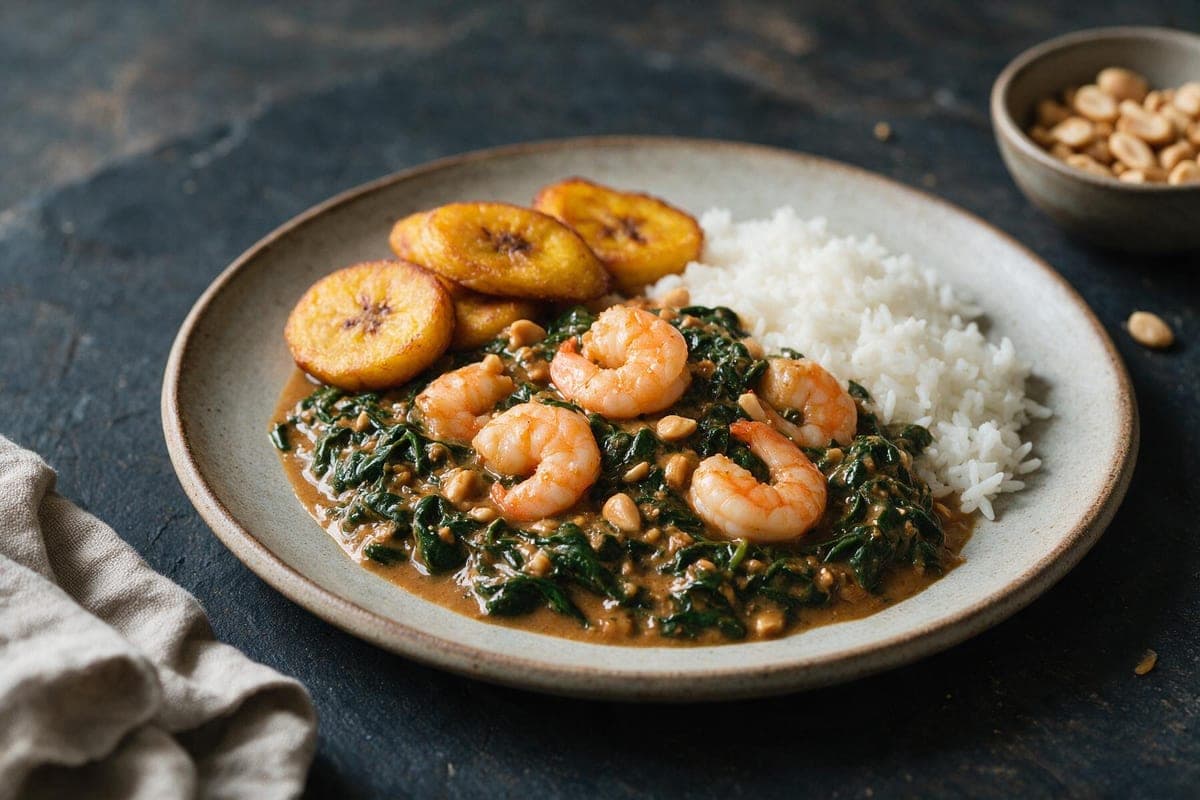
Ndolé-Style Spinach and Peanut Stew with Shrimp
Cameroon's national dish adapted for the supermarket: greens simmered in a savory peanut sauce with shrimp, served with fried plantains and rice.
- Prep
- 20 min
- Cook
- 40 min
- Total
- 60 min
- Serves
- 2 adults + 1 child, with stew left over
- Budget
- $20–$30
Ndolé is a stew of bitter greens cooked with ground peanuts, garlic, onion and dried shrimp into something thick, savory and faintly nutty, finished with whole shrimp or chunks of beef. The real thing uses ndolé leaves, a bitterleaf that is washed and boiled repeatedly to tame it; our version uses spinach, which is why the title says "ndolé-style," and adds a squeeze of lemon and a handful of chopped kale to hint at the bitterness that is lost. It is served with fried ripe plantains and, at our table, a pot of rice. The flavor is closer to a rich, green creamed-spinach-meets-satay than to any curry.
Why it's on our list
Cameroon is sometimes called "Africa in miniature" for its range of landscapes and cultures, and ndolé is the dish the whole country seems to agree on. I want to cook it because it is a greens-forward dinner that is actually luxurious, and because binding greens with ground peanuts is a technique new to me. I am upfront about the adaptation: real ndolé leaves are sold frozen or dried at African groceries and online, and I would try them the second time; spinach gets the method onto a weeknight. The stew is one pot, the shrimp cook in minutes, and the plantains fry while the sauce finishes. Fried plantain is also the surest way to get my son to try a green stew.
Field notes · Origin & culture
Ndolé originated in Douala, Cameroon's largest city and port, in the Littoral Region, and is associated with the Duala people of the coast; it is now widely regarded as the national dish and appears at weddings, funerals and Sunday tables across the country. The name refers both to the dish and to the leaf, a species of bitterleaf (Vernonia) native to West and Central Africa, which must be washed and boiled, sometimes with a little salt or a softening agent, to draw out its bitterness before it is cooked. The stew combines the prepared leaves with ground peanuts, crayfish or dried shrimp, garlic and onion, and is finished with beef, smoked fish, or fresh shrimp; the shrimp version is sometimes called "royal." It is traditionally served with fried or boiled plantains, or with bobolo and miondo, fermented cassava sticks steamed in leaves. It is considered laborious to make, which is part of why it is a celebration dish.
Noteworthy ingredients
- Spinach (plus a little kale): Standing in for bitterleaf. Fresh is best; frozen chopped spinach, thawed and squeezed dry, is practical. A cup of chopped kale and a squeeze of lemon add some of the edge the real leaf brings. Frozen ndolé leaves from an African grocery can be used instead, pre-boiled per the package.
- Natural peanut butter: Unsweetened, peanuts-only. Cameroonian cooks boil raw peanuts and grind them to a paste; peanut butter thinned with stock is the shortcut.
- Dried shrimp or crayfish: Sold at Asian and Latin markets and online; a tablespoon ground fine gives the stew its deep savory undertone. If you cannot find it, add a teaspoon of fish sauce instead.
- Ripe plantains: Yellow with black spots, soft to the thumb; green ones will be starchy, not sweet. Found at Walmart, most supermarkets and any Latin grocery.
- Shrimp: Large raw shrimp, peeled. Frozen is fine; thaw in cold water while you prep.
Prep — 20 min
- Start the rice: rinse 1 1/2 cups rice and cook with 2 1/4 cups water and a pinch of salt according to the package.
- Wash the spinach and chop it roughly. If using frozen, thaw and squeeze very dry. Chop the kale fine.
- Dice one onion and slice the other thin. Mince the garlic and grate the ginger. Grind the dried shrimp to a powder in a spice grinder or mortar.
- Stir the peanut butter with 1 cup of the stock until smooth. Pat the shrimp dry and season with salt.
- Peel the plantains and slice on a diagonal into 1/2-inch ovals.
Cook — 40 min
- Heat 2 tablespoons oil in a Dutch oven over medium. Cook the diced onion with a pinch of salt 5 minutes until soft. Add the garlic, ginger and ground dried shrimp; stir 1 minute.
- Add the spinach and kale in handfuls, letting each wilt before adding more. Cook 5 minutes until the greens have collapsed and most of their water has cooked off.
- Stir in the thinned peanut butter and the remaining 1 cup stock. Add the whole chile. Simmer 15 minutes, stirring often, until the stew is thick and the peanut has lost its raw taste; it should look like a dense, glossy creamed spinach. Add water if it gets pasty.
- Meanwhile, heat 1/4 inch of oil in a second skillet over medium-high. Fry the plantain slices in a single layer 2–3 minutes per side until deep gold and caramelized at the edges. Drain on paper towels and salt lightly.
- Push the shrimp down into the stew, cover and cook 4–5 minutes until pink and curled. In the last 2 minutes, heat the remaining 2 tablespoons oil in the plantain skillet and quickly fry the sliced onion until just golden; spoon it over the stew.
- Remove the chile. Season the stew with salt, black pepper and a good squeeze of lemon.
Serving
Spoon ndolé onto each plate with the shrimp on top and the fried onions scattered over, fried plantains stacked alongside and rice if you want it (many Cameroonian tables skip the rice; the plantains are the starch). The stew is mild as written, so my son's plate matches ours; adults who want heat can mash the softened chile into their portion. Leftover ndolé keeps three days and reheats well; the shrimp are best the first night, so cook only what you need and add fresh ones to leftovers. Plantains do not keep; fry only what you will eat.