Dinner night · Côte d'Ivoire
Attiéké with Grilled Fish and Tomato-Onion Sauce
The Ivorian street classic: fluffy fermented-cassava couscous, broiler-charred whole fish and a sharp fresh tomato, onion and chile relish. Thirty-five minutes.
- Prep
- 15 min
- Cook
- 20 min
- Total
- 35 min
- Serves
- 2 adults + 1 child
- Budget
- $20–$30
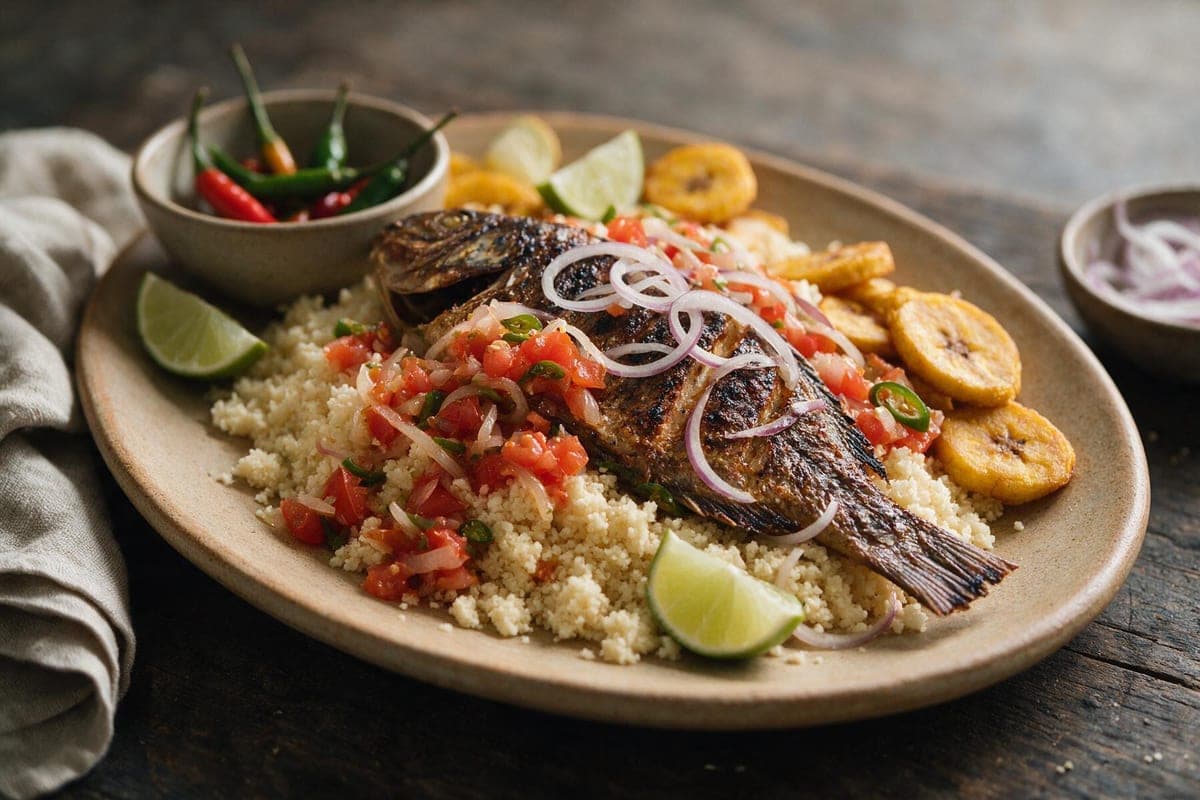
Attiéké is a couscous-like grain made from fermented, grated cassava, steamed until the granules are light, separate and faintly sour. In Côte d'Ivoire it is served most often with poisson braisé, a whole fish rubbed with garlic, ginger and oil and grilled over coals until the skin blisters, and with a sharp uncooked relish of chopped tomato, onion and hot chile that is half salad and half sauce. A squeeze of lime and a few slices of fried plantain finish the plate. Our version broils the fish and steams the attiéké in a bowl; the whole thing takes about thirty-five minutes.
Why it's on our list
Côte d'Ivoire's attiéké was recognized by UNESCO in late 2024 as intangible cultural heritage, which put a dish I had never tasted on my list immediately. I want to learn what fermented cassava actually tastes like and how its texture differs from wheat couscous, and whether a fifteen-minute broiler fish can stand in for one grilled over charcoal on an Abidjan street corner. It is weeknight-feasible in the strictest sense: attiéké steams in ten minutes, the fish broils in fifteen, and the relish is chopped, not cooked. The one real errand is the attiéké itself, an African grocery or an online order; the substitutes are noted honestly below.
Field notes · Origin & culture
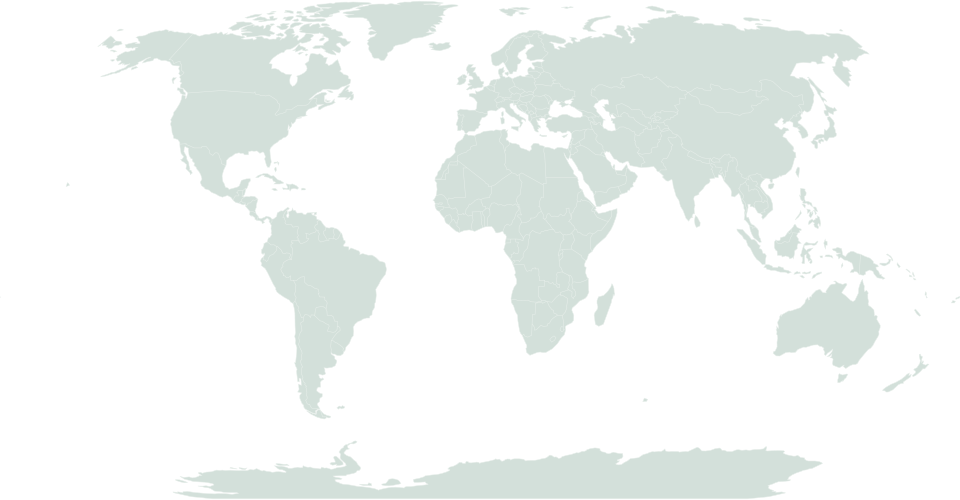
Attiéké is a traditional food of the lagoon peoples of southern Côte d'Ivoire, including the Ébrié, Adjoukrou, Alladian, Abidji, Avikam, Ahizi and Attié, with a related dish, akyeke, among the Nzema of neighboring western Ghana. Its name is usually traced to the Ébrié word adjèkè, reshaped by Bambara traders and French colonists. Women's cooperatives still make most of it, through a multi-day process of peeling, grating, fermenting, pressing, granulating and steaming cassava, and in December 2024 "skills related to attiéké production in Côte d'Ivoire" were inscribed on UNESCO's list of intangible cultural heritage. Once a lagoon specialty, it is now a national staple eaten at every hour: with grilled or fried fish and a tomato-onion-chile relish, with chicken, with eggs, or as garba, the Abidjan street plate of attiéké with fried tuna and raw onion and chile that is a favorite of students and workers.
Noteworthy ingredients
- Attiéké: Sold frozen (ready to steam), vacuum-packed or dried at African groceries, and online from Ivorian brands. If you cannot find it, use fine wheat couscous fluffed with a squeeze of lime to mimic the sourness; gari (dried cassava granules, from African or Latin groceries) moistened and steamed is the closer substitute.
- Whole fish or thick fillets: A whole 2-pound tilapia, red snapper or branzino, cleaned by the fish counter, is traditional and dramatic; thick fillets of snapper, mahi or tilapia are easier on a weeknight and for a child.
- Fresh chile: The relish takes a habanero or Scotch bonnet, chopped fine. Keep it in a separate bowl and the dish is as mild as you like.
- Maggi-style seasoning: Ivorian cooks crumble a bouillon cube into the garlic-ginger rub. Half a teaspoon of chicken bouillon powder or simply more salt does the job.
- Ripe plantain: For alloco, the fried plantain that is attiéké's standard companion. Look for yellow skins with black spots.
Prep — 15 min
- Heat the broiler to high with a rack 6 inches from the element. Pat the fish dry and, if whole, cut three diagonal slashes into each side down to the bone.
- Pound or mince 3 garlic cloves with half the ginger, 1 teaspoon salt, black pepper, the bouillon powder if using and 2 tablespoons oil into a paste. Rub it all over the fish, inside the slashes and the cavity. Let it sit while you prep the rest.
- Make the relish: dice the tomatoes and one onion small; mince the remaining garlic clove and ginger; chop the chile very fine, seeds removed for less heat. Toss the tomato, onion, garlic and ginger with the juice of 1 lime, the vinegar, 1 tablespoon oil and salt to taste. Put the chile in a separate small bowl; adults can stir it into their portion.
- Slice the second onion into thin rings and set aside for the plate. Peel the plantain and slice into 1/2-inch diagonals.
Cook — 20 min
- Lay the fish on a foil-lined sheet pan and broil 7–8 minutes until the skin blisters and chars in spots. Turn carefully with two spatulas and broil 6–8 minutes more, until the flesh at the thickest part flakes and reads 140°F. Fillets need about 5 minutes per side; thin ones, less. Rest while you finish.
- Steam the attiéké: if frozen, break it into a microwave-safe bowl, sprinkle with 2 tablespoons water, cover and microwave 3–4 minutes; or steam in a sieve over simmering water 8–10 minutes. Dried attiéké is moistened per the package (usually equal parts water, 10 minutes to swell) and steamed the same way. Salt lightly and fluff until the granules are separate and light. (Couscous substitute: pour 1 1/2 cups boiling water over 1 1/2 cups couscous, cover 5 minutes, fluff with a squeeze of lime.)
- Heat 1/4 inch of oil in a small skillet over medium-high and fry the plantain slices 2–3 minutes per side until golden and caramelized. Drain and salt.
Serving
Pile attiéké on a platter or on each plate, lay the fish on top or alongside, and spoon the tomato-onion relish over the attiéké. Scatter the raw onion rings over the fish, add lime wedges and the fried plantain, and set the bowl of chile where only the adults can reach it. In Côte d'Ivoire this is eaten with the right hand, pressing attiéké and a flake of fish together; a fork is fine. My son's plate gets fish, attiéké, plantain and chile-free relish. Leftover attiéké keeps three days and reheats with a sprinkle of water; cold fish folded into it with the relish is a good lunch.