Dinner night · Cyprus
Afelia with Pourgouri
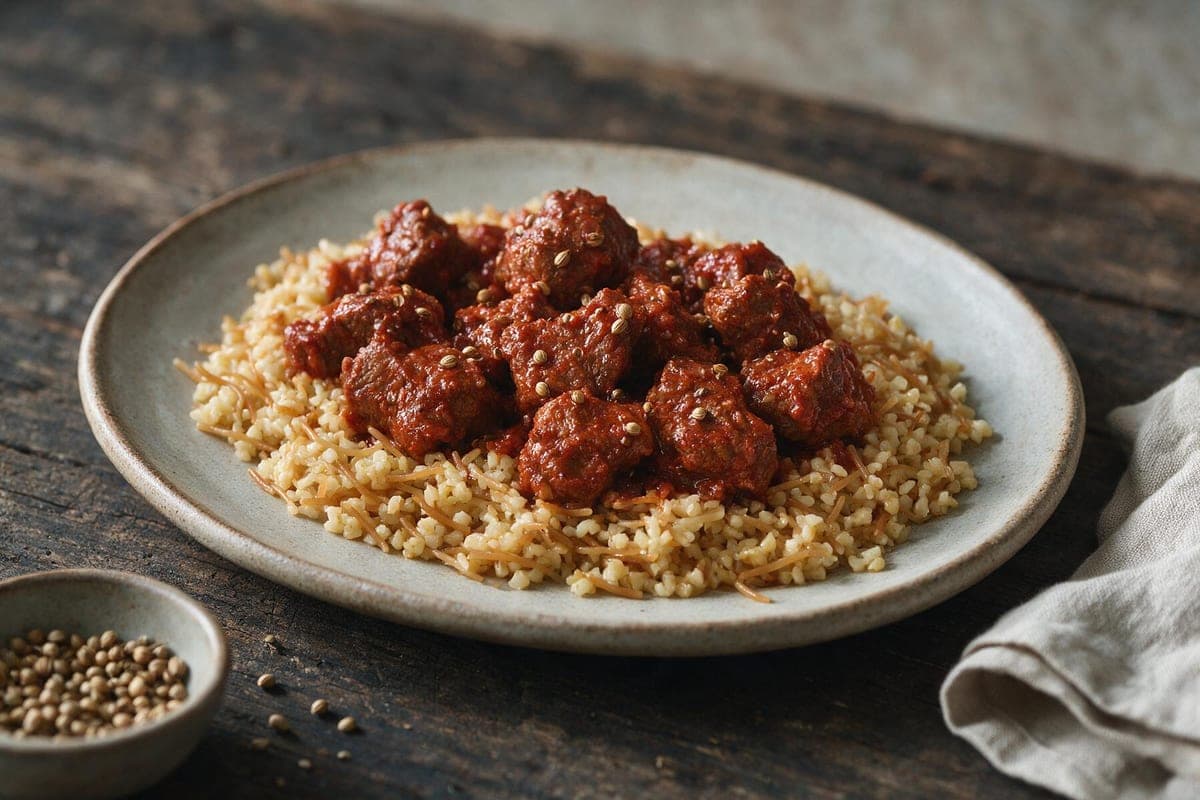
Cypriot pork braised in red wine with cracked coriander seed, over a bulgur and vermicelli pilaf: a one-skillet dinner with a quick marinade.

- Prep
- 15 min
- Cook
- 40 min
- Total
- 55 min
- Serves
- 2 adults + 1 child
- Budget
- $16–$24
Afelia is one of the most distinctively Cypriot things you can cook: cubes of pork marinated in dry red wine with coarsely crushed coriander seed, browned, then simmered in the marinade until the wine reduces to a dark, fragrant glaze. The coriander is the whole personality of the dish, warm and citrusy and nothing like fresh cilantro. It is traditionally served with pourgouri, a bulgur pilaf cooked with browned vermicelli, onion and tomato, plus yogurt and a plain salad. Nothing about it is spicy.
Why it's on our list
Our map is heavy on chicken and light on pork, and afelia is pork cooked in a way I have never tried: with wine as the only liquid and a single spice doing all the work. I want to learn what coriander seed tastes like when it is the lead rather than a background note, and whether a 30-minute marinade gets anywhere near the overnight version Cypriot cooks use. Pourgouri is its own lesson, a pilaf method that browns pasta before adding grain; it is fast, cheap and could become a regular side on its own. The budget is modest and the technique is a plain braise.
Field notes · Origin & culture
Afelia is pork marinated and cooked in red wine with crushed coriander seed, and it is counted among the signature dishes of Cyprus, where pork, wine and coriander are a classic trio (the same marinade seasons the island's smoked loukaniko sausages and lountza). The dish's name is thought to derive from an ancient Greek word for meat cooked on a spit, though the modern braise is a different thing. Pourgouri pilafi, the bulgur pilaf, is the everyday Cypriot starch and the traditional partner; Cyprus's official tourism site publishes the two as a single recipe. Yogurt, olives and a tomato-cucumber salad complete the plate. Cyprus's food reflects Greek, Turkish, Levantine and British layers, and afelia, with its wine and coriander, is usually described as among the most purely Cypriot of the island's dishes.
Noteworthy ingredients
- Coriander seed, whole: Buy whole seeds and crush them coarsely yourself in a mortar or under a heavy pan; pre-ground coriander is dusty and loses the citrus-pine aroma that makes the dish. Two tablespoons sounds like a lot, and it is correct.
- Dry red wine: Cypriot cooks would use a local red; any inexpensive, dry, fruity red works. It is the only liquid in the braise, so avoid anything sweet or heavily oaked.
- Pork shoulder: Boneless shoulder (sometimes sold as Boston butt) stays tender through a braise and is the traditional cut. Pork loin will dry out; if it is all you can find, cut the simmer to 15 minutes.
- Coarse bulgur and vermicelli: For pourgouri you want coarse (#3) bulgur, sold in the grain or international aisle at most supermarkets and at any Middle Eastern grocer. Vermicelli nests or fideo (Latin American aisle) are the pasta; broken angel hair is the fallback.
Prep — 15 min
- Cut the pork into 1 1/4-inch cubes, trimming only the thickest fat. Pat dry.
- Crush the coriander seed coarsely; you want cracked halves and quarters, not powder.
- In a bowl, toss the pork with the wine, half the crushed coriander, 1 teaspoon salt and plenty of black pepper. Cover and marinate 30 minutes at room temperature, or overnight in the refrigerator if you plan ahead.
- Dice the onion. Chop the large tomato. For the salad, cut the cucumber and vine tomatoes into chunks, toss with chopped parsley, a tablespoon of olive oil, a squeeze of lemon and salt; refrigerate.
- If using yogurt, spoon it into a bowl and set it out to take the chill off.
Cook — 40 min
- Lift the pork out of the marinade with tongs, letting it drain; reserve the marinade. Pat the pieces dry so they brown.
- Heat 2 tablespoons olive oil in the skillet over medium-high. Brown the pork in two batches, 2–3 minutes per side, until well colored. Return everything to the pan.
- Pour in the reserved marinade and add the remaining coriander and the cinnamon stick if using. Bring to a boil, then lower to a steady simmer, cover, and cook 25 minutes.
- Meanwhile make the pourgouri. Heat 1 tablespoon olive oil in the saucepan over medium heat. Add the vermicelli, broken into inch-long pieces, and stir until golden brown, 2–3 minutes. Add the onion and cook 4 minutes until soft, then the chopped tomato for 2 minutes.
- Add the broth and 1/2 teaspoon salt, bring to a boil, stir in the bulgur, cover, reduce heat to low and cook 10 minutes until the liquid is absorbed. Turn off the heat and leave covered 5 minutes, then fluff with a fork.
- Uncover the pork and raise the heat to medium-high. Simmer 5–8 minutes, stirring, until the wine has reduced to a thick, glossy glaze that coats the meat. Taste for salt and pepper.
Serving
Spoon pourgouri onto plates, pile the glazed pork beside it, and put the salad, yogurt and olives in the middle of the table for everyone to help themselves; a squeeze of lemon over the pork brightens it. There is no chile anywhere in this dinner, so there is nothing to hold back for a child; the question will be whether the wine flavor reads as "fancy" or "weird," and I'll serve my son's pork with a spoon of yogurt to round it off. The dish is dairy-free if the yogurt stays optional. Leftovers keep three days, and the pork is excellent cold, cut small, in a pita with the salad.