Dinner night · DR Congo
Poulet à la Moambé
The Congolese national dish: chicken braised in a rich palm-nut (or peanut) and tomato sauce, served with rice and quick garlicky greens in about an hour.
- Prep
- 15 min
- Cook
- 45 min
- Total
- 60 min
- Serves
- 2 adults + 1 child, with leftovers for lunch
- Budget
- $16–$26
Poulet à la moambé is chicken braised in moambe, the thick orange pulp of African oil-palm fruit, with onion, garlic and tomato until the sauce is deep, rich and a little nutty. The flavor is hard to compare to anything else: earthy and savory, with a faint sweetness from the palm fruit. Many home cooks stretch or replace the palm nut with peanut butter, the version most Americans can make from a supermarket. It is served with rice or fufu and greens, traditionally cassava leaves, which we swap for spinach or collards.
Why it's on our list
This is the dish most often named as the national dish of the Democratic Republic of the Congo, and I want our Central African nights to start with the real thing rather than a generic "African peanut stew." The ingredient I want to learn is palm-nut cream, sold in cans at African groceries and online; if I cannot find it, the peanut-butter version is well established and honest to how many families cook. It is weeknight-feasible because it is one pot that simmers for 35 minutes while the rice and greens cook alongside. The heat is optional, so my son's plate stays mild and the pili-pili goes on the table.
Field notes · Origin & culture
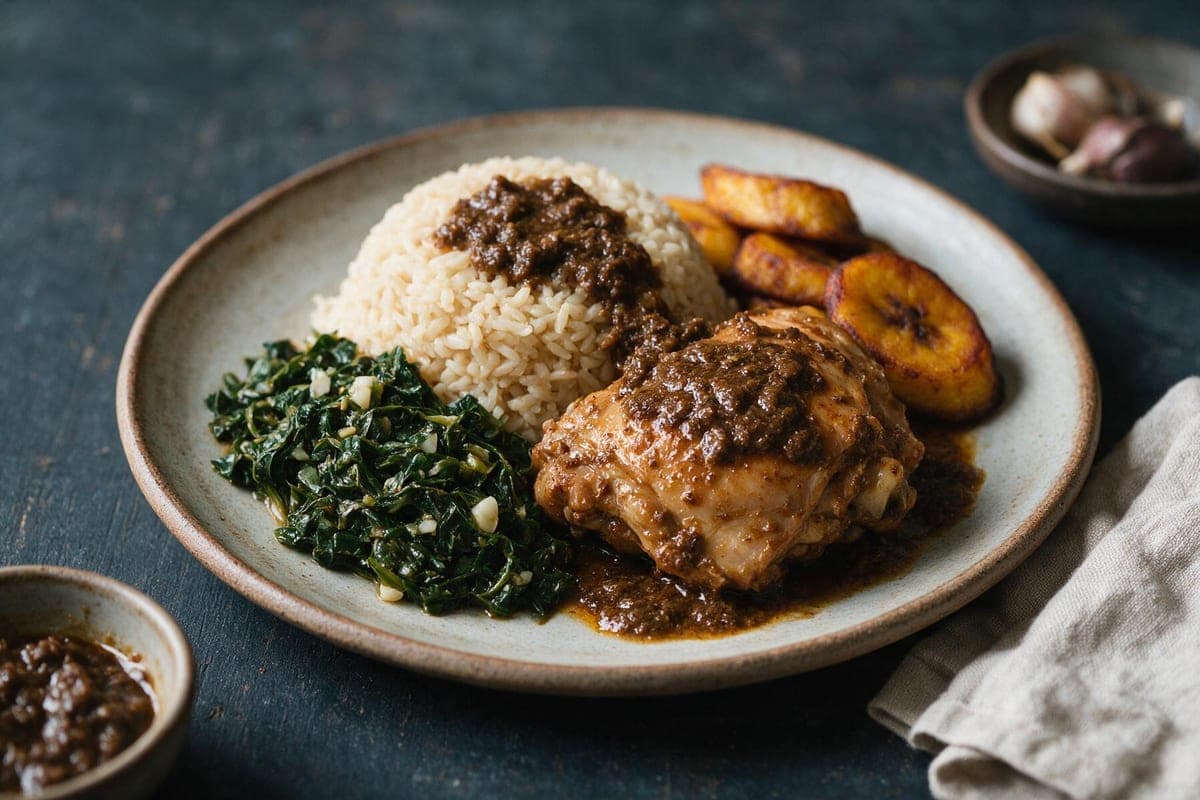
Moambe (also mwambe or mwambi) is the pulp of the oil-palm fruit, boiled, pounded and sieved into a thick sauce; it is used across Central Africa, and chicken cooked in it is claimed as a national dish by the Democratic Republic of the Congo, as moamba de galinha in Angola and as poulet nyembwe in Gabon. In Kinshasa and Brazzaville, poulet à la moambé is the dish for Sunday lunch and for guests, and the proper plate includes rice or fufu, pondu (cassava leaves, also called saka-saka), fried plantains and a dish of pili-pili chile. Peanut-based versions are common where palm nut is unavailable, and some cooks combine both. Recipes vary by household and by region, so this is a mainstream home version rather than one definitive recipe.
Noteworthy ingredients
- Canned palm-nut cream (sauce graine): Look for brands like Trofai or Praise at African or Caribbean grocers and online; a 14-oz can is enough. If you cannot find it, use the peanut-butter method below, a genuine Congolese variation rather than a compromise.
- Natural peanut butter: For the peanut version, use unsweetened peanut butter; the sweetened kinds make the sauce taste like dessert.
- Bone-in chicken thighs: They give the sauce body and stay moist through a long simmer. Remove the skin at the table if it is too rich.
- Greens: Cassava leaves are traditional and sold frozen at African grocers as pondu or saka-saka; frozen chopped spinach or fresh collards are our everyday stand-in.
- Pili-pili or fresh habanero: The heat is served alongside, never cooked in for a mixed table.
Prep — 15 min
- Start the rice: rinse 1 1/2 cups rice and cook with 2 1/2 cups water and a pinch of salt according to the package.
- Pat the chicken dry and season well with salt and pepper.
- Dice the onion and tomatoes. Mince the garlic, keeping 1 clove aside for the greens.
- Wash the greens and chop them roughly; if using frozen spinach, thaw it and squeeze out the water.
- If using palm-nut cream, open the can and stir it so the oil and pulp recombine. If using peanut butter, whisk it with 1 cup warm stock in a bowl until smooth so it will not clump in the pot.
Cook — 45 min
- Heat 2 tablespoons oil in a Dutch oven over medium-high. Brown the chicken skin-side down for 5 minutes, turn and brown 3 minutes more, then move to a plate.
- Lower the heat to medium. Add the onion with a pinch of salt and cook 5 minutes until soft. Add the garlic and cook 1 minute.
- Stir in the tomato paste and diced tomatoes and cook 3–4 minutes until the tomatoes break down into a thick base.
- Add the palm-nut cream and 1 cup stock (or the peanut-butter mixture), the bay leaf and nutmeg if using. Stir well, bring to a simmer, and return the chicken with its juices, turning the pieces to coat.
- Cover and simmer gently 30–35 minutes, stirring every 10 minutes and scraping the bottom so the sauce does not catch, until the chicken reaches 165°F and the sauce is thick enough to coat the back of a spoon. If it looks too thick, add a splash of water; if too thin, simmer uncovered for the last 5 minutes.
- While the chicken finishes, make the greens: heat 1 tablespoon oil in a skillet over medium, add the reserved garlic for 30 seconds, then the greens with a pinch of salt. Cook 4–6 minutes until wilted and tender (longer for collards), and squeeze over a little lemon.
- Taste the sauce and adjust salt and pepper. Slice the chile and set it on a small plate.
Serving
Mound rice on each plate, set a chicken thigh beside it and spoon the moambé sauce generously over both; put the greens alongside. The sliced chile goes in the middle of the table so each adult can add heat, and my son's plate stays as mild as the sauce itself, which is rich but not spicy. Fried plantains from the freezer aisle make it a proper Kinshasa Sunday plate. Leftovers keep three days and improve overnight; reheat gently with a splash of water.