Dinner night · Ecuador — Sierra (Andean highlands)
Llapingachos with Fried Eggs
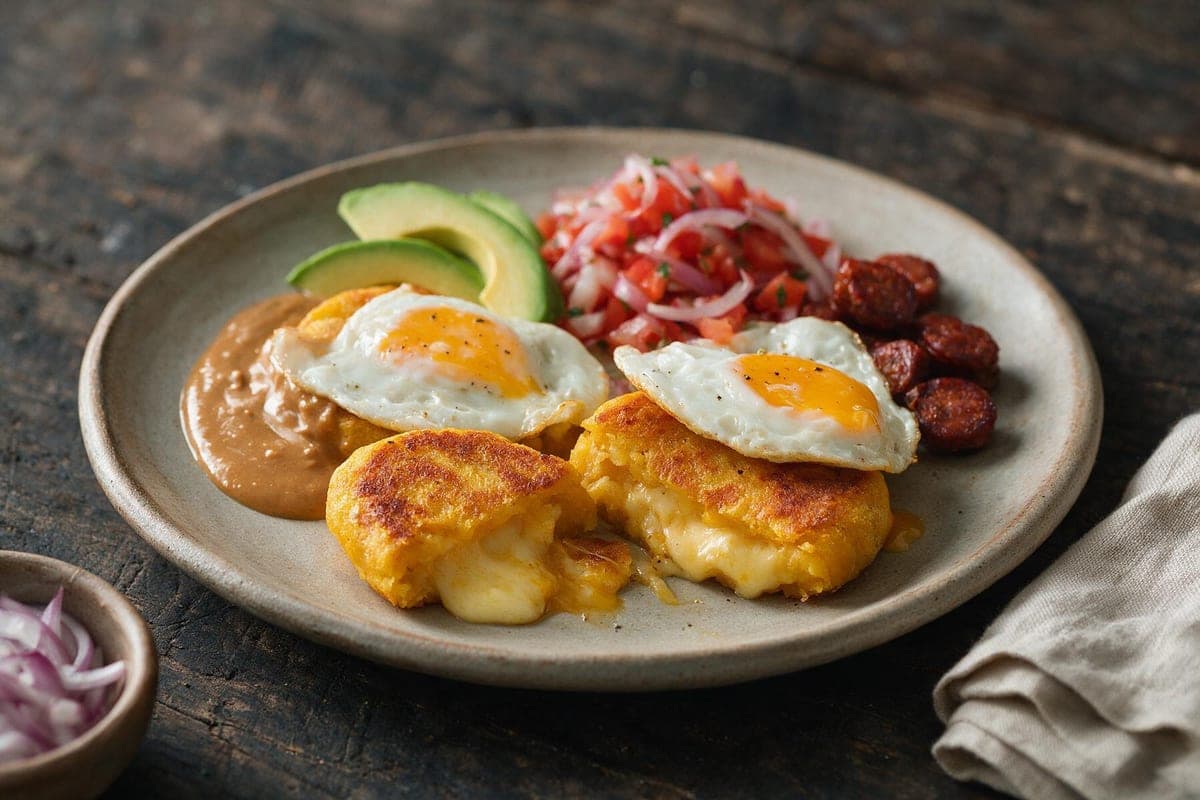
Ecuador's highland potato cakes, golden with annatto and stuffed with melting cheese, griddled crisp and served with warm peanut sauce, a fried egg, avocado and a tomato-onion salad. Vegetarian and gluten-free, about an hour.
- Prep
- 30 min
- Cook
- 30 min
- Total
- 60 min
- Serves
- 2 adults + 1 child, about 10 potato cakes
- Budget
- $10–$16
Llapingachos are thick patties of mashed potato, seasoned with onion softened in annatto-tinted oil, wrapped around a nugget of fresh cheese and griddled until the outsides are deep golden and crisp and the cheese has melted. In the Ecuadorian highlands they come with salsa de maní, a warm, savory peanut sauce thinned with milk, plus a fried egg, avocado, a sharp little salad of tomato and red onion in lime, and often chorizo or fried pork, which this vegetarian version leaves off. The plate is soft, crisp, rich and bright at once, all from the supermarket.
Why it's on our list
I want a vegetarian dinner on the map that is not a salad or a stew, and llapingachos are a full, filling Andean plate built on the potato in its homeland. The technique I expect to learn is a potato cake that holds together without flour or egg, crisps on the griddle, and keeps the cheese inside; the trick is reportedly very dry mashed potato and a rest in the fridge. The savory peanut sauce is the second lesson. It is weeknight-feasible because the potatoes can be boiled and mashed the night before, and the sauce, salad and eggs take ten minutes between them. There is no heat in any of it, so my son's plate is ours.
Field notes · Origin & culture
Llapingachos belong to Ecuador's Sierra, the Andean highlands, and are most associated with the city of Ambato in Tungurahua province, where they are a point of civic pride; they are now standard on menus from Quito to Cuenca and into southern Colombia. The name is usually traced to Kichwa, from a root meaning to crush or mash, with a Spanish ending, which fits a dish built on the Indigenous Andean potato and the cheese that arrived with the Spanish. Annatto gives the cakes their color, and the peanut sauce reflects the peanut's long history in the region. A fried egg, avocado and tomato-onion salad is the common highland plate; coastal versions come with rice, and Riobamba pairs them with fried pork. This is the Sierra plate, kept meatless.
Noteworthy ingredients
- Starchy potatoes: Russets or Yukon Golds mash dry and hold a patty shape; waxy red potatoes fall apart. Boil them whole in their skins so they absorb less water.
- Queso fresco: The crumbly, mild fresh cheese in the Hispanic dairy case stands in for Ecuadorian queso de mesa; grated part-skim mozzarella melts more but also works.
- Ground annatto (achiote): Sold as powder or seeds in the Hispanic aisle; the powder is easiest. It colors the onion oil deep orange and adds a faint earthy note. Paprika gives the color if you cannot find it.
- Natural peanut butter: Unsweetened peanut butter with sautéed onion, annatto and milk is the quick route to salsa de maní; traditional cooks grind roasted peanuts.
Prep — 30 min
- Boil the potatoes whole, unpeeled, in salted water 25–30 minutes until tender. Drain, let them steam dry 5 minutes, then peel and mash or rice them very smooth. Do not add liquid.
- While the potatoes boil, dice one white onion finely. Heat 1 tablespoon oil in the skillet over medium heat, stir in 1/2 teaspoon annatto until the oil turns orange, then cook the onion 5 minutes until soft. Scrape half into the mashed potato with 1 teaspoon salt; leave the rest in the pan for the peanut sauce.
- Knead the potato briefly until it holds together like dough. Cover and refrigerate at least 15 minutes (overnight is better).
- Crumble the cheese finely. Slice the red onion paper-thin and soak in cold water 10 minutes, then drain and toss with the diced tomatoes, the juice of 1 lime, cilantro and salt. Slice the avocados and squeeze the second lime over them.
- Shape the cakes: flatten about 1/3 cup of potato in your palm, put a tablespoon of cheese in the center, fold the potato around it and pat into a 3-inch disk about 3/4 inch thick. Smooth any cracks. Chill while you make the sauce.
Cook — 30 min
- Peanut sauce: return the skillet with the reserved annatto onion to medium heat, add the minced garlic and cumin and stir 1 minute. Whisk in the peanut butter and 1 cup milk and simmer gently 5 minutes until smooth and the consistency of thin gravy; add milk if thick. Season and keep warm in the small saucepan on the lowest heat.
- Wipe the skillet, add 1 tablespoon oil and heat over medium. Lay in the potato cakes without crowding and cook 4–5 minutes per side, undisturbed until the first side is deeply golden and releases easily; flipping too early is how they break. Keep finished cakes warm in a low oven.
- In the same skillet, melt the butter over medium heat and fry the eggs to your liking, seasoning with salt and pepper.
Serving
Give each person three llapingachos (two for my son), spoon warm peanut sauce over or beside them, and lean a fried egg against the stack. Add avocado slices and a heap of the tomato-and-red-onion salad. The Ecuadorian plate often includes fried chorizo, which anyone who wants it can add. Nothing is spicy; Ecuadorian tables keep a bowl of ají, a fresh chile salsa, and any mild hot sauce fills that role for the adults. Leftover cakes keep three days and re-crisp in a dry skillet; the peanut sauce loosens with milk. The potato dough can be made a day ahead, which is the version I would actually cook on a Tuesday.