Dinner night · El Salvador
Pupusas with Curtido
El Salvador's griddled corn-masa cakes stuffed with cheese and refried beans, served with tangy cabbage curtido and a thin tomato salsa: a hands-on, vegetarian, gluten-free dinner in about an hour.

- Prep
- 30 min
- Cook
- 25 min
- Total
- 55 min
- Serves
- 2 adults + 1 child, about 10 pupusas
- Budget
- $10–$15
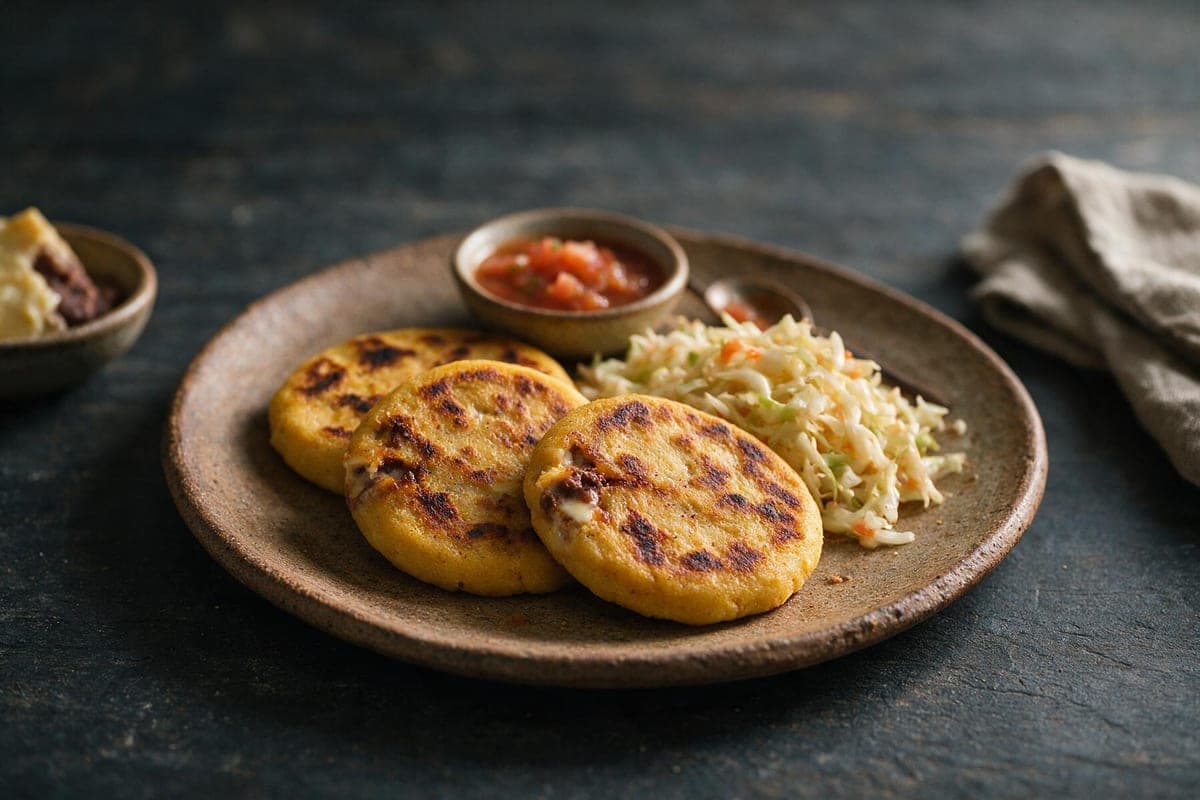
A pupusa is a thick, hand-formed corn tortilla with the filling sealed inside before it hits the griddle: melting cheese, refried beans, or both (revueltas, which traditionally also include ground pork chicharrón). Cooked on a hot comal until blistered, with cheese oozing from a crack or two, each one is eaten in the hand with curtido, a lightly pickled cabbage slaw with carrot and oregano, and a spoonful of thin, mild tomato salsa. This is the vegetarian frijol con queso; the masa is just corn flour, water and salt.
Why it's on our list
Pupusas are the national dish of El Salvador and one of the great hands-in-the-dough family cooking projects; I want a dinner where shaping the food is half the evening. The technique I expect to learn is the sealing: patting masa into a cup, filling it, pinching it shut and flattening it without the cheese escaping, which pupuserías make look effortless and which I expect to take a few ugly tries. It is weeknight-feasible because masa harina needs no resting, the beans come from a can, and the curtido improves while everything else happens. Nothing is spicy, so my son eats it as we do, and I suspect a dinner he helped shape is one he will eat.
Field notes · Origin & culture
Pupusas have pre-Columbian roots in what is now El Salvador, and Salvadoran archaeologist Roberto Ordóñez linked them to the Pipil people; the name is usually traced to a Nawat word for something swollen or fluffy, though etymologies vary. Early versions were vegetarian; pork and cheese fillings came later. Pupusas were still fairly localized in central El Salvador into the mid-twentieth century; they spread across the country and then, with migration during the 1980s civil war, across the United States, where pupuserías are now part of the landscape. In 2005 El Salvador's Legislative Assembly declared them the national dish and set the second Sunday of November as National Pupusa Day, timed to the corn harvest. Curtido and a thin salsa roja are the standard companions.
Noteworthy ingredients
- Masa harina: Instant corn masa flour (Maseca is in nearly every US supermarket). Not cornmeal; the bag will say "masa." Mixed with warm water and salt it is workable in two minutes.
- Quesillo or Oaxaca cheese: Salvadoran quesillo is the traditional melting cheese; Oaxaca cheese or whole-milk mozzarella, shredded fine, are the substitutes. Many cooks add chopped loroco (an edible flower bud sold in jars at Latin markets), worth trying if you find it.
- Small red beans: Mashed with sautéed onion into a thick paste that will not leak. Canned refried beans work if cooked down until very thick.
- Cabbage and oregano for curtido: Dried oregano, white vinegar and a little sugar are all it needs. Make it first; 30 minutes of sitting is the minimum, a day is better.
Prep — 30 min
- Curtido first: shred the cabbage finely and grate the carrot; slice half the onion paper-thin, and the jalapeño if using. Toss with 1/2 cup vinegar, 1/2 cup hot water, 1 tablespoon sugar, 1 1/2 teaspoons salt and the oregano. Press down and set aside.
- Salsa: blend the tomatoes, remaining onion, garlic, a few cilantro stems and a pinch of salt until smooth. Simmer in the saucepan with 1 tablespoon oil for 10 minutes; it should stay pourable. Season and keep warm.
- Beans: drain (keep 1/4 cup liquid) and cook in a skillet with 1 tablespoon oil over medium heat 5 minutes, mashing to a stiff paste. Cool; hot filling tears the masa.
- Shred the cheese finely and mix with the queso fresco if using. If it is very wet, press it in a paper towel.
- Masa: mix 3 cups masa harina with 1 teaspoon salt and about 2 1/2 cups warm water, kneading until it feels like soft play-dough that does not crack when you press a ball flat. Add water a tablespoon at a time if it cracks. Cover with a damp towel.
- Set out a bowl of oiled water for your hands.
Cook — 25 min
- Heat the skillet or comal over medium-high with no oil, or a very thin film, until a drop of water skitters.
- Oil your palms. Take about 1/3 cup masa, roll it smooth, then press your thumb into the center and turn to form a thick cup with 1/4-inch walls.
- Put about 1 tablespoon beans and 2 tablespoons cheese inside. Pinch the edges up over the filling, seal, and roll gently back into a ball.
- Pat the ball flat between your palms, rotating, to a disk about 4 inches across and 1/2 inch thick. Patch any leaks with a pinch of masa. Thick is correct.
- Cook 3–4 minutes per side until mottled brown with blistered spots and a little cheese escaping. Work in batches and keep finished ones warm in a towel. Expect the first two to be ugly; by the fourth you will have it.
Serving
Give everyone two or three pupusas straight from the griddle with a big pile of curtido and the warm tomato salsa spooned over or in a bowl for dipping. They are eaten in the hand, torn open so the curtido can be stuffed inside. My son's plate needs no adjustment unless he objects to curtido, in which case plain shredded cabbage with lime stands in; the jalapeño only goes into a split-off adult batch. Leftover pupusas reheat in a dry skillet, 2–3 minutes a side, and uncooked ones freeze well for a 10-minute dinner another night. The curtido keeps a week and gets better.