Dinner night · Eritrea
Zigni with Taita
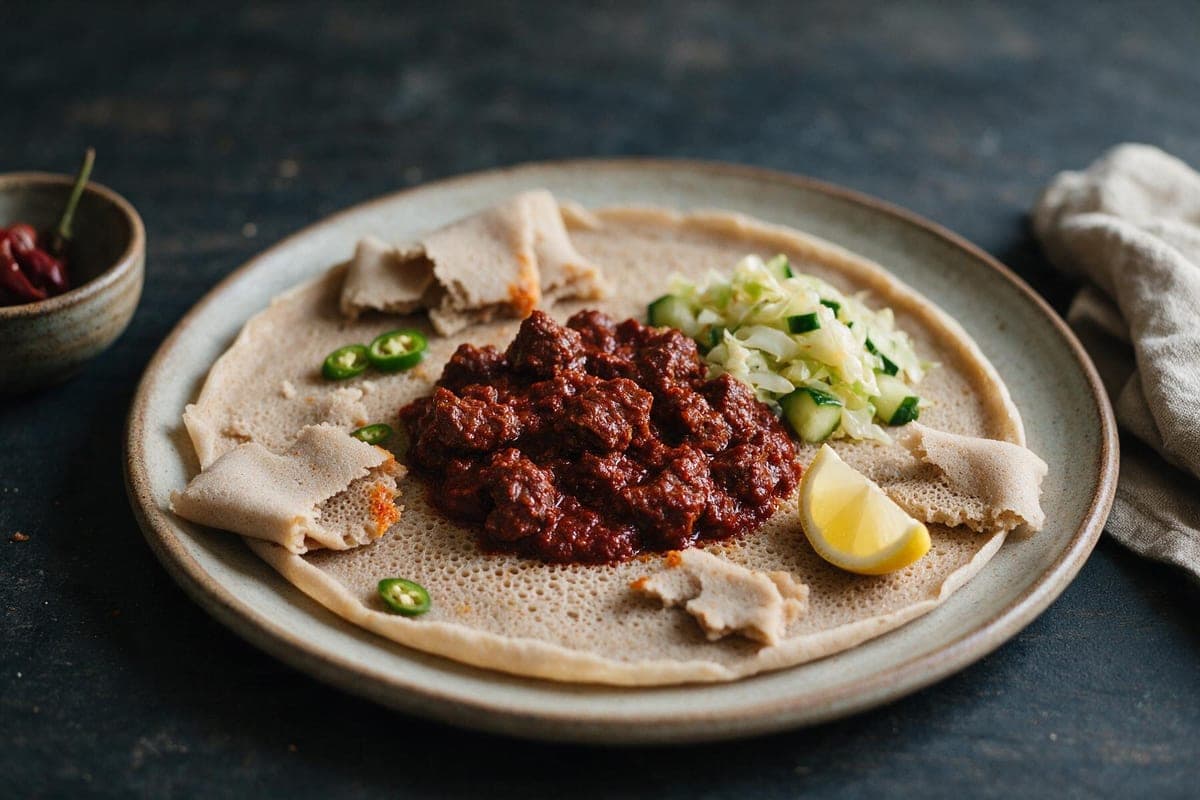
Eritrea's deep-red berbere beef stew, simmered with onion and tomato and scooped up with spongy flatbread: one pot, big flavor, about an hour.

- Prep
- 15 min
- Cook
- 50 min
- Total
- 65 min
- Serves
- 2 adults + 1 child, with a bowl left for lunch
- Budget
- $20–$30
Zigni is the Eritrean stew that most people picture when they think of Horn-of-Africa food: cubes of beef cooked slowly in a thick sauce of onions, tomato and berbere, the red chile-and-spice blend that colors everything it touches. The sauce is deep brick-red, glossy and savory, warm rather than scorching when the berbere is measured with care. It is eaten with taita (the Tigrinya name for the spongy, slightly sour flatbread called injera in Ethiopia), torn into pieces and used as both plate and spoon. This version is a one-pot braise with store-bought injera or another soft flatbread, ready in a little over an hour.
Why it's on our list
We already have an Ethiopian night on the map, so I want Eritrea to stand on its own rather than be a footnote to its neighbor, and zigni is the dish Eritreans themselves name first. The technique I want to learn is the long, dry onion cook that starts most Horn-of-Africa stews: onions cooked down with no oil at first until they melt into a paste, which is what gives the sauce its body without flour or cream. Berbere is the one specialty ingredient, and it is now easy to find. Once the beef goes in, the pot looks after itself, and I expect to keep my son's portion gentle by holding back some of the berbere and passing the rest at the table.
Field notes · Origin & culture
Zigni belongs to the family of stews Eritreans call tsebhi, the backbone of a meal served on a shared tray lined with taita; diners tear the bread in front of them and dip it into the stews. Zigni is usually made with beef, though lamb, goat and ground-meat versions exist, and its character comes from berbere, the chile-forward spice blend shared across Eritrea and Ethiopia whose exact recipe varies by family. Eritrean cooking shows more Italian influence than Ethiopian cooking does, a legacy of the colonial period: pasta dishes are common, Asmara is known for its cafés and espresso, and you can find zigni spooned over spaghetti as well as taita. The coffee ceremony that follows a meal is one of the most recognizable parts of Eritrean hospitality.
Noteworthy ingredients
- Berbere: The whole dish. Buy a blend labeled berbere (Whole Foods, well-stocked supermarkets, any Ethiopian or Eritrean grocer, or online). Heat varies by brand, so start with the lower amount. In a pinch, mix 2 tablespoons paprika, 1 teaspoon cayenne, 1/2 teaspoon each ground ginger, coriander and fenugreek, and a pinch each of cardamom, cinnamon and cloves.
- Beef chuck: Cut into 1-inch cubes, it turns tender in about 45 minutes of simmering. Stew meat from the butcher case works but check for very large pieces.
- Onions, lots of them: Three large onions sound like too many; they cook down to a paste that thickens the sauce. Do not skip the slow, dry start.
- Taita / injera: Many cities have an Ethiopian or Eritrean grocer or restaurant that sells injera by the packet; some Whole Foods stock it. Substitute warm naan, lavash or soft flour tortillas; the dish is still right.
- Oil instead of spiced butter: Many home cooks use tesmi, a spiced clarified butter. I am using neutral oil to keep this dairy-free; a tablespoon of butter stirred in at the end is a fine upgrade.
Prep — 15 min
- Finely dice the onions; a food processor pulsed a few times is fine here because they will cook to a paste anyway. Mince the garlic and grate the ginger. Dice the tomatoes.
- Pat the beef dry and season with 1 teaspoon salt and a few grinds of pepper.
- For a quick cooling side, toss the cabbage with thin cucumber slices, a squeeze of lemon, a pinch of salt and a drizzle of oil. Refrigerate.
- Measure the berbere: 2 tablespoons for a warming stew, 3 for one that bites. Slice the chile for the table if using.
Cook — 50 min
- Put the onions in a dry Dutch oven over medium heat with a pinch of salt. Stir every minute or two for 10–12 minutes; they will release their water, soften and start to turn golden and pasty. Add a splash of water if they catch.
- Add the oil, then the berbere, cumin and cardamom. Stir constantly for 1 minute so the spices bloom in the oil without scorching.
- Add the garlic, ginger and tomato paste; cook 1 minute. Add the diced tomatoes and cook 4–5 minutes, until they break down and the mixture looks like a thick red paste.
- Add the beef and stir to coat. Pour in 1 1/2 cups water, bring to a simmer, then cover and cook on low for 40–45 minutes, stirring once or twice, until the beef is tender and the sauce has thickened enough to mound slightly. Uncover for the last 10 minutes if it looks thin.
- Taste for salt. If you want more heat for the adult portions, stir another teaspoon of berbere into a ladle of stew in a small bowl.
- Warm the injera or flatbread in a dry skillet or wrapped in foil in a low oven for 5 minutes.
Serving
Lay a round of injera or flatbread on each plate and spoon the zigni into the center, with the cabbage-cucumber salad to one side; tear more bread into pieces for scooping and put the chile slices and a wedge of lemon on the adult plates only. My son's plate gets the 2-tablespoon version of the stew with extra salad and bread, and the cilantro is optional for everyone. Zigni is better the next day: leftovers keep three days in the fridge and reheat gently with a splash of water, and they are good over spaghetti.