Dinner night · Estonia — Mulgimaa
Mulgipuder with Bacon and Onion
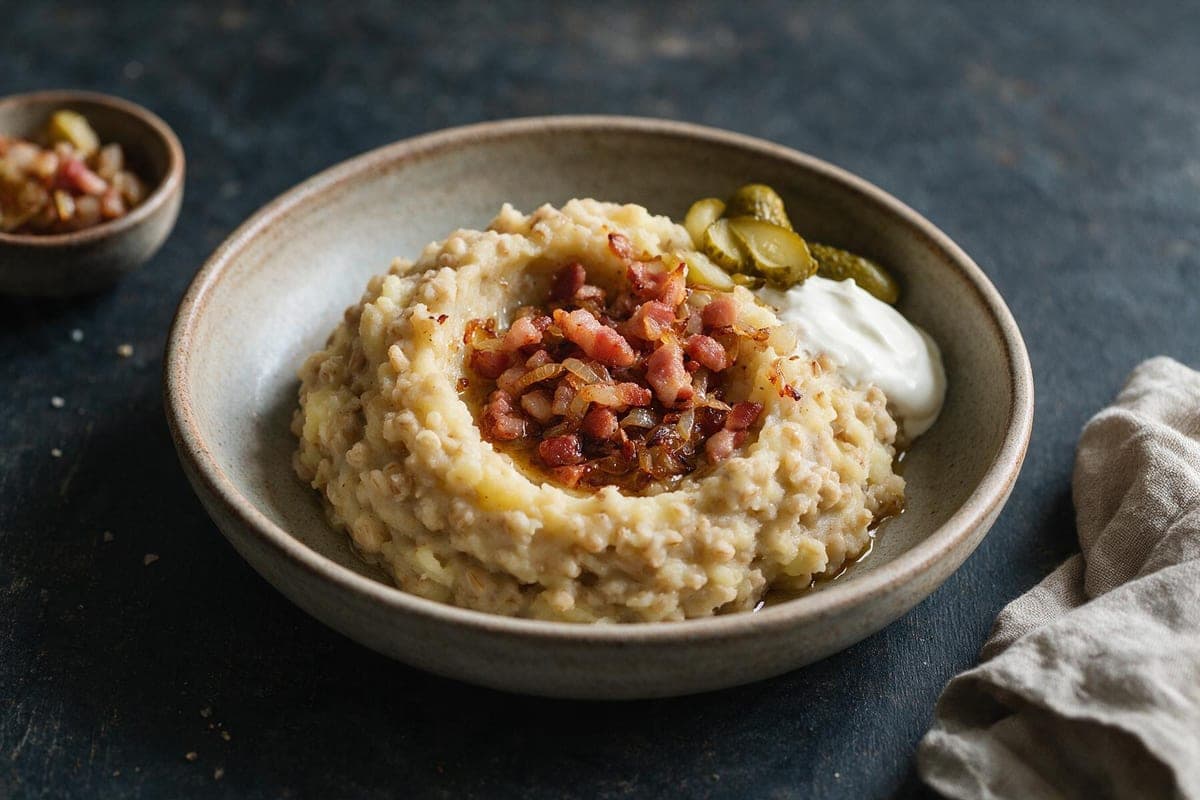
Estonia's UNESCO-listed potato-and-barley mash, topped with crisp bacon and golden onions and served with sour cream and pickles: one pot, 50 minutes.

- Prep
- 10 min
- Cook
- 40 min
- Total
- 50 min
- Serves
- 2 adults + 1 child, with enough mash for a second meal
- Budget
- $10–$18
Mulgipuder is potatoes and pearl barley cooked together in one pot until the barley is tender and the potatoes collapse, then mashed into a thick, slightly chewy porridge and loosened with milk and butter. The classic topping is cubes of bacon or pork belly fried until crisp with a heap of onions softened in the fat, spooned over each bowl with the drippings. Sour cream and a few pickles or a spoon of sauerkraut on the side cut the richness. It is farm food from southern Estonia, and it costs almost nothing to make.
Why it's on our list
I was looking for an Estonian dinner that was actually cooked in Estonian homes rather than a restaurant showpiece, and this is it: the only Estonian dish on UNESCO's intangible heritage list, and one that families still make for Sunday lunch. What I want to learn is the texture, which is somewhere between mashed potatoes and risotto, and whether pearl barley in a mash can win over a potato purist. The bacon-and-onion topping is a known quantity in our house. It is weeknight-feasible because it is one pot that simmers mostly unattended for 35 minutes while the topping takes ten, and the leftovers are reportedly the best part, fried into crisp cakes the next morning.
Field notes · Origin & culture
Mulgipuder takes its name from Mulgimaa, a historic region in southern Estonia around present-day Viljandi County, whose farmers in the second half of the nineteenth century began boiling barley groats and potatoes together because the combination was cheap and filling and barley grew well on the region's heavy soils. By the end of that century the porridge was known throughout Estonia. It was traditionally cooked in a large pot and eaten with fried pork and onion, sour milk or sour cream, and rye bread. In December 2024, UNESCO added the making and eating of Mulgi porridge to its Representative List of the Intangible Cultural Heritage of Humanity, following a local campaign in Mulgimaa; it is the only Estonian food tradition on the list.
Noteworthy ingredients
- Pearl barley: Sold in the rice-and-grains aisle of any US supermarket (Quaker or store brand). Estonians traditionally used barley groats, which are less polished and take longer; pearl barley cooks in about 35 minutes. Do not use quick-cooking barley, which turns to paste.
- Starchy potatoes: Russets break down into the barley and bind the mash. Yukon Golds work but stay a little chunkier.
- Bacon or pork belly: Thick-cut smoked bacon, cubed, is the practical choice. Salt pork or fresh pork belly is closer to Estonian tradition and worth trying if your store has it.
- Whole milk and butter: Used to loosen the mash at the end. Estonian cooks also use sour milk (hapupiim); a splash of buttermilk gives the same tang.
- Pickles or sauerkraut: Something sour is essential on the plate. Dill pickles from the refrigerated section or a spoon of good sauerkraut both work.
Prep — 10 min
- Rinse the barley in a sieve under cold water. Put it in a large heavy pot with 5 cups cold water and 1 teaspoon salt.
- Peel the potatoes and cut them into 1 1/2-inch chunks. Keep them in cold water until needed.
- Halve and slice the onions about 1/4 inch thick. Cut the bacon into 1/2-inch cubes.
- Chop 2 tablespoons dill or chives. Put the sour cream and pickles in bowls for the table. Slice the rye bread if using.
Cook — 40 min
- Bring the barley to a boil, lower to a simmer, cover and cook 15 minutes.
- Add the potato chunks to the barley, adding a splash of water if it looks dry (the water should just cover everything). Cover and simmer 20 minutes more, until the potatoes fall apart when pressed and the barley is tender but still has a little bite.
- While the pot simmers, put the bacon in a cold skillet and bring it to medium heat. Cook 8–10 minutes until crisp and the fat has rendered. Scoop out the bacon and set aside.
- Add the onions to the fat with a pinch of salt and cook over medium heat 10–12 minutes until golden and soft. Return the bacon to the pan to warm through and season with black pepper. For a vegetarian bowl, fry a share of the onions separately in 2 tablespoons butter instead.
- Drain off any water left in the pot above the level of the barley and potatoes, keeping a cup in case you need it. Mash everything together right in the pot; it should be thick and a little textured, not smooth. Beat in the butter and enough warm milk to make it creamy but still able to hold a shape. Season well with salt and pepper.
Serving
Spoon a generous mound of mulgipuder into each bowl, make a hollow in the top, and spoon the bacon, onions and all their drippings into it. Put the sour cream, pickles or sauerkraut, rye bread and herbs on the table. There is no spice to manage; my son's bowl can get a lighter hand with the onions if he prefers, and the bacon alone is likely to be the selling point. Leftover mash keeps three days; press it into patties and fry in butter until crisp on both sides, which Estonians treat as a dish in its own right.