Dinner night · Gabon
Poulet Nyembwe
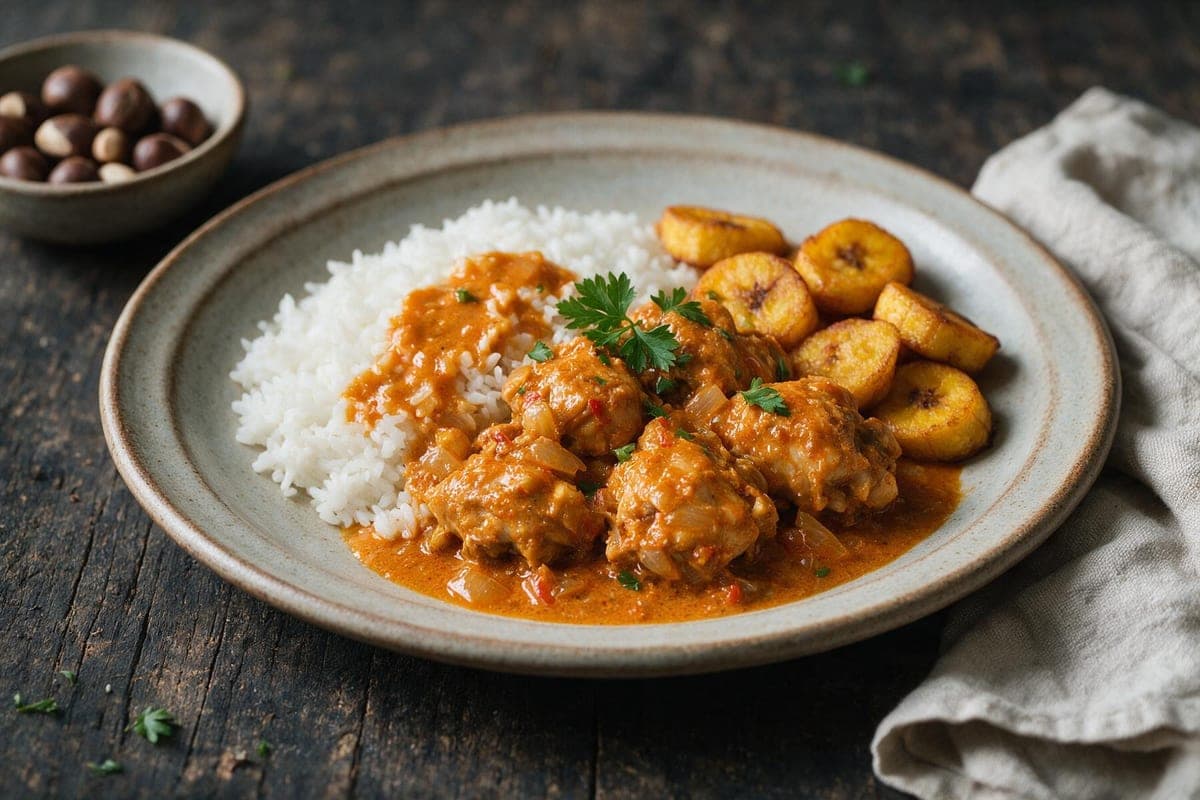
Gabon's national dish: chicken simmered in a thick, orange palm-nut sauce with onion, garlic and chile, served with rice and fried plantain in about an hour.
- Prep
- 15 min
- Cook
- 45 min
- Total
- 60 min
- Serves
- 2 adults + 1 child, with sauce left over
- Budget
- $18–$28
Poulet nyembwe is chicken cooked in nyembwe, the sauce made from the pulp of oil-palm fruit: thick, deep orange, savory and faintly sweet, with a flavor somewhere between tomato and roasted squash and a richness all its own. The chicken, traditionally smoked first over a wood fire, simmers in the sauce with onion, garlic, a chile and often a little dried fish until tender and glossy. It is eaten with boiled plantain, cassava sticks or rice. This version uses canned palm-nut cream from an African market, a smoked-paprika shortcut for the smoke, and rice and fried plantain alongside.
Why it's on our list
Gabon is a country I know almost nothing about at the table, and poulet nyembwe is the one dish every source agrees on: French Wikipedia calls it the national dish, cooked across all nine provinces. What I want to learn is palm-nut sauce itself. It is the backbone of cooking from Ghana to Angola (moambe in the Congos, banga soup in Nigeria, sauce graine in Côte d'Ivoire), and I have never cooked with it; a can of palm-nut cream is a cheap ticket into a whole region of flavors. It is weeknight-feasible because the can does the work that would otherwise mean boiling and pounding palm fruit, leaving a simple forty-five-minute braise. The chile stays whole, so the sauce is rich rather than hot, and my son's plate gets plantain, rice and the mildest pieces.
Field notes · Origin & culture
Nyembwe is the sauce made from the pulp of the African oil palm's fruit; English Wikipedia explains that the word comes from Myene, a Gabonese coastal language, where it means palm oil, and that nyembwe chicken, poulet nyembwe or poulet gnemboue in French, is "considered a national dish of Gabon." Traditionally the palm nuts are boiled, pounded and strained, and canned substitutes labeled sauce graine or noix de palme are an accepted shortcut. Gabonese cooking leans on cassava in many forms, plantain, river and ocean fish, and forest ingredients like odika, the wild-mango-seed paste sometimes called indigenous chocolate; a smoked chicken is the preferred start for nyembwe, which is why Gabonese cooks abroad often reach for smoked meat. Proportions of chile, onion and dried fish vary by household and province, so this is one supermarket-friendly version.
Noteworthy ingredients
- Canned palm-nut cream (sauce graine / noix de palme): The only specialty item, in 28-oz cans at African markets and online under brands such as Ghana Fresh, Trofai and Praise. There is no true substitute; tomato, peanut butter and red palm oil make a pleasant stew but not nyembwe, so I'd wait for the can.
- Bone-in chicken thighs: Stand in for a whole cut-up chicken. Smoked chicken or smoked turkey drumsticks are closer to the traditional bird; with smoked meat, skip the browning.
- Smoked paprika or liquid smoke: A pinch hints at the wood-fire flavor of the traditional smoked chicken.
- Dried shrimp or smoked fish (optional): A spoonful adds the savory depth many Gabonese cooks expect. Fish sauce is a fair substitute.
- Plantains: Ripe, black-spotted for frying; green for boiling, which is also traditional.
Prep — 15 min
- Pull the skin off the chicken thighs. Season with 1 teaspoon salt, black pepper and the smoked paprika.
- Dice the onions. Mince the garlic. Leave the chile whole. Crumble the bouillon cube into 1 cup hot water.
- Open the palm-nut cream and stir it; separated solids and oil are normal.
- Peel the plantains and slice on a diagonal 1/2 inch thick.
- Start the rice: rinse 1 1/2 cups rice and cook with 2 1/4 cups water and a pinch of salt by the package timing.
Cook — 45 min
- Heat 2 tablespoons oil in the Dutch oven over medium-high heat. Brown the chicken 3–4 minutes per side and move it to a plate.
- Lower the heat to medium, add the onions with a pinch of salt and cook 6 minutes until soft. Add the garlic and stir 1 minute.
- Pour in the palm-nut cream and the bouillon water, add the bay leaf, the whole chile and the dried shrimp or fish sauce if using, and stir until smooth. Bring to a simmer.
- Return the chicken to the pot, pushing it under the sauce. Partially cover and simmer over medium-low heat 35–40 minutes, stirring every 10 minutes and scraping the bottom, until the chicken is tender and reaches 165°F and the sauce is the consistency of a loose tomato sauce with orange oil shining on top. Too thick, add a splash of water; too thin, uncover for the last 10 minutes.
- While the chicken finishes, heat 1/3 cup oil in the skillet over medium-high heat and fry the plantain slices 2–3 minutes per side until golden; drain and salt lightly.
- Remove the bay leaf and the chile. Season the sauce with salt, black pepper and a squeeze of lemon. Skim some surface oil if you prefer a lighter plate; Gabonese cooks would leave it.
Serving
Spoon rice onto plates, set the chicken beside it and ladle plenty of nyembwe over both, with fried plantain on the side and parsley on top; in Gabon the starch might be boiled plantain or bâton de manioc. The sauce as written is mild, so my son's plate is the same as ours, with the softened chile on a saucer for adults to mash in. Leftovers keep three days and the sauce thickens in the fridge; reheat gently with a few spoonfuls of water. Extra nyembwe is excellent over rice with a fried egg.