Dinner night · Gambia
Domoda with Rice
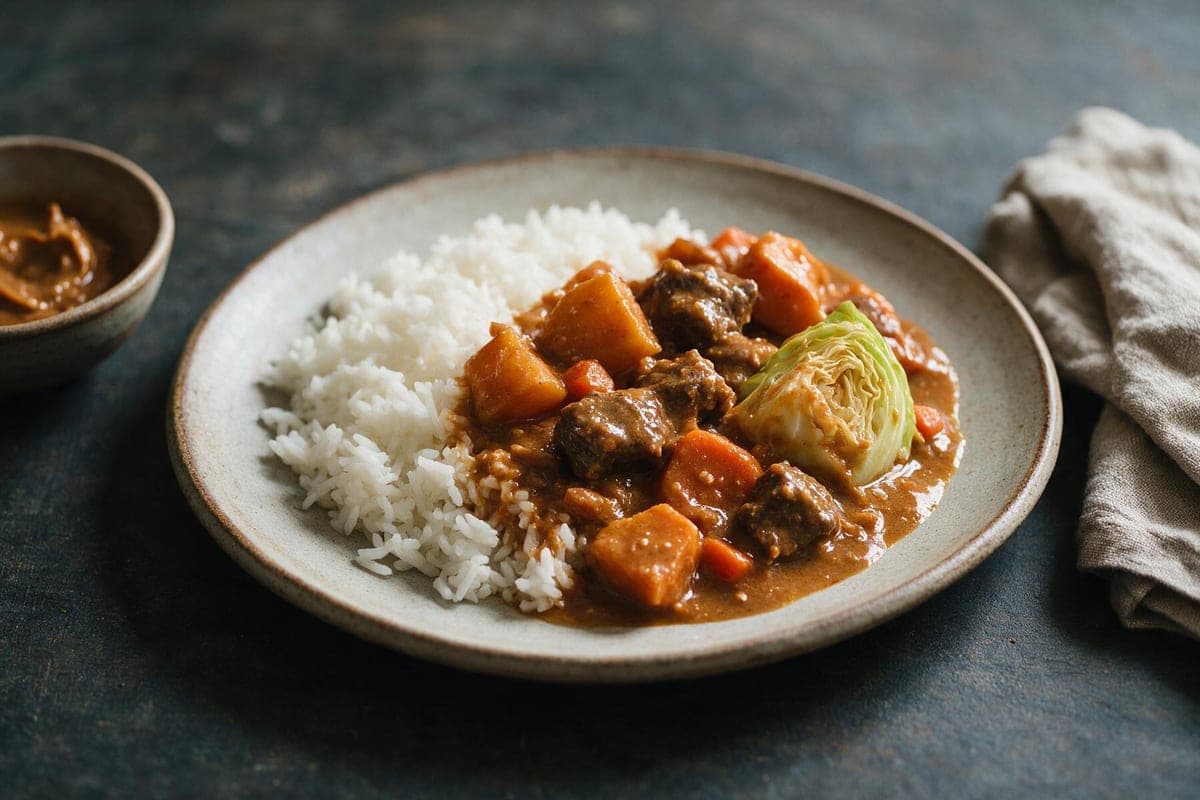
Gambia's national peanut stew: beef, tomato, sweet potato and cabbage simmered in a peanut-butter gravy until thick and glossy, over white rice.

- Prep
- 15 min
- Cook
- 55 min
- Total
- 70 min
- Serves
- 2 adults + 1 child, with a generous bowl left over
- Budget
- $15–$24
Domoda is a peanut stew, and the peanut is not a garnish: a thick paste of groundnuts is whisked into a tomato broth and simmered with meat and vegetables until the sauce turns the color of terracotta and coats everything like a gravy. The Gambian version uses whatever is on hand, often beef or chicken, with sweet potato or pumpkin, carrots and cabbage, sharpened at the end with lemon juice and a whole chile that perfumes the pot without setting it on fire. It is served over plain white rice. This recipe uses beef chuck, natural peanut butter and supermarket vegetables, and it comes together in one pot.
Why it's on our list
Peanut stews run all along West Africa and I want to learn the Gambian one, because groundnuts are Gambia's main crop and this is the dish the country calls its own. The technique I want to understand is how to cook peanut butter into a sauce without it splitting or scorching: thinning it first, adding it to a simmering pot, and keeping the heat low while it thickens. I also want a dish where sweet potato and cabbage are cooked into the stew, which is how I think I can get more vegetables into my son without a negotiation. It is weeknight-feasible because the browning is brief, the stew simmers on its own for 40 minutes, and everything goes into one pot with rice on the side.
Field notes · Origin & culture
Domoda is widely described as the national dish of Gambia: a stew of concentrated peanut paste with meat or fish, onion, tomato and tomato paste, potatoes or sweet potatoes, carrots, cabbage and lemon juice, served with white rice. Groundnuts have long been Gambia's main export crop, and the stew is the everyday expression of that; the closely related Senegalese version is mafé, and households differ in vegetables, meat and sourness. Gambian cooking draws on Mandinka, Wolof, Fula and Jola traditions, and its other signature dishes, benachin (one-pot rice), yassa (lemon-and-onion marinated chicken or fish) and superkanja (okra stew), share the same pantry of peanuts, tomatoes, lemon and chile. Domoda is made with chicken, beef, lamb or fish depending on the day, so this beef version is one of several equally traditional choices.
Noteworthy ingredients
- Natural unsweetened peanut butter: The stand-in for pounded groundnut paste. Buy the kind whose only ingredients are peanuts and salt; sweetened, emulsified peanut butter makes the stew taste like dessert. About 3/4 cup.
- Sweet potato or pumpkin: The soft, sweet element that balances the peanut. Orange sweet potato is the easiest; butternut squash works too.
- Beef chuck: Cut into 1-inch cubes; it needs the full simmer to go tender. Boneless chicken thighs are a faster alternative that cuts 15 minutes off the cook time.
- A whole hot chile: Gambian cooks drop in a whole fresh chile that stays intact and is removed before serving; the stew tastes of its warmth without real heat. A habanero gives the most authentic aroma; a jalapeño is milder.
Prep — 15 min
- Pat the beef dry and season with salt and pepper.
- Dice the onion. Mince the garlic. Dice the tomatoes. Peel the sweet potato and cut into 1-inch chunks. Peel and slice the carrots into thick coins. Cut the cabbage into 2-inch wedges, leaving a bit of core so they hold together.
- Whisk the peanut butter with 1 cup warm water in a bowl until smooth and pourable; this prevents lumps.
- Rinse the rice and set up the rice pot with 2 1/4 cups water and a pinch of salt. Make the hibiscus drink base now if you have not already (see Drink Pairings).
Cook — 55 min
- Heat the oil in the Dutch oven over medium-high. Brown the beef in two batches, 3–4 minutes each, and move to a plate.
- Lower the heat to medium, add the onion with a pinch of salt, and cook 5 minutes until soft. Stir in the garlic and tomato paste and cook 1 minute, then add the tomatoes and cook 4 minutes until jammy.
- Return the beef, add 3 cups stock (or water with the bouillon cube), the bay leaf and the whole chile, and bring to a simmer. Cover and cook gently 25 minutes.
- Pour in the thinned peanut butter, stirring until the broth turns uniformly orange-brown. Add the sweet potato and carrots, re-cover, and simmer 15 minutes, stirring every few minutes so the peanut sauce does not catch on the bottom.
- Tuck in the cabbage wedges, cover, and cook 10 minutes more, until the beef is tender, the sweet potato yields to a fork and the sauce is thick enough to coat a spoon. If it is too thick, loosen with a splash of water; if thin, simmer uncovered a few minutes.
- Start the rice when the sweet potato goes in: bring to a boil, cover, cook 15 minutes on the lowest heat and rest 5. Remove the chile and bay leaf from the stew. Season with salt, pepper and the juice of half the lemon; it should taste rich, a little sour and barely warm with chile.
Serving
Spoon rice onto each plate and ladle the domoda over one side, making sure each person gets beef, sweet potato, carrot and a wedge of cabbage, with plenty of sauce soaking into the rice. Lemon wedges go on the table. Because the chile cooked whole and came out, the stew is gentle enough that my son gets the same bowl we do; adults who want more can mash a little of the chile into their portions. Leftover domoda is better the next day and keeps four days; it thickens in the fridge and loosens with a splash of water. It freezes well.