Dinner night · Ghana
Ghanaian Jollof Rice with Chicken
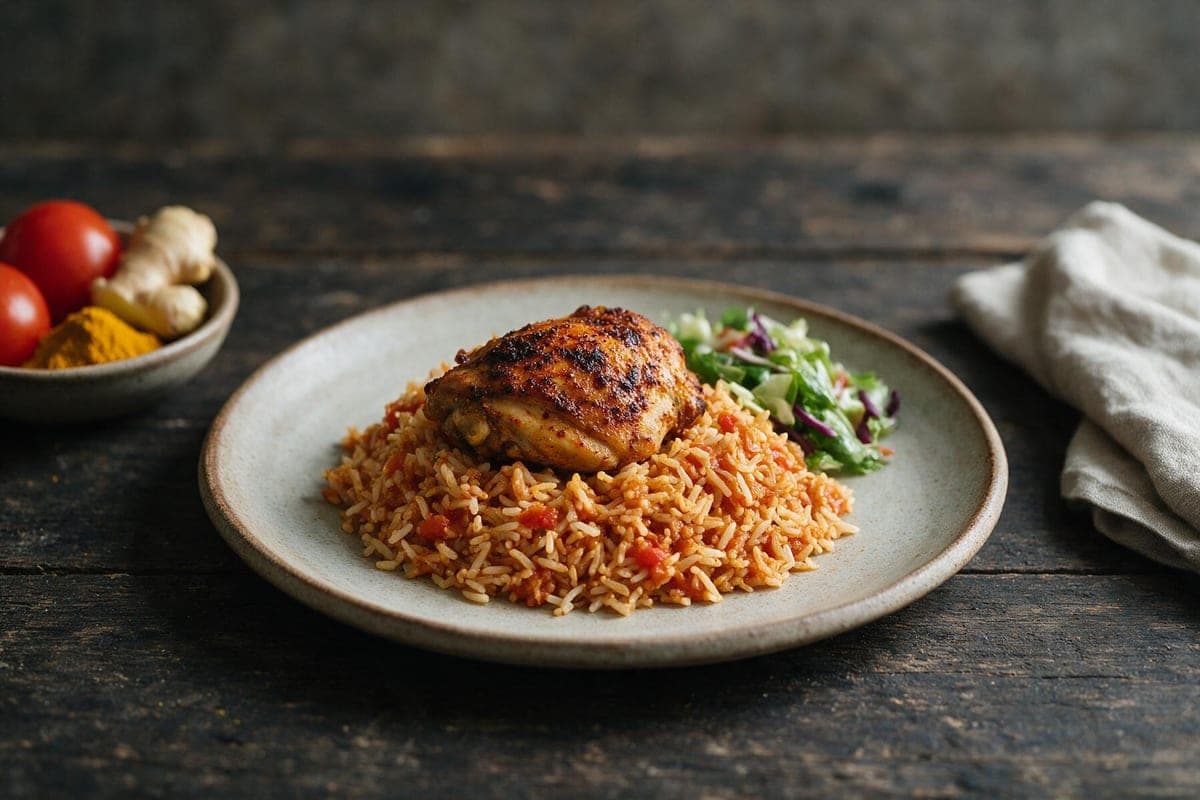
The Ghana side of the jollof debate: jasmine rice steamed in a blended tomato-ginger-curry stew, with oven-roasted spiced chicken and a cool salad.

- Prep
- 20 min
- Cook
- 50 min
- Total
- 70 min
- Serves
- 2 adults + 1 child, with plenty of rice left over
- Budget
- $16–$25
Jollof is rice cooked in a tomato stew until every grain is stained orange-red and tastes of the sauce. The Ghanaian version starts with a blended base of tomatoes, onion, ginger, garlic and chile, fried down with tomato paste and a spoonful of curry powder until it darkens, then thinned with chicken stock; jasmine rice goes in and steams, covered, with bay leaves and thyme. Meanwhile, chicken thighs rubbed with the same spices roast on a sheet pan, and a simple salad of lettuce, cucumber and tomato goes on the side, as at Ghanaian parties. The rice is fragrant and gently warming rather than hot.
Why it's on our list
Jollof is probably the most famous dish in West Africa, and the friendly feud over whose version is best, Ghana's or Nigeria's, is half the fun of cooking it. I want the Ghanaian version specifically because its differences are concrete: jasmine rice rather than parboiled, a blended tomato base, ginger and curry powder in the stew. The technique I want to nail is steaming the rice in the sauce without it turning mushy or scorching, which is what every jollof cook argues about. It is weeknight-feasible because the base is a blender job, the rice cooks covered and unattended, and the chicken roasts beside it. And it is party food, so it should make an ordinary Tuesday feel celebrated.
Field notes · Origin & culture
Jollof rice takes its name from the Wolof people and the Jolof Empire, which ruled parts of present-day Senegal and Gambia from around the fourteenth century; the Senegalese thieboudienne is generally considered its ancestor, and one popular account credits a Saint-Louis cook named Penda Mbaye with the rice-and-tomato version, though historians treat that as tradition rather than record. The dish spread along the coast and is now cooked across West Africa, each country insisting on its own version. Ghanaian jollof is typically made with jasmine or basmati rice, a blended tomato-pepper-onion base, ginger, garlic and spices such as curry powder, and is served with fried or grilled chicken, beef or fish, a salad, fried plantain, and often shito. The social-media "jollof wars" between Ghana and Nigeria, which took off in the mid-2010s, have made the dish a point of national pride on both sides.
Noteworthy ingredients
- Jasmine rice: The grain most Ghanaian cooks reach for; basmati is the other common choice. Rinse until the water runs nearly clear so the grains do not clump.
- Tomato paste plus fresh tomatoes: Both. The paste is fried until it darkens, which is where jollof's deep color and savory edge come from; the fresh tomatoes are blended into the base.
- Curry powder: A mild yellow curry powder (McCormick is fine) is a standard Ghanaian jollof seasoning, used modestly as a background note.
- Scotch bonnet or habanero: Ghanaian jollof is usually noticeably hot. This version puts the chile in whole for aroma and keeps the heat at the table; blend half a chile into the base if your household wants warmth in the rice itself.
- Shito (optional): Ghana's smoky, oily, hot chile-and-dried-fish condiment, sold in jars at African groceries and online. A teaspoon on an adult plate is traditional. Hot sauce is the stand-in.
Prep — 20 min
- Heat the oven to 425°F. Pat the chicken dry. Grate 1 teaspoon of the ginger and mince 1 garlic clove; mix with 1 tablespoon oil, 1 teaspoon salt, 1/2 teaspoon curry powder, the paprika and black pepper, and rub over the chicken. Set on a foil-lined sheet pan.
- Blend the tomatoes, one onion, the red bell pepper, the remaining ginger and garlic with 1/4 cup water until smooth. You should have about 3 cups of purée.
- Dice the second onion. Rinse the rice in several changes of water and drain well.
- For the salad, tear the lettuce, slice the cucumber and cut any remaining tomato into wedges; keep cold.
Cook — 50 min
- Put the chicken in the oven and roast 35–40 minutes until the skin is browned and the thickest piece reads 165°F. It can rest while the rice finishes.
- Heat 3 tablespoons oil in a Dutch oven over medium. Cook the diced onion with a pinch of salt 5 minutes until soft. Add the tomato paste and fry, stirring constantly, 3 minutes until it turns brick red and smells toasty rather than raw.
- Pour in the blended tomato base. Add the remaining 1 teaspoon curry powder, the bay leaves and thyme. Cook over medium, stirring often, 12–15 minutes, until the stew has thickened, darkened to deep red-orange, and the oil has begun to separate at the edges. This reduction is what makes jollof taste like jollof; do not rush it.
- Stir in the stock and 1 1/2 teaspoons salt; the liquid should taste well seasoned, since the rice will absorb it. Add the rice and the whole chile and stir once. Bring to a boil, then cover tightly (foil under the lid helps), lower the heat to the minimum, and cook 20 minutes without stirring.
- Scatter the frozen vegetables over the top if using, replace the lid and cook 5 minutes more. Turn off the heat and rest 10 minutes. Remove the chile, bay leaves and thyme stems, then fluff from the bottom; a slightly toasted layer at the base is prized, not a mistake.
- Dress the salad with lime or lemon, a drizzle of oil and salt just before serving.
Serving
Mound jollof on each plate with a piece of chicken on top and the salad alongside. Adults get a teaspoon of shito or a shake of hot sauce beside the rice; my son's plate stays as it comes from the pot, which as written is only gently warm. Jollof is one of the great leftovers: it keeps four days and reheats well in a covered skillet with a tablespoon of water, and cold jollof with a fried egg is a legitimate Ghanaian breakfast.