Dinner night · Guinea
Guinean Riz Gras with Chicken
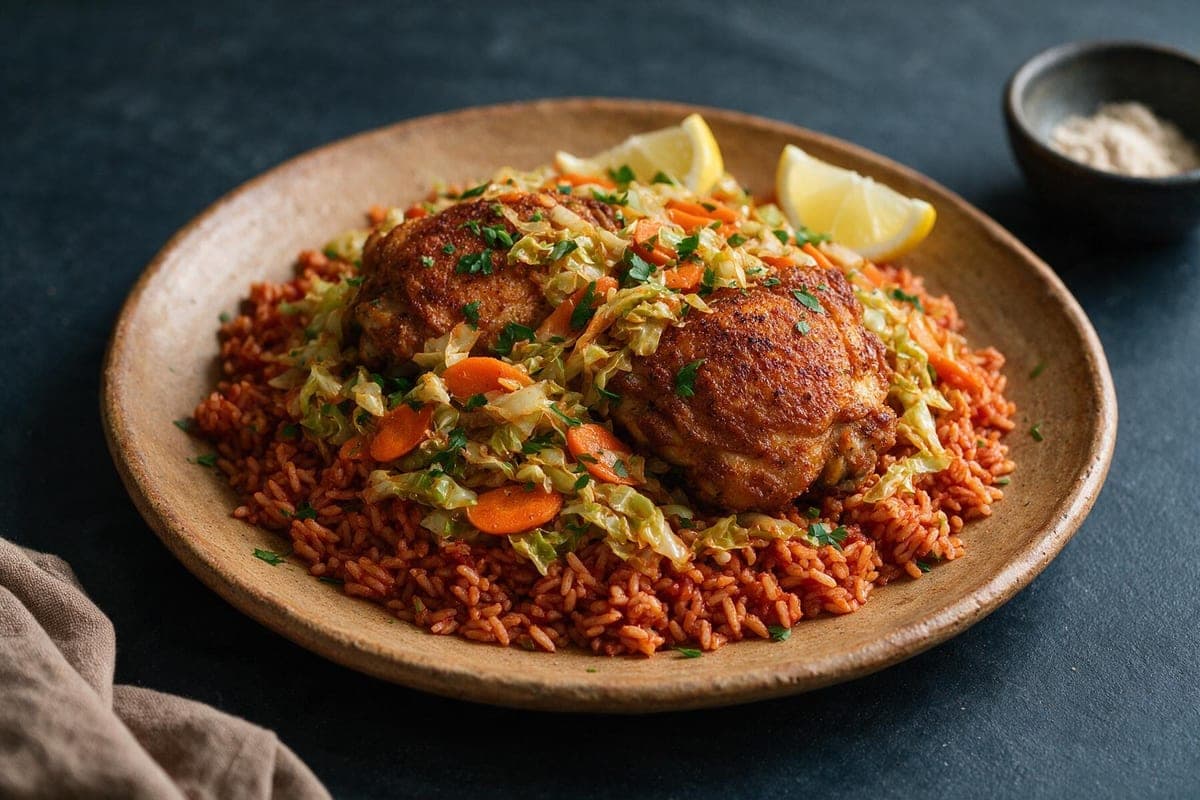
One-pot tomato rice cooked in the pan with browned chicken thighs and vegetables, Guinea's everyday celebration dish, done in about an hour.

- Prep
- 20 min
- Cook
- 45 min
- Total
- 65 min
- Serves
- 2 adults + 1 child, with rice left for lunch
- Budget
- $16–$24
Riz gras, literally "fat rice," is the one-pot tomato rice of Francophone West Africa: chicken browned in oil, a sauce built from onion, garlic, tomato and tomato paste, and then the rice cooked right in that sauce so every grain turns orange-red and savory. Carrots, cabbage and a whole chile usually simmer alongside, soaking up the broth. The chicken goes back on top at the end. It is the dish Guinean families cook for a Sunday or a guest, and it is built entirely from supermarket ingredients.
Why it's on our list
Riz gras is the plainest route into a cuisine I know too little about. Guinea's food leans on rice more than almost any country in the region, and this is the dish Guineans themselves name when asked what to cook for company. The technique I want to learn is cooking rice in a reduced tomato sauce rather than water: knowing how much liquid to add, and when to leave the pot strictly alone, carries over to jollof, thieboudienne and Spanish rice. It is weeknight-feasible because it is one pot with the work front-loaded; once the lid goes on there are twenty quiet minutes. The whole chile floats in the pot uncut, which is how I'd keep a gentle version for my son and a hotter plate for me.
Field notes · Origin & culture
Riz gras belongs to the family of West African rice dishes cooked in a tomato-and-onion base, a lineage that includes Senegal's thieboudienne and the jollof rice of Ghana and Nigeria; French Wikipedia traces the family to the Wolof empire and lists Guinea among the countries where riz gras is a staple, alongside Senegal, Burkina Faso, Benin and Togo. In Guinea it is often made with beef or chicken, and sometimes with fish on the coast, and it appears at weddings, baptisms and holiday meals as well as in everyday restaurants. Guinea's regions, from the Atlantic coast to the Fouta Djallon highlands and the forest southeast, each have their own sauces, but rice is the common thread. Household versions of riz gras vary in vegetables and heat, so this is one practical version, not the definitive one.
Noteworthy ingredients
- Tomato paste: Riz gras gets its color and depth from a generous amount of paste fried until it darkens. Use a 6-ounce can.
- Maggi or bouillon cubes: West African home cooking uses them freely; they are the flavor that makes riz gras taste like itself. Any chicken bouillon cube works; cut the added salt accordingly.
- Parboiled or long-grain rice: Parboiled rice is traditional and forgiving; jasmine works but cooks faster and softer. Rinse either until the water runs mostly clear.
- A whole habanero or Scotch bonnet: Dropped into the pot whole, it perfumes the rice with almost no heat. Chop it only if you want fire.
- Green cabbage and carrots: The usual vegetables; some cooks add eggplant or cassava. They come out soft and sweet.
Prep — 20 min
- Pat the chicken dry. Season with 1 teaspoon salt, the black pepper, thyme and the juice of half the lemon. Let it sit while you cut vegetables.
- Roughly chop one onion and the tomatoes with 2 garlic cloves; blend to a coarse purée, or chop very fine by hand if you prefer texture.
- Slice the second onion thin. Mince the remaining garlic. Dice the bell pepper. Peel the carrots and cut into 2-inch batons. Cut the cabbage into 2 wedges, keeping the core so they hold together.
- Rinse the rice in a sieve under cold water until the water runs mostly clear. Drain well.
- Crumble the bouillon cubes into 3 1/2 cups hot water and stir to dissolve.
Cook — 45 min
- Heat the oil in the Dutch oven over medium-high heat. Brown the chicken skin-side down for 6 minutes, turn and brown 3 minutes more. Move to a plate. The chicken will finish in the pot later.
- Lower the heat to medium. Add the sliced onion and bell pepper and cook 5 minutes until soft. Add the minced garlic and the tomato paste and stir constantly for 3–4 minutes until the paste darkens to brick red and smells sweet; this step is where the dish's flavor comes from.
- Pour in the tomato-onion purée and the bay leaves. Simmer 8–10 minutes, stirring now and then, until it thickens and the oil shows at the edges.
- Add the bouillon water, the carrots and cabbage wedges, and the whole chile. Nestle the chicken back in. Bring to a simmer, cover, and cook 15 minutes.
- Lift out the chicken, cabbage and carrots to a plate and cover with foil. Taste the sauce; it should be a little strong, because the rice will absorb it. You want about 3 1/2 cups of liquid in the pot; add hot water if needed.
- Stir in the rice, bring back to a boil, then cover tightly and drop the heat to the lowest setting. Cook 18–20 minutes without lifting the lid. Turn off the heat and let it stand 10 minutes, then fluff; a crusty bottom layer is prized.
- While the rice rests, return the chicken to a 425°F oven for 8 minutes to crisp the skin and ensure it reaches 165°F.
Serving
Spoon the red rice onto a platter, pile the chicken, cabbage and carrots on top, and squeeze the rest of the lemon over everything; chopped parsley is a common finish. Set the cooked chile on a saucer for anyone who wants to mash a little into their plate; the rice itself is mild, so my son's bowl is the same as ours without it. Leftover riz gras keeps three days and reheats well in a covered skillet with a splash of water, and is good cold with a fried egg the next morning.