Dinner night · Guyana
Guyanese Chicken Curry with Roti
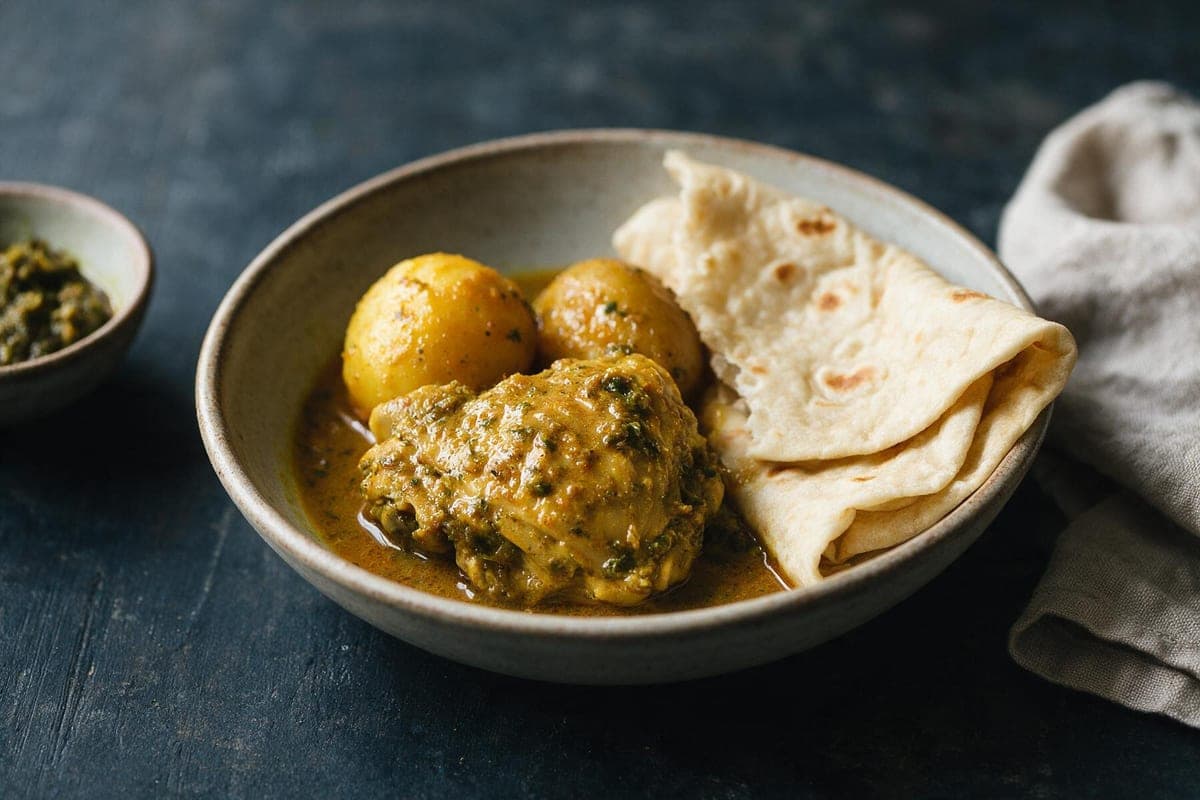
The Indo-Guyanese standard: chicken marinated in green seasoning, cooked in a fried curry-powder paste with potatoes until the gravy is thick and golden, with soft homemade sada roti for tearing and scooping. About 75 minutes.
- Prep
- 25 min
- Cook
- 50 min
- Total
- 75 min
- Serves
- 2 adults + 1 child, with curry left for lunch
- Budget
- $12–$18
Guyanese curry is its own thing, neither Indian nor Trinidadian exactly: chicken marinated in a fresh "green seasoning" of scallion, garlic, thyme and cilantro, then cooked in a paste of Caribbean curry powder and cumin fried in hot oil until it darkens and smells toasty (the step Guyanese cooks call bunjal, "burning the curry"). Potatoes soak up the gravy, which cooks down thick and clinging rather than soupy. It is eaten with roti torn by hand; this version uses sada roti, the plain, puffed, griddled flatbread that is the quickest of the Guyanese breads.
Why it's on our list
I want to understand how Indian cooking changed when it crossed an ocean, and Guyanese curry is one of the clearest examples: the spice blend is milder, fresh herbs and a hot pepper replace most of the whole-spice work, and it is one pot in under an hour. The technique I expect to learn is frying the curry paste first, the opposite of how I usually make curry and the step Guyanese cooks insist is the entire difference. The roti is the second lesson; a flatbread that puffs on a dry griddle in a minute is a skill I would use weekly. It is weeknight-feasible because the roti cooks while the curry simmers. The pepper goes in whole and comes out before serving, so my son's portion is mild.
Field notes · Origin & culture
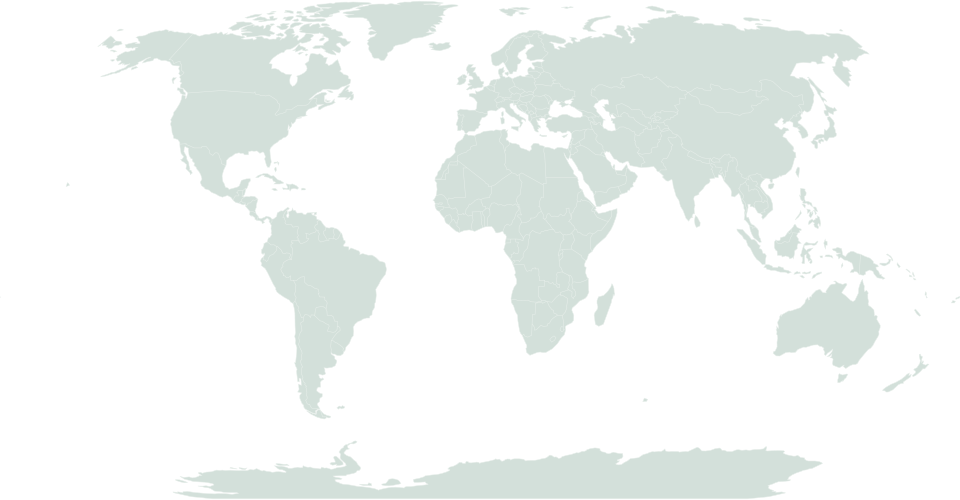
Chicken curry and roti is the central dish of Indo-Guyanese cooking, and Indo-Guyanese people make up a large share of Guyana's population. Indian indentured laborers began arriving in British Guiana in 1838, the year slavery ended there, and by 1917 more than 230,000 had come, most from what are now Uttar Pradesh and Bihar, to work the coastal sugar estates. They brought flatbreads (paratha, dhalpuri, sada roti) and masala blends, which adapted over generations to Caribbean ingredients: wiri wiri peppers, thyme, scallion, coconut. Guyanese curry powder is milder than most Indian blends and heavy on turmeric, coriander and cumin. Curry and roti is now eaten across every community in Guyana and in the diaspora in New York and Toronto.
Noteworthy ingredients
- Caribbean curry powder: Chief, Lalah's or Betapac, from Caribbean groceries or online. Madras-style curry powder is the closest supermarket substitute; add 1/2 teaspoon cumin and a pinch of ground fennel to lean it Guyanese.
- Green seasoning: A fresh paste of scallion, garlic, thyme, cilantro (or culantro) and onion, the universal Guyanese marinade; make extra, it keeps a week.
- Wiri wiri pepper: A tiny, round, very hot Guyanese chile. A Scotch bonnet or habanero left whole in the pot gives aroma without much heat; remove it before it bursts.
- Garam masala and ground cumin (geera): Added at the end for warmth.
Prep — 25 min
- Green seasoning: blend 4 scallions, 4 garlic cloves, the leaves from 4 thyme sprigs, a big handful of cilantro, a quarter of the onion and 2 tablespoons water into a coarse paste. Toss the chicken with 3 tablespoons of it and 1 teaspoon salt; set aside (or refrigerate up to a day).
- Roti dough: whisk 3 cups flour, 2 teaspoons baking powder and 1 teaspoon salt. Add about 1 1/4 cups warm water gradually to make a soft, slightly sticky dough. Knead 3–4 minutes until smooth, rub with oil, cover and rest 20 minutes.
- Peel the potatoes and cut into 1 1/2-inch chunks. Dice the rest of the onion and the tomatoes. Mince the remaining garlic.
- Stir the curry powder and cumin with 1/4 cup water into a thick, pourable paste.
Cook — 50 min
- Heat 2 tablespoons oil in the Dutch oven over medium heat. Cook the onion and garlic 3 minutes. Pour in the curry paste and fry, stirring constantly, 2–3 minutes until it darkens a shade and smells toasted rather than raw; add a splash of water if it sticks.
- Add the chicken and its marinade. Stir to coat and cook, stirring now and then, 8–10 minutes so the chicken browns in the paste.
- Add the tomatoes, potatoes, the whole hot pepper and 1 1/2 cups water, enough to come most of the way up the chicken. Bring to a simmer, cover and cook 25 minutes.
- Uncover and simmer 5–10 minutes more until the potatoes are tender and the gravy coats the chicken. Fish out the pepper. Stir in the garam masala and a squeeze of lime, taste for salt and rest 5 minutes.
- Roti, while the curry simmers: divide the dough into 6 balls and roll each into a thin 8-inch round. Heat the dry skillet or tawa over medium-high. Cook each roti about 1 minute, until bubbles form, flip and cook 1 minute more, then flip again and press gently around the edges with a folded towel so it puffs. Stack in a towel.
Serving
Give everyone a bowl of curry with a piece of chicken and a couple of potatoes under a good ladle of gravy, with roti folded on the side. The Guyanese way is to tear a piece of roti, pinch up chicken and gravy with it and eat with your fingers. With the pepper kept whole and removed, this is a warming curry rather than a hot one, so my son's bowl is the same as ours; the adults can mash the retrieved pepper into their own bowls or add Caribbean pepper sauce. The curry is better the next day and keeps three days; roti reheats in a dry skillet for 30 seconds a side.