Dinner night · Israel
Shakshuka with Pita
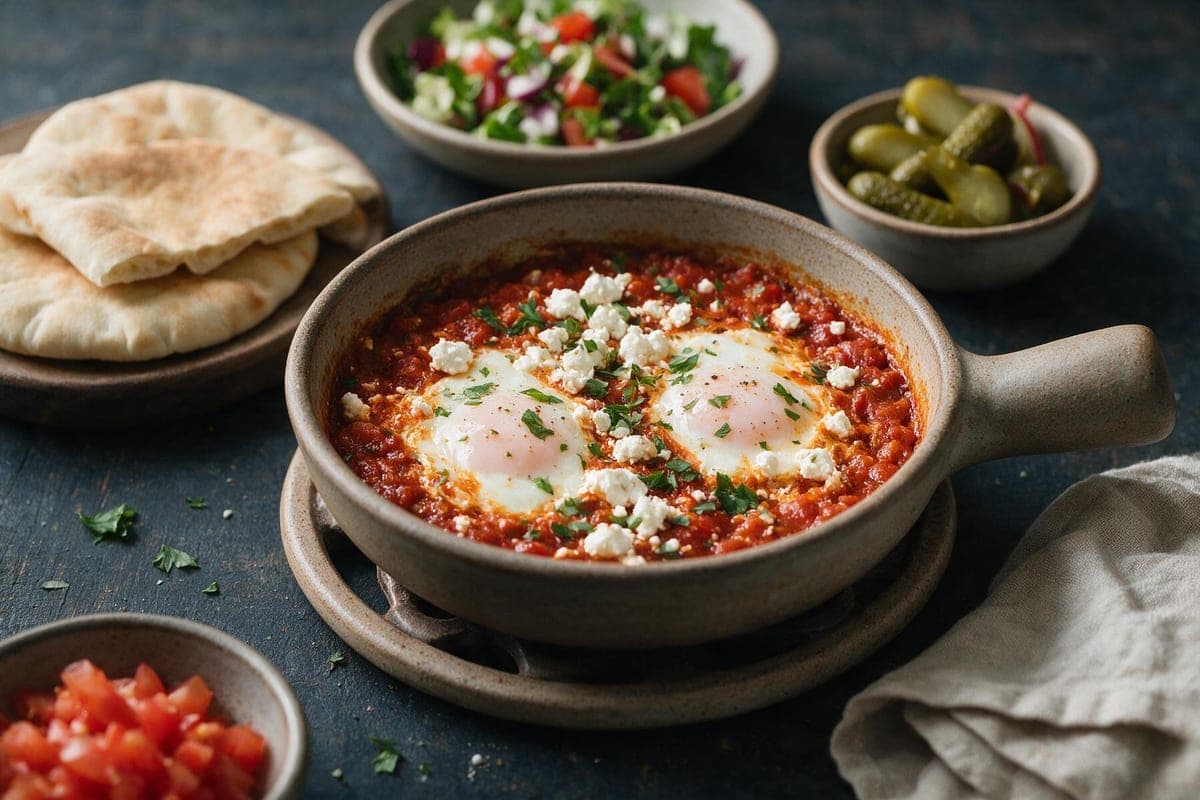
Eggs poached in a skillet of peppery tomato sauce, finished with feta and herbs and eaten with warm pita and chopped salad: a thirty-minute vegetarian dinner from Israel's cafés.

- Prep
- 10 min
- Cook
- 25 min
- Total
- 35 min
- Serves
- 2 adults + 1 child; 6 eggs, two each
- Budget
- $12–$18
Shakshuka is eggs cooked directly in a skillet of simmering tomato and pepper sauce, seasoned with cumin, paprika and garlic, until the whites set and the yolks stay soft. The pan comes to the table and everyone tears pita to scoop up sauce and egg. In Israel it is breakfast, lunch and late dinner, served with chopped salad, pickles and often a crumble of salty cheese. It is cheap, fast, vegetarian and deeply satisfying, and it uses one pan.
Why it's on our list
I want a dinner on our map that costs under fifteen dollars and is done in half an hour, and shakshuka is that dish. It also gives us an egg night, which our chicken-heavy rotation needs. The technique I expect to learn is timing the eggs: cracking them into wells in the sauce, covering the pan, and pulling it the moment the whites turn opaque so the yolks run into the tomato. Heat is simple to manage: the base sauce is just warm with paprika and cumin, and harissa or chile flakes go on the adult portions at the table. Pita, a quick cucumber-tomato salad and something pickled make it a meal rather than a brunch.
Field notes · Origin & culture
Shakshuka's roots are in North Africa, particularly Tunisia and Libya, where eggs cooked in a peppery tomato sauce were everyday working-class food; the name is usually explained as Maghrebi Arabic for "a mixture" or "all shaken up." Jewish families who emigrated from Tunisia and Libya in the 1950s and 1960s brought the dish to Israel, where it was home cooking for decades before becoming a café staple. Its wider fame is often credited to Bino Gabso, whose Jaffa restaurant Dr. Shakshuka, opened in the early 1990s, made the dish a symbol of the city. Today it is one of the dishes most associated with Israeli food, served from breakfast through dinner with pita, tahini, chopped salad and pickles, and it remains just as much a dish of Tunisia, Libya and the wider region.
Noteworthy ingredients
- Canned crushed tomatoes: The base of the sauce out of tomato season. A 28-oz can is right for six eggs; look for one without added herbs. In summer, 2 lb of ripe tomatoes, grated, is better.
- Sweet paprika and cumin: The two seasonings that make it taste like shakshuka rather than Italian eggs. Smoked paprika is a common addition but not traditional; a pinch is fine.
- Feta or Bulgarian cheese: Israeli cafés often finish the pan with crumbled salty white cheese (gvina bulgarit) or a spoon of labneh. Feta is the easy US substitute. Skip it for a dairy-free version.
- Harissa: The Tunisian chile paste, in a tube or jar at Whole Foods and many supermarkets. Stir a teaspoon into the adult half of the pan or serve on the side. Chile flakes are the backup.
Prep — 10 min
- Dice the onion and the bell pepper into 1/2-inch pieces. Mince the garlic. Chop the parsley.
- Make the chopped salad: dice the cucumbers and tomatoes small, toss with 1 tablespoon olive oil, the juice of half the lemon, and a pinch of salt. Set aside.
- Crumble the feta. Crack the eggs into a bowl one at a time to check for shell, or have them ready to crack straight into the pan.
- Heat the oven to 300°F for warming the pita, or plan to warm them in a dry skillet.
Cook — 25 min
- Heat 2 tablespoons olive oil in a 12-inch skillet over medium heat. Add the onion and bell pepper with a pinch of salt and cook 8 minutes, stirring, until soft and beginning to color at the edges.
- Add the garlic, paprika and cumin and stir for 30 seconds until fragrant.
- Pour in the crushed tomatoes, add the sugar, 3/4 teaspoon salt and a little black pepper. Simmer 8–10 minutes, stirring occasionally, until the sauce thickens enough that a spoon dragged through it leaves a track that fills slowly. If it gets too thick, add a splash of water; the eggs need a loose sauce to poach in.
- If anyone wants heat, stir harissa or chile flakes into one half of the pan only.
- Lower the heat to medium-low. Make six wells in the sauce with the back of a spoon and crack an egg into each. Season the eggs with salt. Cover and cook 5–8 minutes, until the whites are set and the yolks are still soft; check at 5 minutes. For firmer yolks, give it 2 minutes more.
- Meanwhile warm the pita in the oven for 5 minutes or 30 seconds per side in a dry pan.
- Scatter the feta and parsley over the pan and bring the whole skillet to the table.
Serving
Set the skillet on a trivet in the middle with the pita, salad and pickles around it, and let everyone spoon out two eggs with plenty of sauce. For my son I will scoop from the harissa-free side and keep the feta to one edge so he can decide. Shakshuka does not reheat well once the eggs are in, so cook only the eggs you will eat; leftover sauce, however, keeps four days and makes the next shakshuka a ten-minute dinner.