Draft preview — not yet published
Dinner night · Japan — Osaka / Kansai
Osaka-Style Okonomiyaki
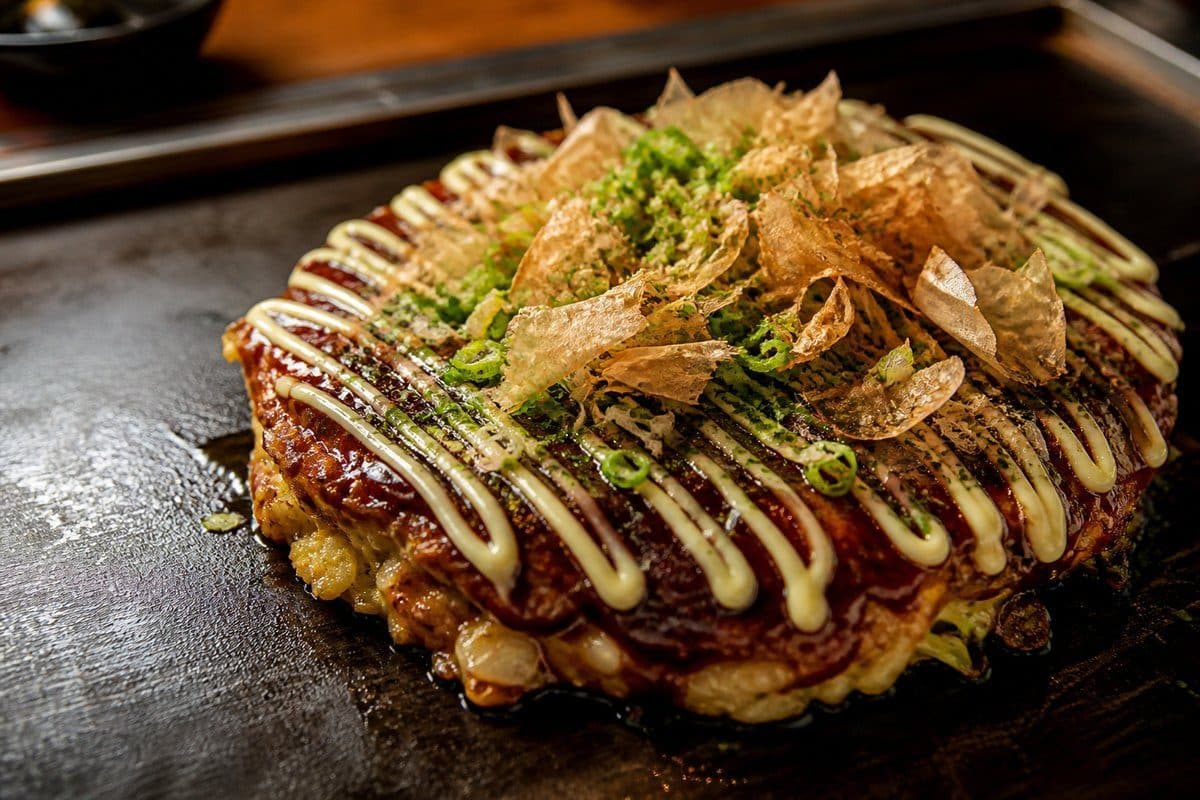
Savory, cabbage-packed Japanese pancakes with crisp edges, a tender center, and a choose-your-own-toppings finish.
- Prep
- 20 min
- Cook
- 20 min
- Total
- 40 min
- Serves
- 2 generously
- Budget
- $18–$28
Okonomiyaki is a griddled savory pancake built around finely sliced cabbage held together with a light egg-and-flour batter. This Osaka-style version uses pork belly or shrimp and finishes with sweet-savory okonomiyaki sauce, creamy Japanese mayonnaise, scallions, and optional bonito flakes. It is crisp outside, soft and steamy inside, and easy to customize at the table.
Why we love it
It turns dinner into a playful cook-and-decorate project without demanding a large menu—well suited to the brief's moderate-low-energy, high-fun Sunday. Tony can add hot sauce or extra scallions, while an 8-year-old can choose milder toppings and help stripe the sauces.
Field notes · Origin & culture
Okonomiyaki is closely associated with Japan's Kansai region, especially Osaka, though many regional forms exist. Its name is often loosely explained as “grilled as you like it,” reflecting the flexible fillings and toppings. Osaka-style okonomiyaki mixes the cabbage and other ingredients into the batter before griddling; Hiroshima-style versions are typically layered and often include noodles.
Noteworthy ingredients
- Okonomiyaki sauce: Find it at H Mart; substitute a mix of 3 tablespoons Worcestershire sauce, 2 tablespoons ketchup, and 1 tablespoon honey or brown sugar. The ketchup is only a component of the finishing sauce, not a tomato-heavy base.
- Kewpie mayonnaise: H Mart or many Walmart locations; regular mayonnaise thinned with a little rice vinegar is a reasonable substitute.
- Bonito flakes and aonori: H Mart. Both are traditional-style finishing options but can be omitted for a child-friendly plate.
- Yuzu juice or syrup: H Mart or Whole Foods; bottled yuzu juice, yuja/yuzu marmalade, or a lemon-lime blend all work in the drinks.
Prep — 20 min
- Finely slice the cabbage; cut long strands once or twice so the pancakes hold together. Thinly slice the scallions, reserving some green tops for serving.
- If using shrimp, pat dry and cut into bite-size pieces. If using pork belly, separate the slices and cut them to fit the pancakes.
- Whisk flour and baking powder in a large bowl. Add dashi, eggs, and soy sauce; whisk just until no large dry pockets remain.
- Fold the cabbage, most of the scallions, and shrimp—if using—into the batter. Do not overmix.
- Set out the sauces and toppings so the pancakes can be served immediately.
Cook — 20 min
- Heat a large lightly oiled skillet or griddle over medium heat.
- Spoon half the cabbage mixture into a thick 6- to 7-inch round. Press only enough to shape it; do not compact it flat.
- If using pork belly, lay half the slices across the top. Cover and cook for 5–6 minutes, until the bottom is browned and the pancake is beginning to set.
- Use two spatulas to flip the pancake confidently. Cover and cook another 5–6 minutes, until the pork is cooked and the center reaches 160°F.
- Flip once more and cook uncovered for 1 minute to re-crisp the first side. Transfer to a plate and repeat with the remaining batter.
- Brush or drizzle with okonomiyaki sauce, stripe with mayonnaise, and finish with scallions plus optional bonito, aonori, and pickled ginger.
Serving
Serve each pancake whole and cut it into wedges at the table. Keep bonito flakes, pickled ginger, and hot sauce off the child's portion unless requested; extra mayonnaise or plain cucumber makes an easy cooling side. Leftovers keep refrigerated for up to 2 days and reheat best in a lightly oiled skillet or air fryer at 350°F until hot and re-crisped.