Dinner night · Kyrgyzstan
Kyrgyz-style Lagman with Beef and Peppers
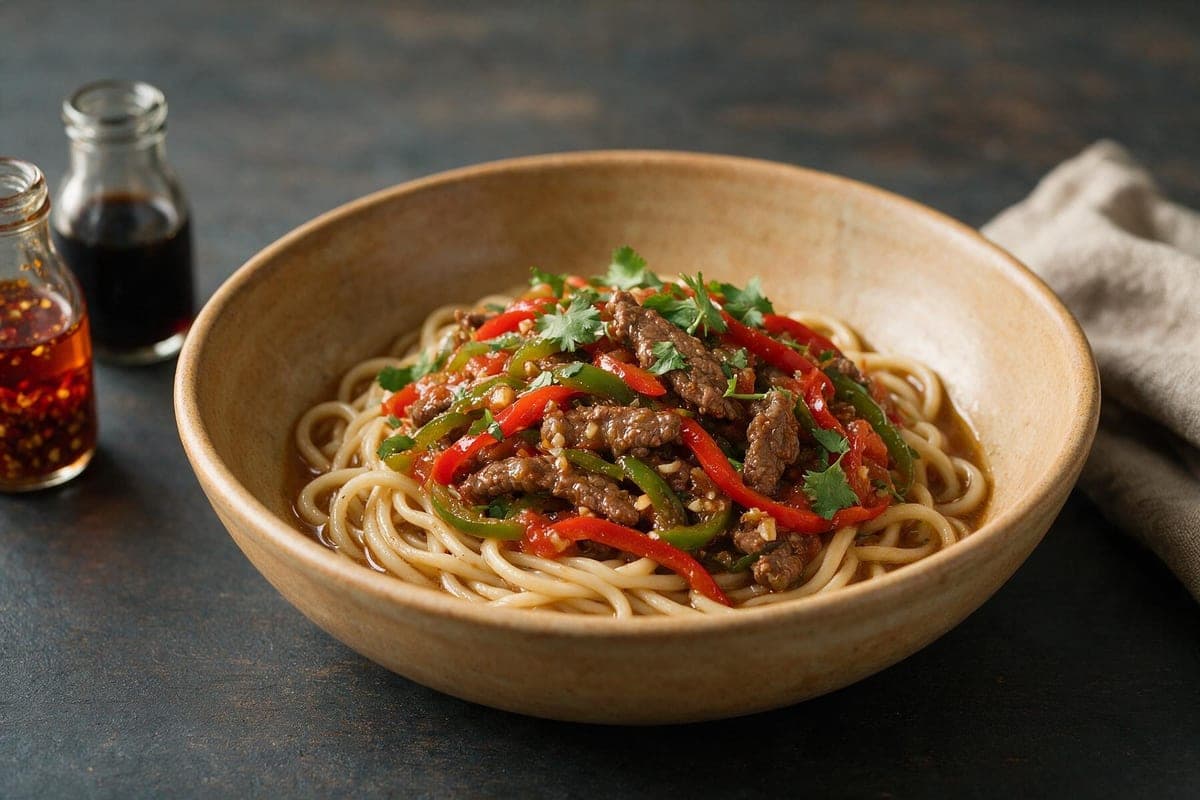
Thick wheat noodles under a glossy stir-fry of beef, peppers, tomato and garlic in a cumin-scented broth: Bishkek's favorite bowl, made with store-bought noodles so it fits a weeknight.

- Prep
- 20 min
- Cook
- 30 min
- Total
- 50 min
- Serves
- 2 adults + 1 child, with a bowl left over
- Budget
- $17–$26
Lagman is a bowl of thick, chewy wheat noodles topped with a saucy stir-fry called vaja or sai: strips of beef cooked hard and fast with onion, bell pepper, celery, tomato, garlic and cumin, then loosened with a little stock so it sits between a sauce and a soup. The traditional noodles are hand-pulled, which takes real practice. This version uses fresh or dried Asian wheat noodles from the supermarket, keeps the stir-fry authentic, and finishes with vinegar and chile oil on the side. It is a knife-and-wok dinner done in under an hour.
Why it's on our list
Kyrgyzstan is the mountain country of Central Asia, and its food is mostly meat, dough and dairy. Lagman is the dish I see in every description of eating in Bishkek, and the one that looks most like something I can do on a Tuesday. The technique I want to learn is the Central Asian stir-fry: a very hot pan, meat cut thin against the grain, vegetables added in strict order so each keeps its bite, and a quick broth deglaze at the end. Hand-pulled noodles are a skill for a weekend; on a weeknight I'll buy them. I'll keep my son's bowl free of chile oil and pass it at the table.
Field notes · Origin & culture
Lagman is a Central Asian cousin of Chinese lamian, and the name is usually traced to it. It arrived in what is now Kyrgyzstan and Kazakhstan with the Uyghur and Dungan (Hui) communities, Muslim peoples from western China who settled in the region in the late nineteenth century; both communities claim the dish, and the question of who made it first is genuinely contested. Today lagman is eaten everywhere in Kyrgyzstan, from Dungan restaurants in Bishkek to roadside cafes on the way to Issyk-Kul, and it is considered a national dish of the country's Uyghur and Dungan minorities as much as a Kyrgyz staple. Versions range from soupy (suyuk lagman) to nearly dry and fried (guiru lagman). This recipe sits in between.
Noteworthy ingredients
- Thick wheat noodles: Fresh udon or Shanghai-style thick noodles from the refrigerated case of an Asian grocery are closest to hand-pulled lagman. Dried udon or thick spaghetti work; cook them al dente so they stay chewy.
- Beef for stir-frying: Flank steak or sirloin sliced thin across the grain. Freezing the meat 20 minutes makes thin slicing much easier.
- Ground cumin and whole coriander seed: The seasoning backbone of lagman, with black pepper. Toast and crush the coriander for the most fragrance.
- Celery and bell pepper: Lagman cooks use a lot of celery, often with its leaves, plus green and red peppers. Daikon or green beans are common additions.
- Chile oil or laza: Served at the table rather than cooked in, so each person sets their own heat. Any Chinese chile-garlic oil works.
Prep — 20 min
- Put the beef in the freezer for 20 minutes while you cut vegetables, then slice it as thin as you can across the grain into strips about 2 inches long. Toss with 1 tablespoon soy sauce and a pinch of black pepper.
- Halve and slice the onion. Cut the peppers into strips about the width of the beef. Slice the celery on the diagonal and roughly chop any leaves. Dice the tomatoes. Mince the garlic. If using daikon, cut into matchsticks; if green beans, cut into 1-inch pieces.
- Toast the coriander seed in a dry skillet for a minute until it smells nutty, then crush it with the flat of a knife or in a mortar. Mix with the cumin and paprika.
- Bring a large pot of salted water to a boil for the noodles. Chop the herbs.
Cook — 30 min
- Heat a wok or deep skillet over the highest heat until it just smokes. Add 2 tablespoons oil and the beef in one layer. Leave it alone for a minute to sear, then stir-fry 2 minutes more until browned at the edges but not cooked through. Move to a plate.
- Add the remaining oil, then the onion with a pinch of salt. Stir-fry 2 minutes. Add the celery, daikon or beans if using, and the peppers; stir-fry 3 minutes so they soften slightly but keep their snap.
- Add the garlic, spice mix and tomato paste and stir for 30 seconds until fragrant. Add the diced tomatoes and cook 2–3 minutes until they collapse into a sauce.
- Return the beef and its juices to the pan. Pour in the stock and the remaining soy sauce, bring to a boil, and simmer 4–5 minutes until the beef is tender and the sauce is loose but not watery. Taste; add salt, black pepper and the vinegar.
- Meanwhile cook the noodles according to the package, 2–3 minutes for fresh, 8–10 for dried. Drain and rinse briefly in warm water to keep them from clumping.
Serving
Divide the noodles among deep bowls and spoon the beef, vegetables and broth over the top so the noodles are half-submerged; scatter with cilantro or dill. Put chile-garlic oil and the vinegar bottle on the table; the Kyrgyz habit is a spoonful of each over the bowl. My son's bowl gets no chile, and I'll offer him a fork rather than chopsticks for the slippery noodles. Store leftover noodles and sauce separately in the fridge for up to two days and reheat the sauce with a splash of stock; the noodles can go straight into the hot sauce.