Dinner night · Latvia
Latvian Grey Peas with Bacon
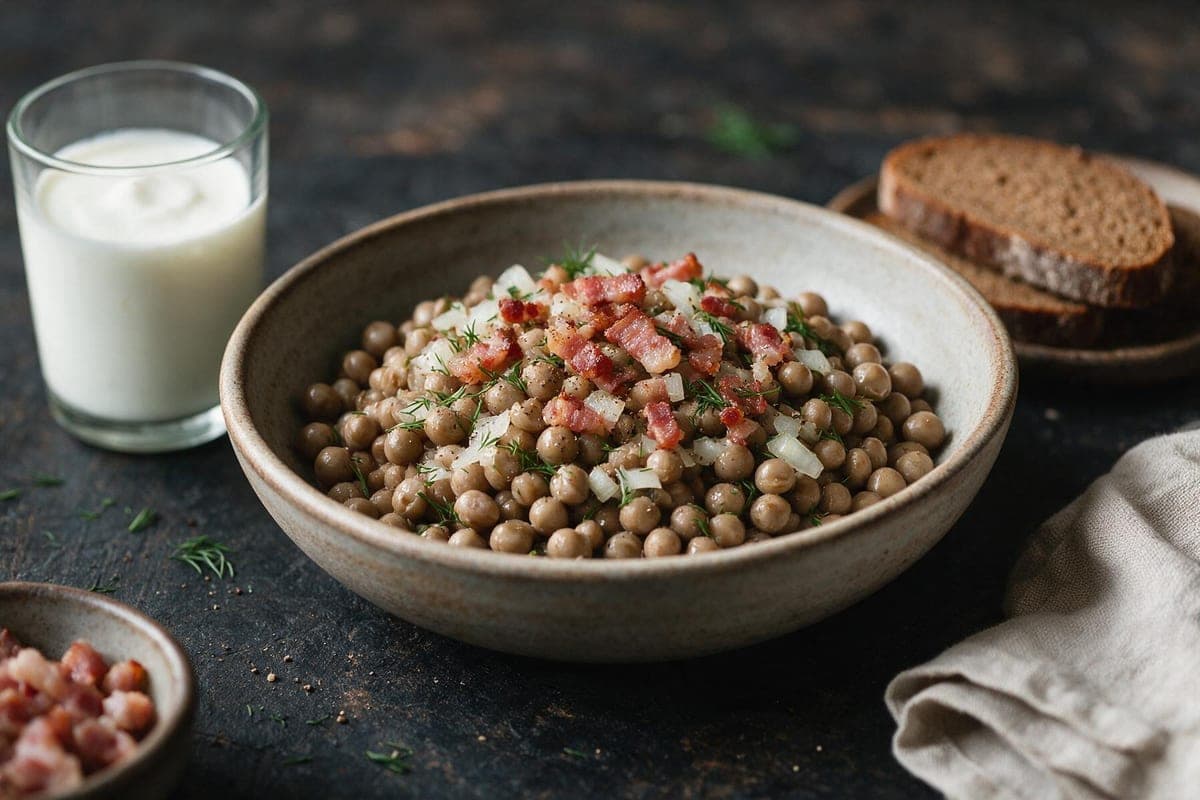
Pelēkie zirņi ar speķi, Latvia's national dish: whole dried peas simmered until tender and topped with crisp bacon and sweet onions, with rye bread and a glass of kefir.

- Prep
- 10 min
- Cook
- 55 min
- Total
- 65 min
- Serves
- 2 adults + 1 child, with leftovers that reheat well
- Budget
- $12–$20
Pelēkie zirņi ar speķi is a bowl of large, nutty grey peas, soaked and simmered until creamy inside but still whole, tossed with cubes of bacon fried crisp and onions softened in the bacon fat. That is the entire dish. It is eaten with thick slices of dark rye bread and, traditionally, a glass of cold kefir or buttermilk alongside. We will serve it with a quick salad of shredded cabbage and carrot to put something fresh on the plate, and with sour cream for anyone who wants it.
Why it's on our list
Beans and peas are a protein the launch collection almost ignored, and this is the most direct version imaginable: a national dish built on a legume, a bit of pork and an onion. What I want to learn is how far a dish this plain can go on technique alone, and whether the famous grey pea, which I have never tasted, is really different from the split peas I know. Honest note: it is weeknight-feasible only if the peas are soaked the night before; after that the pot simmers unattended while the bacon and onion take ten minutes. The canned-chickpea shortcut below is not Latvian, but it gets the idea on the table in half an hour.
Field notes · Origin & culture
Grey peas, a large, mottled brown-grey field pea, have been grown in Latvia since at least the medieval Hanseatic era and are widely described as the country's national dish, with the pea-and-bacon combination tied especially to Christmas Eve. Latvian folk tradition holds that eating peas at Christmas keeps away tears, and brings money, in the coming year. The dish became a national symbol during Latvia's first period of independence in the 1920s and 1930s, when cheap, storable, home-grown ingredients were a point of pride. Rye bread (rupjmaize) and soured dairy such as kefir are the other two pillars of the traditional Latvian table, which is why they are on this plate too.
Noteworthy ingredients
- Grey peas: The real thing, Latvian large grey peas, is sold by Baltic grocers online and occasionally at Eastern European markets in the US. If you find them, soak overnight and simmer 45–60 minutes. The closest supermarket stand-ins are whole dried yellow peas or marrowfat peas (not split peas, which collapse into soup). Canned chickpeas are the fast, non-traditional shortcut: firm, nutty and already cooked.
- Bacon: Thick-cut, cut into 1/2-inch cubes. Smoked slab bacon or pancetta is even closer to Latvian speķis. The fat it renders is the dish's only sauce.
- Dark rye bread: Dense, sour, caraway-flecked Baltic or German rye, sold in most supermarket bakery sections in vacuum packs. It is part of the meal, not a garnish.
- Kefir: Plain, full-fat. Poured into a glass and drunk with the peas, the way Latvians do it; buttermilk is the traditional alternative.
- Onion: Two large ones, cooked slowly until sweet. Do not rush them.
Prep — 10 min
- The night before: rinse the dried peas, cover with plenty of cold water and leave on the counter. They will double in size. (Shortcut: drain and rinse 3 cans of chickpeas and skip to step 4.)
- Drain the soaked peas, put them in a large pot, cover with fresh cold water by two inches, and add the bay leaf. Do not salt yet; salt early can toughen the skins.
- Halve and thinly slice the onions. Cut the bacon into 1/2-inch cubes.
- Shred the cabbage finely and grate the carrot. Toss with 1 tablespoon vinegar, a squeeze of lemon, 1/2 teaspoon salt and a tablespoon of chopped dill; set aside to soften.
- Slice the rye bread. Pour the kefir into a pitcher and put it back in the refrigerator.
Cook — 55 min
- Bring the peas to a boil, skim any foam, then simmer gently, partly covered, for 45–60 minutes until a pea squashes easily between your fingers but the skins are still intact. Add 1 teaspoon salt in the last 10 minutes. Drain, saving a cup of the cooking liquid.
- While the peas simmer, put the bacon in a cold skillet with 1 tablespoon oil and bring it up to medium heat. Cook 8–10 minutes, stirring now and then, until the fat has rendered and the cubes are crisp at the edges. Lift the bacon out with a slotted spoon.
- Add the onions to the bacon fat with a pinch of salt. Cook over medium-low heat 12–15 minutes, stirring occasionally, until deeply soft and golden. Do not let them crisp; they should be sweet and slumped.
- Tip the drained peas into the skillet with the onions and most of the bacon. Toss over medium heat 3–4 minutes with a splash of the reserved cooking liquid so everything is glossy and hot. Season generously with black pepper and salt to taste.
- Shortcut timing: with canned chickpeas, do steps 2 and 3 first, then warm the chickpeas in the onions and bacon fat for 5 minutes with a few spoons of water.
Serving
Spoon the peas into wide bowls and scatter the reserved crisp bacon on top with chopped dill. Put the rye bread, butter, the cabbage salad and the sour cream in the middle of the table and pour everyone a glass of cold kefir, including my son; if kefir is a step too far, cold milk is the family-table version. Black pepper is the only heat in the dish, so there is nothing to set aside for him. Leftover peas keep four days and are traditionally eaten cold or fried again in butter until the skins blister.