Dinner night · Lithuania
Šaltibarščiai with Hot Potatoes
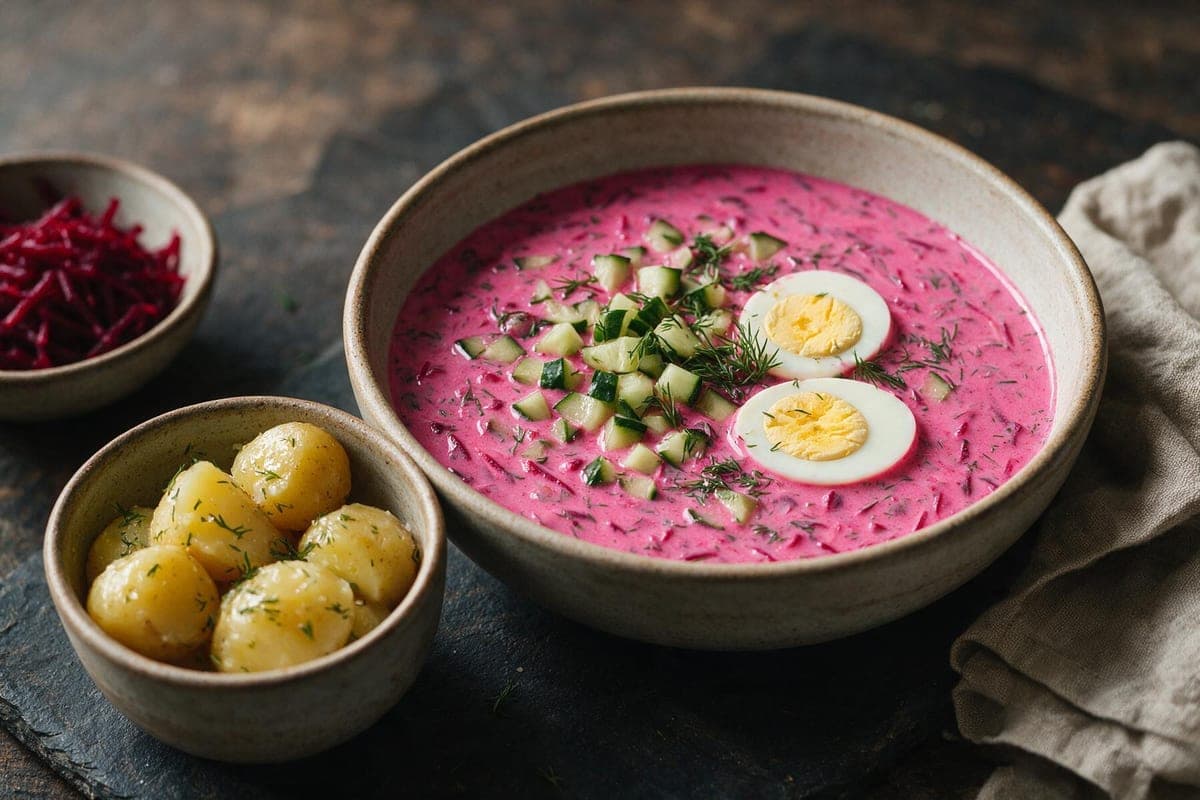
Lithuania's shocking-pink cold beet and kefir soup with cucumber, dill and egg, eaten with a side of hot buttered potatoes: a 25-minute, almost no-cook dinner.

- Prep
- 15 min
- Cook
- 10 min
- Total
- 25 min
- Serves
- 2 adults + 1 child, generous bowls
- Budget
- $12–$18
Šaltibarščiai is a cold soup the color of a highlighter pen: kefir or buttermilk blended with grated cooked beets, then filled out with diced cucumber, scallions, lots of dill and halved hard-boiled eggs. It is served in bowls alongside a plate of hot boiled potatoes, which you eat with a fork between spoonfuls of cold soup; the hot-cold contrast is the point. There is no stove time beyond boiling eggs and potatoes, and the whole thing is vegetarian and gluten-free. It is also, by a wide margin, the most photographed dish in the Baltics.
Why it's on our list
I wanted one dinner on this list that asks nothing of the oven, and a bowl of pink soup is also simply fun to put in front of a child. What I want to learn is whether a cold, tangy, dairy-based soup can really be a full meal, which Lithuanians insist it is, and how the kefir-to-beet ratio changes the flavor from sharp to mellow. The technique is nothing; the test is palate. It is weeknight-feasible at an extreme: fifteen minutes of grating and chopping while the potatoes and eggs boil, and the soup actually improves if it sits in the refrigerator while the table is set. Pre-cooked vacuum-packed beets make it faster still.
Field notes · Origin & culture
Cold beet soups exist across Eastern Europe, from Polish chłodnik to Russian and Belarusian versions, all rooted in the practice of using soured dairy as a summer soup base before refrigeration. Lithuania's šaltibarščiai is distinguished by its kefir base and by the hot boiled potatoes always served alongside, and it has become something of a national emblem: Vilnius hosts a Pink Soup Fest each June, complete with a parade and tasting stops, and the soup appears on nearly every menu in the country from May to September. The name means simply "cold borscht." Beets, dill, cucumbers, eggs and dairy are the backbone of Lithuanian cooking, and this dish puts all five in one bowl.
Noteworthy ingredients
- Kefir: Plain, unflavored, full-fat kefir is the authentic base and is sold in the yogurt aisle of most US supermarkets (Lifeway is the common brand). Buttermilk is the standard substitute, slightly thicker and less tangy; some cooks use half kefir, half buttermilk.
- Cooked beets: Vacuum-packed cooked beets from the produce section save 45 minutes of boiling. Pickled beets from a jar also work and add a vinegar edge many Lithuanians like; drain them and use a splash of the brine.
- Fresh dill: Lots of it. Dried dill is not a substitute here.
- Cucumber: English or Persian cucumbers, no need to peel or seed.
- Potatoes: Small waxy potatoes, boiled and served hot with butter and dill, are the required side, not a garnish.
Prep — 15 min
- Put the eggs in a pot of cold water, bring to a boil, cook 9 minutes, then cool in cold water and peel. Halve them.
- Scrub the potatoes and put them in a second pot of cold salted water; start them now so they are ready when the soup is.
- Grate the beets on the large holes of a box grater into a large bowl. If using jarred pickled beets, drain them and add 2 tablespoons of the brine to the bowl.
- Dice the cucumber into 1/4-inch pieces. Thinly slice the scallions, white and green. Chop a generous 1/2 cup of dill.
- Pour the kefir over the beets and stir; the color turns hot pink at once. Stir in the sour cream, cucumber, scallions and most of the dill. Season with 1 teaspoon salt, black pepper and a squeeze of lemon or the vinegar; taste and adjust. It should be bright and tangy, not sweet.
- Refrigerate the soup while the potatoes finish. If you have 30 minutes to spare, chill it longer and it gets better.
Cook — 10 min
- Simmer the potatoes 15–18 minutes until tender, then drain, return to the hot pot, and toss with the butter, a pinch of salt and a tablespoon of dill.
- Taste the soup once more straight from the refrigerator; cold food needs more salt than you think. Thin with a splash of cold water or milk if it is thicker than heavy cream.
- Ladle into bowls and top each with two egg halves and a scatter of dill. Pile the hot potatoes on a separate plate in the middle of the table, or give each person a small side plate.
Serving
The soup goes in wide bowls with the eggs on top, and the hot potatoes come alongside, never in the soup. You alternate: a spoonful of cold pink soup, a bite of hot buttery potato. Rye bread and butter on the table if you have it. There is nothing to tame for my son's bowl; if he balks at the color, the potatoes are a reliable fallback and the soup can be offered as a dip for them. Leftover soup keeps two days covered in the refrigerator and tastes even better on day two. Boil fresh potatoes for it rather than reheating old ones.