Dinner night · Luxembourg
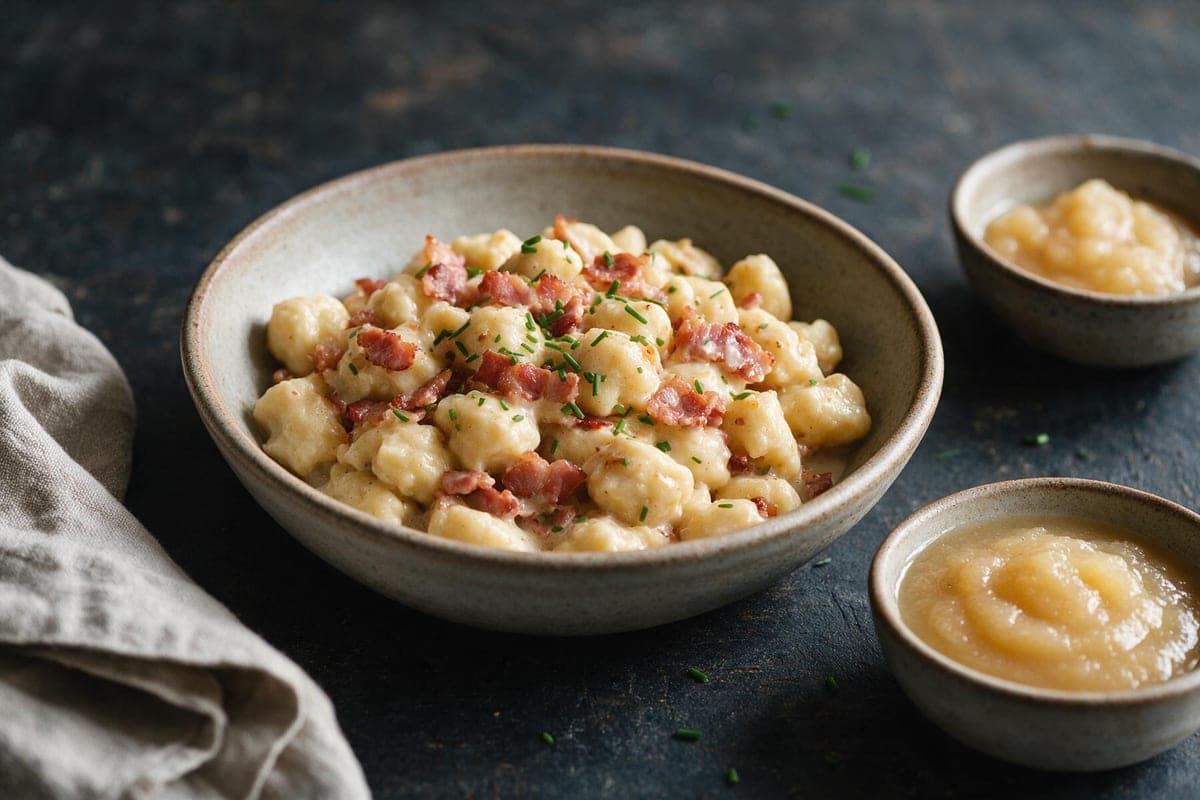
Kniddelen with Bacon and Cream
Luxembourg's pillowy flour dumplings, boiled in minutes from pantry staples and tossed with crisp bacon and a light cream sauce; a 35-minute dinner.

- Prep
- 15 min
- Cook
- 20 min
- Total
- 35 min
- Serves
- 2 adults + 1 child, generously
- Budget
- $12–$18
Kniddelen are Luxembourg's dumplings: a thick batter of flour, eggs and milk dropped by the spoonful into simmering water, where they puff into soft, slightly chewy pillows. The classic way to eat them is Kniddelen mat Speck, with chunks of smoked bacon fried until crisp and a sauce made from the bacon fat, a little cream and, in many homes, a splash of white wine. A spoon of applesauce or a sharp green salad on the side is traditional and keeps the plate honest.
Why it's on our list
Luxembourg is a tiny country that rarely gets a dinner of its own, and this dish is the reason to give it one: genuinely national, genuinely simple, and nearly free. I am curious whether a dumpling made from a batter this basic can be as good as Luxembourgers say, and whether the texture lands closer to gnocchi, spätzle or matzo balls. Nothing needs a special trip; flour, eggs, milk and bacon are always in the house, which makes this worth learning for nights when the fridge is nearly empty. My son is a fan of anything dumpling-shaped, so the hard part will be getting the adults a fair share.
Field notes · Origin & culture
Kniddelen (the name is a cousin of the German Knödel) are among the most widely cited traditional dishes of Luxembourg, and the Luxembourg government's own culture site describes them as farmers' food made from what every kitchen had: flour, eggs, milk, butter and bacon. They are associated with the cold months and with the simple, filling cooking of the Grand Duchy's rural past, and they are still served in brasseries and at home, often with Speck (smoked bacon) and cream or with applesauce. Luxembourg's cooking sits between German heartiness and French technique, which this dish shows nicely: German-style dumplings, finished with a cream sauce. The cookbooks of Ketty Thull, first published in 1937 and found in many Luxembourgish homes, are a common reference for the classic version.
Noteworthy ingredients
- Slab bacon or thick-cut smoked bacon: The Luxembourgish Speck is cut into chunky lardons rather than thin strips. A piece of slab bacon from the deli counter is ideal; thick-cut sliced bacon cut into 1/2-inch pieces is nearly as good. Pancetta works but lacks the smoke.
- All-purpose flour: Nothing fancy; the dumplings depend on the batter resting a few minutes so the flour hydrates.
- Heavy cream: A modest amount, loosened with a little of the dumpling water. Crème fraîche is a common alternative and adds tang.
- Dry white wine (optional): Luxembourg's Moselle valley makes crisp Rivaner and Riesling, and a splash in the sauce is common. Leave it out and use a squeeze of lemon instead if you prefer.
Prep — 15 min
- Bring a large pot of well-salted water to a boil, then lower it to a steady simmer.
- Make the batter: whisk the eggs and milk with 1 teaspoon salt and a pinch of nutmeg. Add the flour and stir with a wooden spoon just until smooth; it should be thick and sticky, holding a mound on the spoon but slowly sagging. If it pours, add a spoon of flour; if it is stiff like dough, add a splash of milk. Let it rest 10 minutes.
- Cut the bacon into 1/2-inch chunks. Finely dice the onion. Snip the chives.
- Dress the greens with oil, vinegar, salt and pepper and set aside. Spoon the applesauce into a small bowl.
Cook — 20 min
- Put the bacon in a large cold skillet and set it over medium heat. Cook 8–10 minutes, stirring now and then, until the fat has rendered and the pieces are browned and crisp at the edges. Move the bacon to a plate, leaving about 2 tablespoons of fat in the pan (pour off any extra).
- Add the onion to the bacon fat and cook over medium heat 3–4 minutes until soft. If using wine, add it and let it bubble down almost completely.
- While the onion cooks, drop the dumplings: with two wet spoons or a small cookie scoop, scoop walnut-sized blobs of batter into the simmering water, about a dozen at a time so the pot is not crowded. They sink, then float as they cook; once they float, give them 3–4 more minutes, then lift them out with a slotted spoon onto a tray. Repeat with the rest of the batter. Test one: it should be set through, tender and a little chewy. Keep 1/2 cup of the cooking water.
- Stir the cream into the onion pan with 1/4 cup of the dumpling water, the butter and a good grind of pepper. Simmer 2 minutes until slightly thickened.
- Add the dumplings and the bacon to the skillet and toss gently over medium heat for 2–3 minutes so the dumplings take on a little color and the sauce coats them. Taste for salt (the bacon usually provides enough) and add a squeeze of lemon.
Serving
Spoon the Kniddelen and bacon into warm bowls, scatter with chives, and pass the applesauce and salad; cold applesauce beside hot, salty dumplings is the traditional contrast and the thing I am most curious about. Nothing here is spicy; for my son I would simply leave the wine out of the sauce. Leftover dumplings keep for three days and are excellent sliced and pan-fried in butter the next day until crisp, which many Luxembourgers consider the best way to eat them.