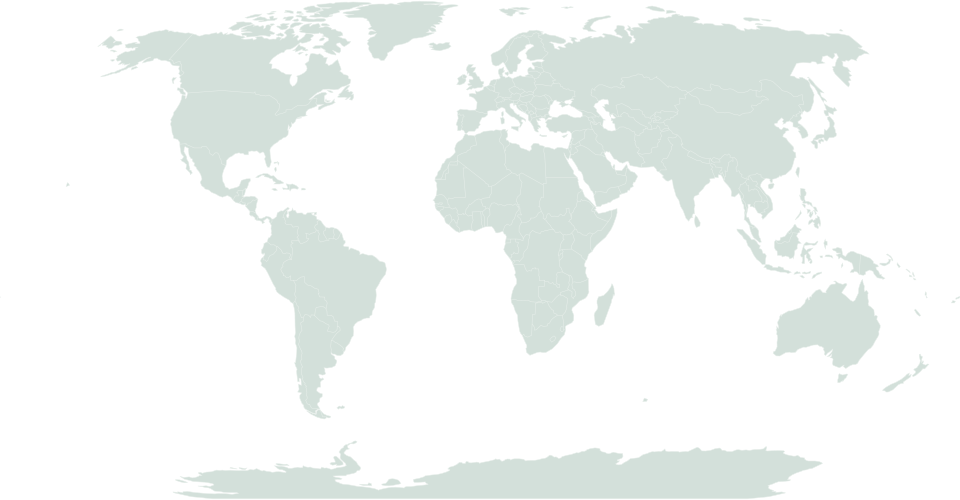
Dinner night · Madagascar
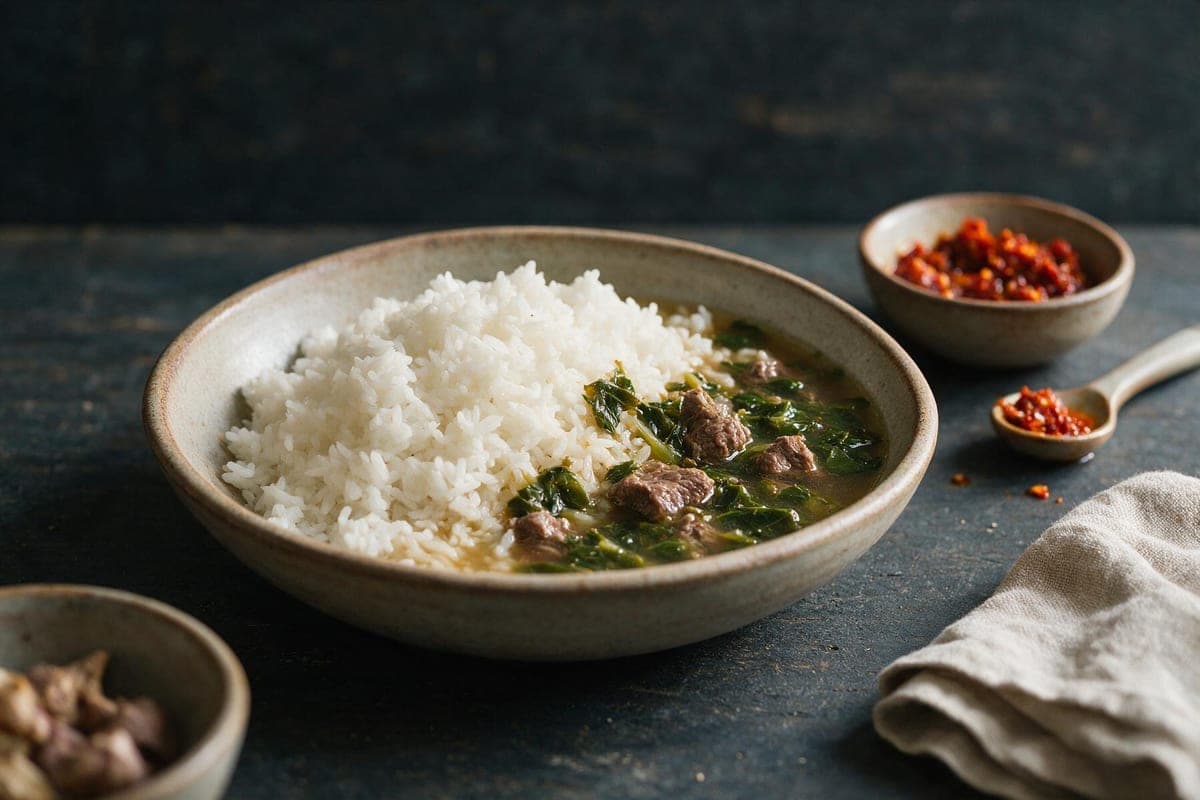
Romazava with Rice
Madagascar's national dish: a clear, gingery beef-and-greens broth served over a mound of rice, with a fiery sakay condiment on the side for adults.
- Prep
- 15 min
- Cook
- 50 min
- Total
- 65 min
- Serves
- 2 adults + 1 child, with broth left over
- Budget
- $16–$25
Romazava is a soupy stew of beef and leafy greens, seasoned with ginger, garlic, tomato and onion, cooked until the broth is light but deeply savory and the meat is tender. The name is usually translated as "clear broth," and that is the point: it is not thick or heavy, and it is eaten over a large helping of plain rice, the way almost everything in Madagascar is. The signature green is brèdes mafana, a leaf that tingles and numbs the tongue slightly; it does not reach US supermarkets, so this version uses a mix of watercress and mustard greens for peppery bite and is honest about what is missing. Heat comes only from sakay, a chile-ginger-garlic paste served on the side.
Why it's on our list
Madagascar has food traditions of its own, with roots in Southeast Asia as much as Africa, and the fact that the Malagasy word for eating a meal literally means "to eat rice" tells me how to frame this dinner: rice at the center, stew as the accompaniment. The technique I want to learn is a broth-based stew that stays clear and light instead of reducing to a gravy, the opposite of how I usually cook beef. I also want to make sakay, the table condiment that lets each person set their own heat, which is the system we already use. It is weeknight-feasible because the only real time is 40 minutes of gentle simmering while the rice cooks. I expect my son to like the rice-and-broth combination, which is close to a soup he already eats.
Field notes · Origin & culture
Romazava is the national dish of Madagascar: in its simplest form, beef (traditionally zebu) with anamalaho, anantsonga or anamamy greens, to which tomato, onion and ginger are commonly added. Its distinguishing ingredient is anamalaho, known in French as brèdes mafana (Acmella oleracea, the paracress), whose leaves and buds contain spilanthol and produce a tingling, mildly numbing effect in the mouth. The dish is one of the laoka, the accompaniments eaten with vary, rice, which anchors every Malagasy meal; sakay, a paste of chile, ginger and garlic, is mixed in at the table to taste rather than cooked into the pot. Malagasy cooking reflects settlement from both Austronesian and East African sources, with later French, Indian and Chinese influence. Romazava varies by household in its greens and whether pork or chicken joins the beef; this is one version.
Noteworthy ingredients
- Watercress and mustard greens: The substitute for brèdes mafana, chosen for peppery flavor and tender stems. Spinach and arugula also work. The numbing tingle of the real thing is not reproducible from the supermarket; if you grow or find Acmella oleracea (sold as "toothache plant" by some herb nurseries), add a handful of leaves at the end.
- Beef chuck: Cut into 1-inch pieces, it gives the broth body and turns tender in 40 minutes. Zebu beef in Madagascar is leaner and cooks longer.
- Fresh ginger: Used generously; it is the backbone of the broth along with garlic.
- Bird chiles or a Thai chile: For the sakay. One or two make a small bowl that will last the week.
Prep — 15 min
- Pat the beef dry and season with salt and pepper.
- Dice the onion and tomatoes. Mince 3 garlic cloves and grate 2 inches of the ginger.
- Wash the watercress and mustard greens in a sink of cold water, drain, and chop coarsely, stems and all; trim off only the thickest watercress stems.
- Sakay: mince the chiles, the remaining garlic clove and the remaining inch of ginger very fine (or pound in a mortar) with 1/4 teaspoon salt and a teaspoon of oil until it is a rough paste. Scrape into a small bowl and cover. Wash your hands and the board.
- Rinse the rice until the water runs clear and let it drain.
Cook — 50 min
- Heat the oil in the Dutch oven over medium-high. Brown the beef on two sides in a single layer, 5–6 minutes total; it does not need deep color.
- Add the onion and cook 4 minutes until softened. Add the minced garlic and grated ginger and stir 1 minute until fragrant. Add the tomatoes and cook 3 minutes.
- Pour in the stock, bring to a simmer, skim any foam, cover, and cook gently 35 minutes until the beef is tender. Keep the heat low so the broth stays clear rather than boiling cloudy.
- Rice, started 20 minutes into the simmer: put the rinsed rice in the rice pot with 2 1/4 cups water and 1/2 teaspoon salt, bring to a boil, cover, and cook on the lowest heat 15 minutes, then rest 5 minutes off the heat. When you lift the lid, leave the rice crust on the bottom of the pot for the ranovola.
- Add the greens to the stew in handfuls, stirring them down, and simmer uncovered 5–7 minutes until tender but still green. Taste the broth and season with salt and pepper; it should taste of ginger and beef, bright and clean. Finish with a squeeze of lemon.
Serving
Fill each bowl with a generous mound of rice and ladle the romazava over one side so the broth soaks in; in Madagascar the rice is the main course and the stew the accompaniment, and the proportions should say so. Put the sakay on the table with a small spoon. There is no chile in the pot, so my son's bowl is identical to ours and the adults stir in sakay a quarter-teaspoon at a time. Leftover romazava keeps three days and the broth gets better; reheat gently with a fresh handful of greens if you have them.