Dinner night · Malawi
Chambo-style Tilapia with Nsima and Ndiwo
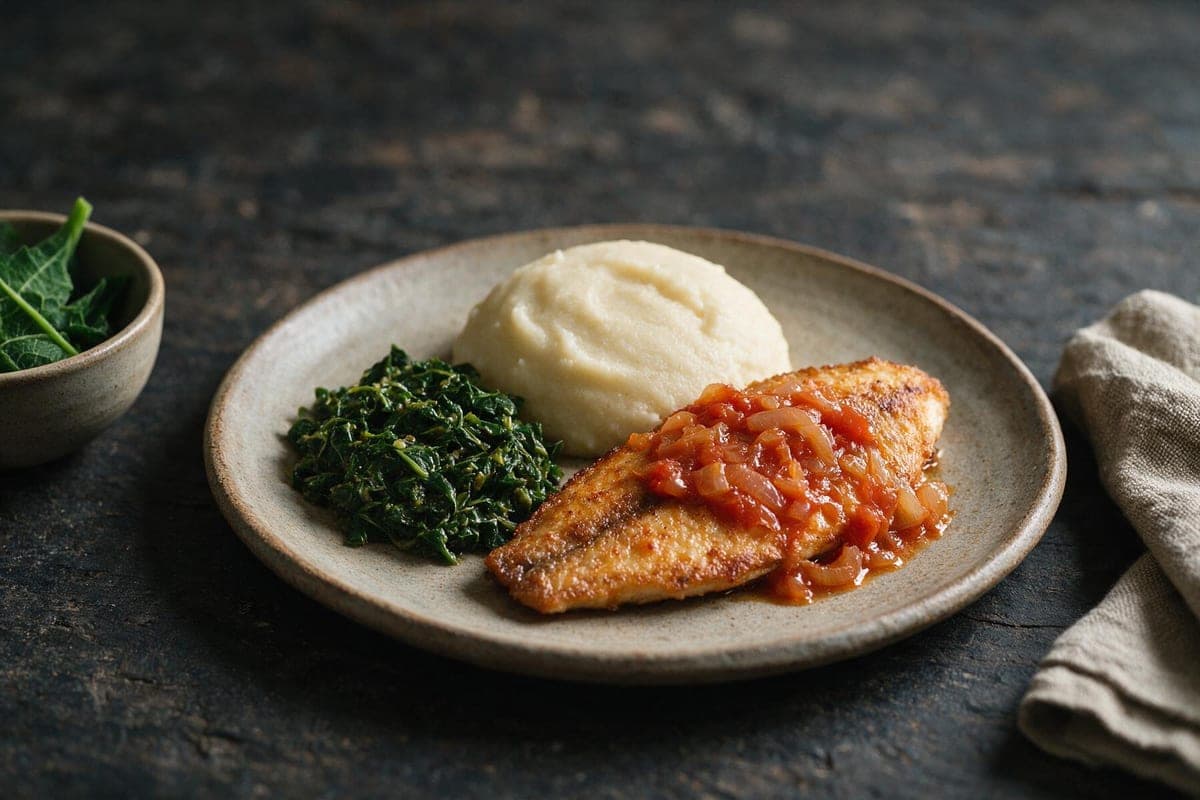
Malawi's lakeside plate reworked for a US kitchen: crisp pan-fried tilapia with a tomato-onion sauce, soft maize nsima and a quick pumpkin-leaf-style greens relish.
- Prep
- 15 min
- Cook
- 30 min
- Total
- 45 min
- Serves
- 2 adults + 1 child
- Budget
- $16–$26
Along the shore of Lake Malawi, dinner is a whole fried fish, a mound of nsima and a relish or two: a tomato-and-onion sauce spooned over the fish, and greens cooked with a little ground peanut. The fish is chambo, a lake tilapia, and the cooking is plain: salt, maybe a squeeze of lemon, hot oil, a crisp skin. This version uses the tilapia fillets every US supermarket sells, fried with a dusting of cornmeal for crunch, with the same tomato sauce and a greens relish built from kale or chard. It is a mild, clean, high-protein plate that eats with the fingers.
Why it's on our list
Our launch recipes were almost all chicken, and this is a chance to put a weeknight fish dinner on the map from a country where fish is the whole point. I want to learn the Malawian relish habit: a few simple side dishes, each cooked in minutes, that together make a stiff maize porridge into a complete meal. It is weeknight-feasible because tilapia fillets fry in six minutes, the sauce is onion and tomato, and the greens take ten. The only real technique is stirring the nsima until it is smooth, and the reward is a plate that costs very little.
Field notes · Origin & culture
Nsima is Malawi's staple, a cornmeal porridge served at lunch and dinner with side dishes called ndiwo: vegetables, beans, meat or fish. Lake Malawi, one of the largest lakes in Africa, supplies much of the country's protein, and chambo, a bream-like tilapia, is its best-known fish, typically grilled or fried whole and served with nsima, rice or vegetables. The lake's chambo species (Oreochromis karongae and relatives) have declined sharply from overfishing and are listed as critically endangered, which is one reason to cook this with farmed tilapia rather than chase the real thing. In 2017 UNESCO added the preparation of nsima to its list of the Intangible Cultural Heritage of Humanity, recognizing the knowledge, from growing and pounding the maize to the etiquette of eating, that surrounds it.
Noteworthy ingredients
- Tilapia fillets: US farmed tilapia is a close relative of chambo and widely available fresh or frozen. Whole small tilapia, if your fish counter has them, are more authentic and fry just as fast; score the sides so they cook through.
- Fine white cornmeal: The nearest match for Malawian maize flour. Look in the Latin or international aisle; avoid masa harina and corn flour.
- Kale or Swiss chard: Stand-ins for pumpkin leaves, the classic Malawian greens. Chard is closer in tenderness.
- Natural peanut butter: A spoonful thickens the greens the way ground groundnuts do in Malawian cooking; use the unsweetened kind.
Prep — 15 min
- Pat the tilapia dry, cut each fillet in half crosswise if large, and season with salt, pepper and the juice of half a lemon. Let it sit while you prep the vegetables.
- Dice the onions. Dice the tomatoes. Mince the garlic. If using the chile, slice it thin and keep it separate.
- Strip the kale or chard leaves from the stems and slice into ribbons; rinse and drain. Slice the tender chard stems thin and keep them with the leaves.
- Mix 1/4 cup cornmeal with the paprika, 1/2 teaspoon salt and a little pepper on a plate for dredging.
- Set out 2 cups cornmeal and a measuring jug of water for the nsima.
Cook — 30 min
- Tomato-onion sauce (ndiwo). Warm 1 tablespoon oil in the medium saucepan over medium heat. Cook half the onion 5 minutes until soft, add the garlic and curry powder if using, stir 30 seconds, then add the tomatoes and 1/2 teaspoon salt. Simmer 10–12 minutes, stirring now and then, until it is a loose, chunky sauce. Keep warm.
- Greens relish. In the heavy saucepan, cook the remaining onion in 1 tablespoon oil 4 minutes. Add the greens and 1/3 cup water, cover and cook 6–8 minutes until tender. Stir in the peanut butter and a pinch of salt and cook 2 minutes uncovered until it clings to the leaves. Scrape into a bowl and wipe out the pan for the nsima.
- Nsima. Bring 3 cups water to a boil in the heavy saucepan. Whisk 1 cup cornmeal with 1 cup cold water and stir it into the boiling water. Cook over medium heat, stirring, 8 minutes to a smooth porridge. Add the second cup of cornmeal a handful at a time, beating hard with the wooden spoon after each, until the nsima is thick, smooth and pulls from the sides. Cover over the lowest heat 3 minutes.
- Fish. Heat the remaining oil in the large skillet over medium-high until it shimmers. Dredge the tilapia in the seasoned cornmeal, shake off the excess, and lay the pieces in the pan without crowding. Fry 3 minutes until the edges are golden, flip carefully and fry 2–3 minutes more until the fish flakes. Drain on a paper towel and squeeze lemon over.
Serving
Shape the nsima into a mound on each plate with a wet spoon. Lay the fish beside it, spoon the tomato-onion sauce over the fish, and put the greens on the other side. Lemon wedges go on the table. My plan is to keep the sliced chile in a saucer for the adults, so my son's plate stays mild and otherwise identical to ours. Eat with the right hand: pinch nsima, flatten it, scoop. Leftover sauce and greens keep three days; fried fish is best the same night but reheats acceptably in a hot oven.