Dinner night · Mali
Tiguadege Na (Malian Beef Peanut Stew)
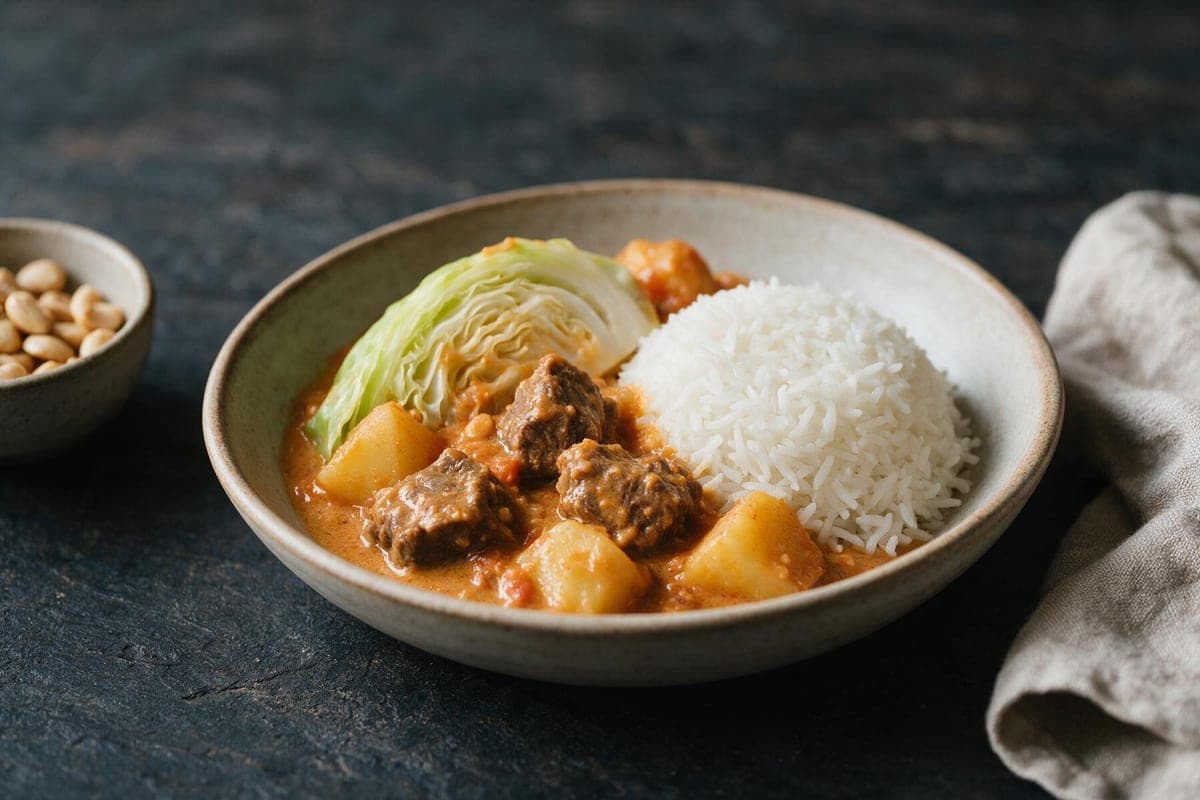
Mali's national dish: beef simmered in a creamy peanut-tomato sauce with sweet potato and cabbage, ladled over rice. One pot, pantry peanut butter.

- Prep
- 20 min
- Cook
- 60 min
- Total
- 80 min
- Serves
- 2 adults + 1 child, with generous leftovers
- Budget
- $18–$27
Tiguadege na is a peanut stew: cubes of beef browned with onion and tomato, then simmered in a sauce built on peanut butter and stock until the meat is tender and the sauce is thick, glossy and faintly sweet. Chunks of sweet potato and wedges of cabbage cook in the pot and take on the peanut flavor. It is richer and more savory than the sweetness of "peanut" suggests, closer to a satay sauce turned into a braise, and it is served over plain white rice. The stew is naturally mild; a single whole chile adds aroma, and heat is a table decision.
Why it's on our list
Mali's cooking is almost never represented on American tables, and when it is, it is usually this dish, which several sources call the national dish. I want to understand the peanut-stew family that runs across West Africa (Senegal's maafe, Gambia's domoda, Guinea-Bissau's caldo de mancarra) by cooking the Malian version, and to see how plain peanut butter turns into something this savory. It is weeknight-feasible because the work is all at the start; after twenty minutes of browning and chopping, the pot simmers on its own for forty, long enough to help with homework. Beef was my pick because our map leans so hard on chicken, and because beef is the meat most often named for this dish.
Field notes · Origin & culture
Tiguadege na (also written tigadèguèna or tiga dèguè na) is from Mali, where it is widely described as the national dish. The name is Bambara, Mali's most widely spoken language: tiga is peanut, dèguè a paste or powder, and na a sauce, so the name is literally "peanut-paste sauce." It is cooked with beef, chicken, lamb or meatballs, and the vegetables vary with what is on hand: sweet potato, cassava, carrot, cabbage and okra all appear. Peanuts arrived in West Africa from South America through Portuguese trade in the sixteenth century and were adopted so completely that peanut sauces are now among the region's signature dishes; the Senegalese maafe and Malian tiguadege na are close relatives and the lines between them are not sharp. In Mali it is usually eaten over rice, or with tô, a thick millet or sorghum porridge.
Noteworthy ingredients
- Natural peanut butter: Use an unsweetened, salted-or-not peanut butter whose only ingredients are peanuts and maybe salt (Smucker's Natural, Whole Foods 365, or the grind-your-own machine). Sweetened, emulsified brands make the sauce cloying and can break. In Mali the paste is often ground fresh; the stir-the-oil-back-in jar is the closest supermarket version.
- Beef chuck: Cut into 1-inch cubes it braises to tenderness in about 45 minutes and flavors the sauce. Stew meat packs work too; trim large pieces.
- Sweet potato and cabbage: The vegetables most often seen in this stew in the United States, and both are easy. Cassava or a small turnip are also traditional.
- Tomato paste: Together with a fresh tomato it gives the sauce its deep rust color and keeps the peanut from tasting flat.
- A whole habanero: Left unbroken it scents the pot without heat. Pierce it or cut it open for the adults, or leave it out.
Prep — 20 min
- Pat the beef dry and season with 1 teaspoon salt and 1/2 teaspoon black pepper.
- Dice the onion; mince the garlic. Core and chop the tomato. Peel the sweet potato and cut into 1 1/2-inch chunks. Cut the cabbage into 3 or 4 thick wedges through the core so they hold together.
- Stir the peanut butter with 1 cup of the stock in a bowl until smooth; this prevents lumps in the pot.
- Start the rice about 25 minutes before the stew is done: rinse 1 1/2 cups rice and cook with 2 1/4 cups water and a pinch of salt according to the package.
Cook — 60 min
- Heat the oil in a Dutch oven over medium-high. Brown the beef in two batches, 3–4 minutes per batch, turning once or twice; it should be dark on at least two sides. Move to a plate.
- Lower the heat to medium. Add the onion with a pinch of salt and cook 5 minutes until soft. Add the garlic and tomato paste and stir 1 minute until the paste darkens a shade. Add the chopped tomato and cook 3 minutes until it breaks down.
- Return the beef and its juices. Pour in the remaining 2 cups stock and the bay leaf, bring to a boil, then lower to a steady simmer. Cover and cook 25 minutes.
- Stir in the thinned peanut butter. Add the sweet potato, tuck the cabbage wedges in, and drop in the whole chile. Cover partially and simmer 20–25 minutes more, stirring from the bottom every so often so the peanut sauce does not catch. The beef should be fork-tender, the sweet potato soft, and the sauce thick enough to coat the back of a spoon; add a splash of water if it tightens too much.
- Remove the bay leaf and chile. Taste and season with salt; the peanut butter varies in saltiness, so taste before you add. A squeeze of lime at the end is not traditional everywhere but brightens the richness.
Serving
Mound rice in shallow bowls, spoon beef, sweet potato and a wedge of cabbage alongside, and pour plenty of sauce over everything. The stew is mild as written, so my son's bowl is identical to ours; adults who want heat can mash a piece of the softened habanero into their portion or shake on hot sauce. Tiguadege na is better on day two and keeps four days; reheat gently with a splash of water, since peanut sauces thicken as they cool. It freezes well without the cabbage.