Dinner night · Moldova
Mămăligă with Brânză and Tochitură
Moldova's cornmeal porridge with crumbled salty cheese, sour cream, a quick pork-and-pepper stew and a fried egg on top: a 50-minute, gluten-free dinner.
- Prep
- 15 min
- Cook
- 35 min
- Total
- 50 min
- Serves
- 2 adults + 1 child, with leftover stew for a second night
- Budget
- $16–$25
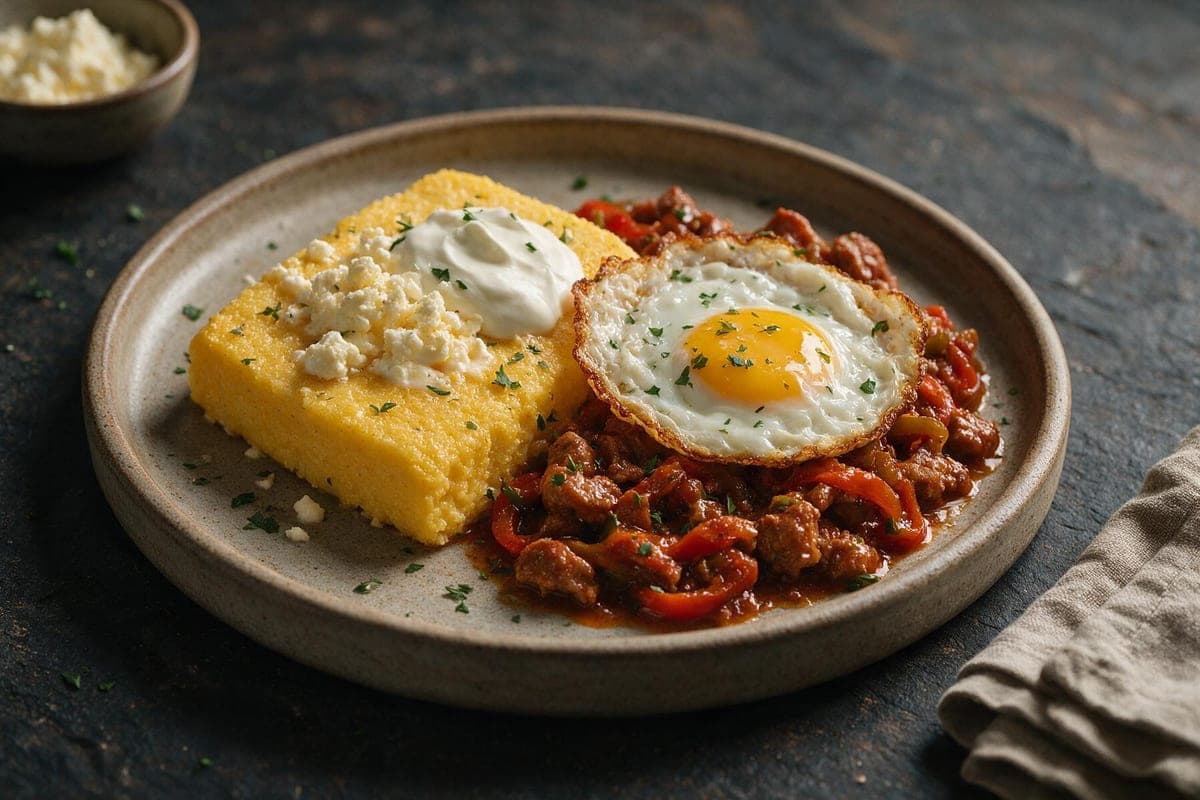
Mămăligă is Moldova's cornmeal porridge, cooked thick enough to slice and served with brânză, a salty crumbly sheep's-milk cheese, and a spoon of smântână (sour cream). Tochitură is the stew that goes beside it: cubes of pork browned in their own fat and simmered with onion, garlic, sweet peppers and a little tomato until the sauce is glossy. A fried egg on top is traditional and, in our house, non-negotiable. Everything is simple, savory and gluten-free.
Why it's on our list
This is polenta's eastern cousin, and polenta is a dish my son already eats happily, so the leap is small while the country is entirely new to us. I want to learn how Moldovan cooks make mămăligă firm enough to cut with a string, how brânză differs from the feta I will probably substitute, and how a stew with only a handful of ingredients gets its depth from rendering the pork slowly. It is weeknight-feasible because the stew and the cornmeal cook side by side in about 35 minutes, and the eggs take three.
Field notes · Origin & culture
Mămăligă cu brânză și smântână is often called Moldova's national dish, and it is shared with neighboring Romania, where the same cornmeal porridge carries the same name; the two countries share a language and most of a culinary tradition. Corn arrived in the region in the seventeenth century and mămăligă replaced older millet porridges as the everyday bread of the countryside. Tochitură, from the verb "a topi," to melt, describes pork cooked down slowly in its own fat; versions exist across both countries, and the one labeled "moldovenească" typically adds the fried egg and brânză on top. In Moldova the cheese is usually sheep's-milk brânză de oi, and the whole plate is weekday food rather than feast food.
Noteworthy ingredients
- Cornmeal: Medium-grind yellow cornmeal or coarse polenta (not instant, not corn flour). Moldovan mămăligă is cooked stiffer than Italian polenta, about 4 parts water to 1 part cornmeal, and turned out of the pot onto a board.
- Brânză: Salty, crumbly sheep's-milk cheese. A block of Bulgarian or Greek sheep's-milk feta from the deli case is the closest supermarket match; cow's-milk feta is fine. Rinse briefly if yours is very salty.
- Pork shoulder: Cut into 1-inch cubes, it browns well and turns tender in 30 minutes of simmering. Pork loin is leaner and will be drier; if you use it, cut the simmer to 15 minutes.
- Sweet paprika and bell peppers: Give the stew its color. A pinch of hot paprika or a sliced chile is optional and stays on the adult side.
- Full-fat sour cream: Served cold on top. Moldovan smântână is a touch richer; Greek yogurt is not a good substitute here.
Prep — 15 min
- Cut the pork into 1-inch cubes, pat dry, and season with 1 teaspoon salt and black pepper.
- Dice the onions. Cut the peppers into 1/2-inch strips. Smash and roughly chop the garlic. Slice the hot pepper, if using, and keep it separate.
- Crumble the cheese into a bowl. Put the sour cream in a serving bowl and return it to the refrigerator. Chop 3 tablespoons herbs.
- Measure 6 cups water into a heavy pot with 1 1/4 teaspoons salt for the mămăligă; bring it to a boil at the start of Cook step 3.
Cook — 35 min
- Heat the oil in a large skillet over medium-high. Brown the pork in a single layer, 3–4 minutes per side, letting the fat render; do it in two batches if needed. Move it to a plate.
- Lower the heat to medium. Add the onions with a pinch of salt and cook 6 minutes until golden. Add the peppers and cook 4 minutes, then the garlic, paprika and tomato paste for 1 minute, stirring so the paprika does not scorch.
- Return the pork, add the diced tomatoes with their juice, the bay leaf and 1/2 cup water. Cover and simmer gently 25–30 minutes until the pork is tender and the sauce is thick and glossy. Uncover for the last 5 minutes if it looks thin. Season to taste.
- Meanwhile, make the mămăligă. With the salted water at a boil, pour the cornmeal in slowly while whisking constantly. Drop the heat to low and cook, stirring with a wooden spoon every minute or two, for 20–25 minutes until it pulls away from the sides of the pot and a spoon stands up in it. Stir in the butter.
- In the last 5 minutes, fry the eggs in a nonstick skillet with a little butter until the whites set and the yolks stay soft.
- Turn the mămăligă out onto a cutting board or into a wide bowl. Moldovans cut it with a taut string; a knife dipped in water works too.
Serving
Give each plate a thick slab of mămăligă, crumble the cheese over it while it is hot, and spoon the stew alongside with a fried egg on top of everything. The sour cream goes on at the table, cold against the hot cornmeal. Herbs over the lot. The stew is mild as written; the sliced hot pepper and a shake of hot paprika stay with the adults, and my son's plate is simply cheese, cornmeal, stew and egg, which is already the whole dish. Leftover tochitură improves overnight and keeps three days; cold leftover mămăligă slices fry beautifully in butter for breakfast.