Dinner night · Mongolia
Tsuivan (Mongolian Noodles with Beef)
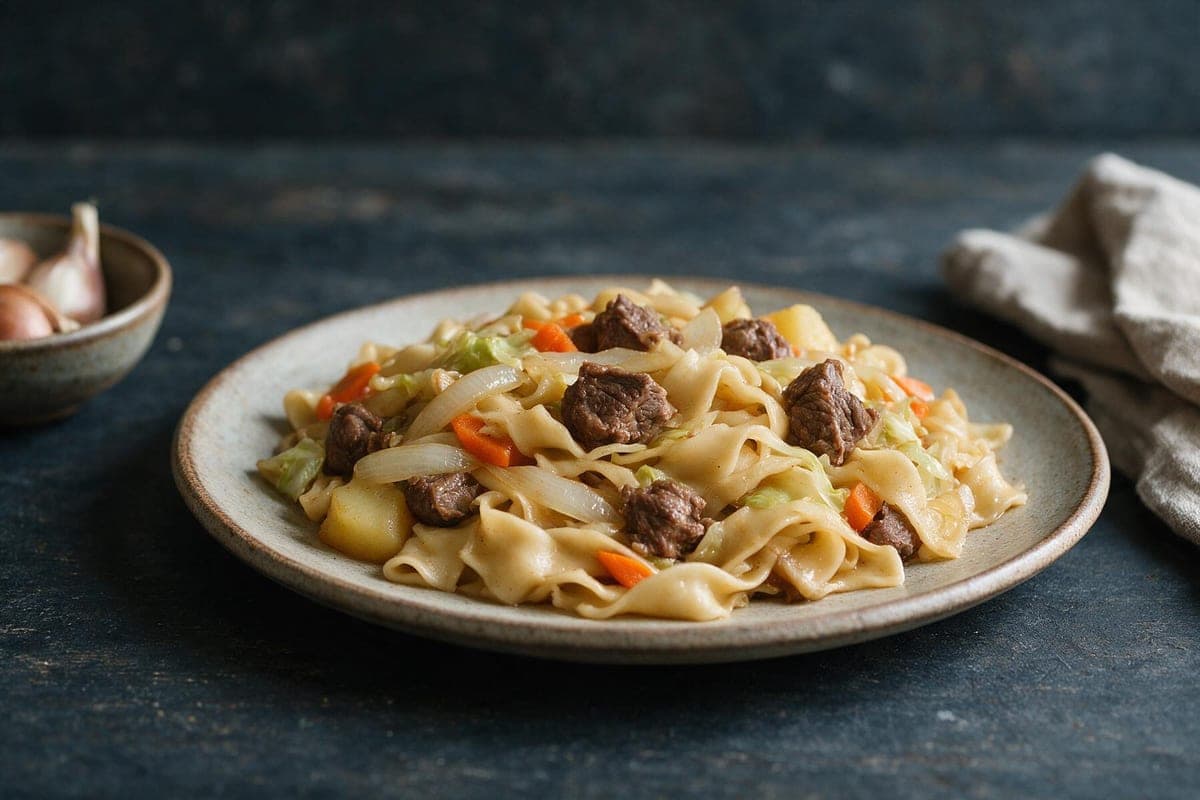
Mongolia's steamed-and-fried noodle supper: beef, onion, carrot, cabbage and potato in one pot with wide noodles steamed on top, hearty, unspiced and built for a cold night.
- Prep
- 20 min
- Cook
- 30 min
- Total
- 50 min
- Serves
- 2 adults + 1 child, generous; tsuivan reheats well
- Budget
- $15–$24
Tsuivan is the everyday noodle dish of Mongolia, the thing you are most likely to be served in a roadside canteen or a family ger: strips of fresh noodle dough steamed over a pot of mutton or beef and vegetables, then tossed through the meat and its juices so the noodles soak up the fat and brown a little at the bottom. It is plain food in the best sense, seasoned with salt, onion and whatever vegetables are at hand. Mongolian cooks roll and cut the noodles by hand; this version uses fresh wide egg noodles from the refrigerator case, which steam on top of the stew the same way, and swaps mutton for beef, easier to find and milder for a first try.
Why it's on our list
Mongolia is one of the countries on our map I could not have named a dish from a year ago, and tsuivan turns out to be a one-pot noodle supper, which is exactly our kind of weeknight. The technique I want to learn is the steam-then-fry method: the noodles cook in the steam rising off the stew rather than in a separate pot of water, so they take on the flavor of the meat instead of diluting it, and then everything gets tossed together at the end. It is weeknight-feasible because the whole thing is a half hour of chopping and simmering in one pan. There is no chile anywhere, so my son's plate and ours are the same, and the pot of salted milk tea beside it is the real experiment.
Field notes · Origin & culture
Tsuivan belongs to the herding cuisine of the Mongolian steppe, where meat, flour and dairy are the staples and vegetables have historically been scarce; the dish is substantial because it is meant to fuel cold, physical days. The word comes from a Chinese term for fried shredded flatbread, a reminder of long culinary exchange across the border, but the dish as Mongolians make it, with hand-cut noodles steamed over mutton and finished in the meat's fat, is firmly their own, served everywhere from Ulaanbaatar canteens (guanz) to herders' gers. Carrot, cabbage and potato became common with Russian influence in the twentieth century. Tsuivan is usually eaten with a bowl of salty milk tea and sometimes a splash of soy sauce or ketchup, both popular modern additions.
Noteworthy ingredients
- Fresh wide egg noodles: Look in the refrigerated section for fresh egg noodles or pappardelle about 1/2 inch wide; Asian markets sell fresh wide wheat noodles cheaply. Dried pappardelle, boiled 2 minutes short of done, is the fallback. Hand-rolled dough is traditional and I may try it another time.
- Beef chuck or sirloin: Cut thin so it cooks quickly. Mongolians would reach for mutton; lamb shoulder works too.
- Cabbage, carrot and potato: The usual trio. Cut the potato small so it finishes with the rest.
- Salt, and not much else: A splash of soy sauce at the end is a common modern touch, included here as optional.
Prep — 20 min
- Slice the beef against the grain into thin strips about 2 inches long. Season with salt and pepper.
- Halve and slice the onion. Cut the carrots into thin matchsticks. Shred the cabbage. Peel the potato and cut into 1/2-inch dice. Slice the bell pepper into strips. Mince the garlic. Slice the scallions.
- If using fresh noodles, loosen them and toss with 1 teaspoon oil so they do not stick in the steam. If using dried pappardelle, boil until 2 minutes short of tender, drain, and toss with oil.
- Have the stock measured and the lid at hand; the steaming step depends on a tight seal.
Cook — 30 min
- Heat the oil in the wide pot over high heat. Add the beef in a single layer and sear 2–3 minutes, until browned on one side. Add the onion and cook 3 minutes more, stirring.
- Add the carrot, potato, bell pepper, garlic and a good pinch of salt. Stir-fry 3 minutes.
- Pour in the stock; it should come about two-thirds of the way up the vegetables, not cover them. Bring to a boil.
- Spread the cabbage over the top, then lay the noodles over the cabbage in a loose, even layer without stirring them in. Cover tightly, lower the heat to medium, and steam 10–12 minutes, until the noodles are tender and most of the liquid is absorbed. Peek once; if the pot is dry before the noodles are done, add a splash of water.
- Uncover, raise the heat to medium-high, and toss everything together with tongs so the noodles pick up the juices. Let it sit undisturbed 2 minutes so the bottom crisps slightly, then toss once more. Season with salt, pepper and the soy sauce if using.
Serving
Pile the tsuivan into wide bowls with plenty of the beef and vegetables mixed through, scatter scallions over the top and set soy sauce and pickled vegetables on the table for anyone who wants them. Mongolians drink salty milk tea alongside, and I plan to pour a small cup for everyone, including my son, as a tasting rather than an obligation. There is nothing spicy to manage. Leftovers keep three days and reheat well in a skillet with a little oil, where the noodles get even crispier.