Dinner night · Mozambique — Zambezia
Frango à Zambeziana
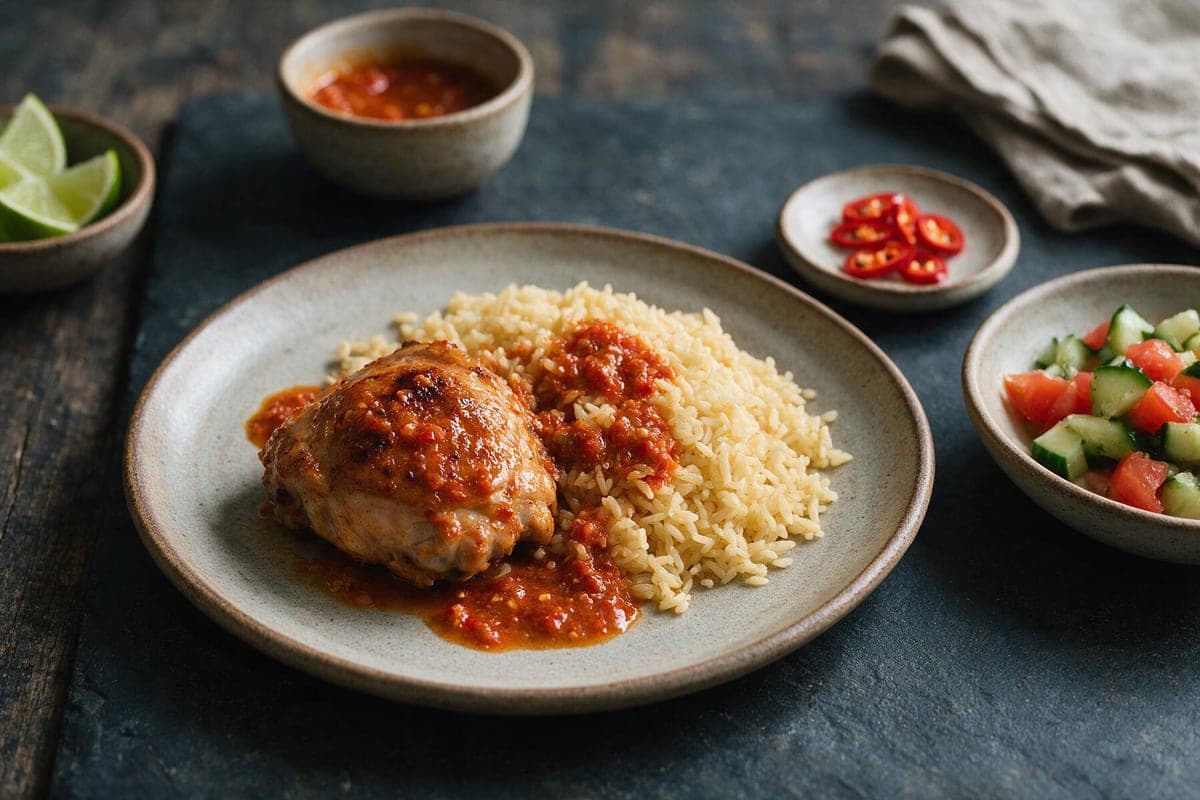
Mozambique's coconut-lime piri-piri chicken from the Zambezi coast, roasted under the broiler instead of over charcoal and basted with its own sauce.

- Prep
- 15 min
- Cook
- 35 min
- Total
- 50 min
- Serves
- 2 adults + 1 child, with extra sauce for the rice
- Budget
- $15–$24
Frango à zambeziana is chicken marinated in coconut milk, garlic, lime and piri-piri chile, grilled until the skin chars, and basted with more of the coconut sauce as it cooks, so it ends up smoky, tangy and rich at the same time. It is the coastal, coconut-growing cousin of the plain piri-piri chicken that Portugal made famous. This version runs under the broiler on a rack so the fat drips away and the skin blisters, with the leftover marinade simmered into a sauce for the rice. The heat is adjustable to the last minute, because most of the chile goes into the sauce, not the marinade.
Why it's on our list
We already have a Portuguese piri-piri tray bake on the map, and I want to cook the Mozambican relative with coconut milk in the mix, to taste how the dish changed on the Indian Ocean coast. The technique I want to practice is basting under a broiler: brushing a coconut sauce onto chicken in the last minutes so it glazes without burning, which is as close as a weeknight gets to the charcoal grill this is meant for. It is weeknight-feasible because the marinade is five ingredients in a blender, the chicken cooks in 30 minutes, and rice takes care of itself. Keeping the chile in the sauce means my son gets the same chicken and the adults get the real piri-piri.
Field notes · Origin & culture
The dish takes its name from Zambezia, the central Mozambican province around the Zambezi River delta whose capital, Quelimane, sits among coconut plantations; coconuts are still one of the province's agricultural products. Frango à zambeziana (also galinha à zambeziana) is chicken marinated with coconut milk, garlic and piri-piri and grilled, and it is particularly associated with central Mozambique. Piri-piri itself is the African bird's eye chile, a small, very hot Capsicum frutescens cultivar whose Portuguese name comes from a Bantu word for pepper; the sauce made from it, with oil, garlic and lemon or lime, is one of the clearest Portuguese-era traces in Mozambican cooking. Household versions vary in heat and in whether the coconut is a marinade or also a finishing sauce, so this is one reading of a family of recipes.
Noteworthy ingredients
- Full-fat canned coconut milk: The marinade and the sauce. Shake the can well; the thick kind from the Asian aisle (not the carton beverage) gives a sauce that clings.
- Piri-piri or African bird's eye chiles: Dried African bird's eye chiles are sold online and in some international markets. Fresh Thai bird chiles are the closest supermarket match; a bottled piri-piri sauce (Nando's is in most US supermarkets) is the easiest substitute and a legitimate shortcut.
- Fresh lime: Lime or lemon brightens both marinade and sauce; Mozambican versions use either.
- Bone-in, skin-on chicken thighs: The skin is where the char and glaze live. Boneless thighs cook in two-thirds the time and give less to baste.
Prep — 15 min
- Blend (or whisk) the coconut milk with the garlic, the juice of 2 limes, the paprika, 1 1/2 teaspoons salt, 1/2 teaspoon black pepper and the bay leaf. Taste it: at this point it should be garlicky and tangy with no heat.
- Pour a third of the marinade into a small saucepan and set aside; this becomes the sauce. Put the chicken in a bowl or zip bag with the rest and turn to coat. Marinate 30 minutes at room temperature if you have the time, or move straight to cooking.
- Slice the chiles thin (seeds in for heat, out for less). Mince a quarter of them and stir into the saucepan of reserved marinade; keep the rest for the table. If using bottled piri-piri, add 1–2 tablespoons to the saucepan instead.
- Start the rice: rinse 1 cup rice and cook with 1 3/4 cups water and a pinch of salt.
- Slice the cucumber and tomatoes, dress with a squeeze of lime, salt and a little chopped cilantro, and chill. Set a rack on a foil-lined sheet pan and move an oven rack so the chicken will sit about 6 inches under the broiler element.
Cook — 35 min
- Heat the oven to 425°F (not the broiler yet). Lift the chicken from the marinade, letting the excess drip back into the bowl, and lay it skin-side up on the rack. Discard the bowl marinade. Roast 22 minutes.
- Meanwhile bring the saucepan of reserved marinade with the chile to a simmer and cook gently 8–10 minutes, stirring, until it thickens to the consistency of heavy cream. Taste and add salt, more chile or a squeeze of lime. Pull out the bay leaf.
- Switch the oven to broil. Brush the chicken skin with a thin layer of the sauce and broil 3–4 minutes until the skin blisters and darkens in spots. Brush again and broil 2–3 minutes more. Watch closely; coconut sugars char fast. The chicken is done at 165°F at the thickest part, 30–32 minutes total.
- Rest the chicken 5 minutes. Stir any juices from the sheet pan into the remaining sauce.
Serving
Spoon rice onto each plate, set a thigh beside it and pour a little sauce over both; put the rest of the sauce in a bowl and the sliced chiles in a saucer so the heat is self-serve, and let the cucumber-tomato salad cool things down. The chicken itself carries only garlic, lime and coconut, so my son gets the same piece as us and the chile sauce stays on the adult side of the table. On a charcoal or gas grill, cook the thighs over medium indirect heat 25 minutes, then over direct heat for the basting, which is nearer the Quelimane way. Leftovers keep three days; the chicken is good cold, pulled into a sandwich.