Dinner night · Myanmar
Burmese Chicken Curry (Kyet Thar Hin)
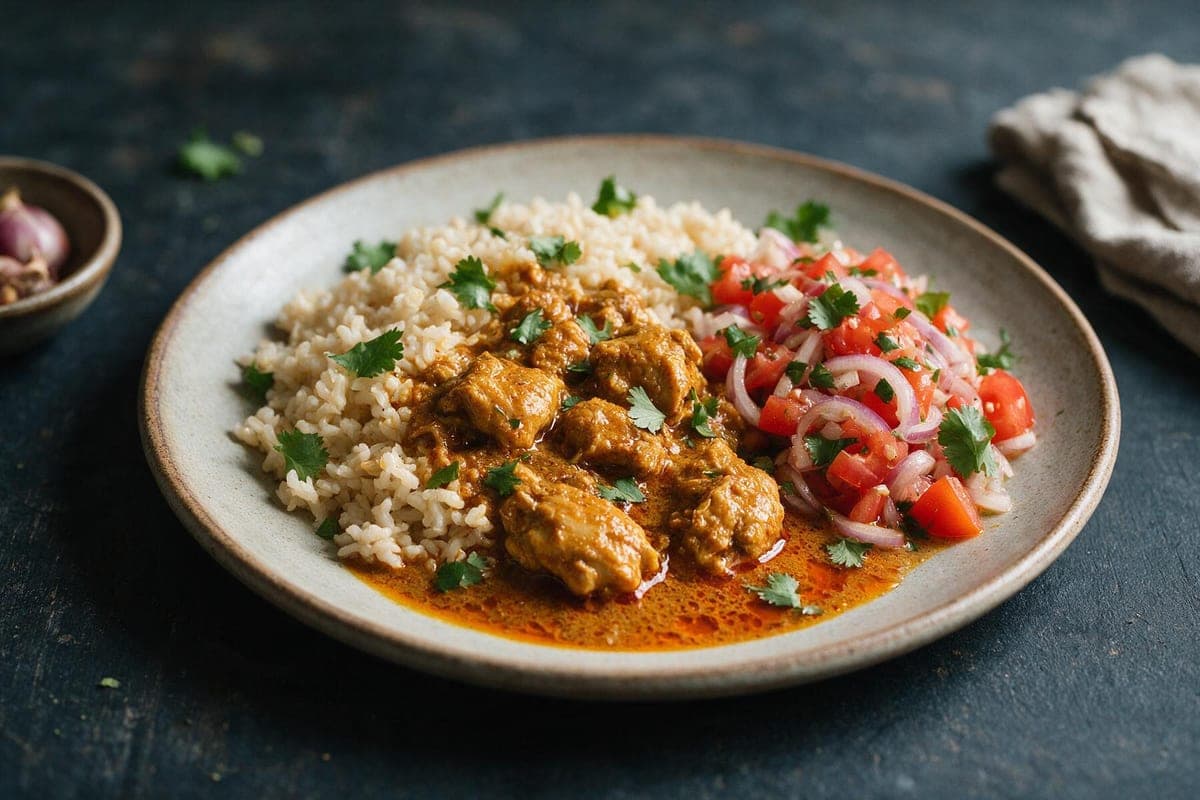
Myanmar's everyday chicken curry: a slow-fried onion, garlic and ginger base, turmeric and paprika for color, fish sauce for depth, cooked until the oil rises, served with rice and a crunchy salad.

- Prep
- 15 min
- Cook
- 45 min
- Total
- 60 min
- Serves
- 2 adults + 1 child, with a portion left for lunch
- Budget
- $15–$24
Kyet thar hin is the home-style chicken curry of central Myanmar: chicken thighs marinated briefly with turmeric and fish sauce, then braised in a thick base of onions, garlic and ginger fried slowly in more oil than feels reasonable, with paprika and a little chile for color. It is thinner and more savory than an Indian curry, with no dairy and no heavy spice blend, and it is finished the Burmese way: cooked until the oil separates and floats in a red-gold layer on top, a stage cooks call si pyan, "the oil returns." With jasmine rice and a sharp tomato-shallot salad, it is a complete, uncomplicated dinner.
Why it's on our list
Burmese food is a gap on our map and in my head; I know the tea-leaf salad and little else. What draws me to this curry is the si pyan finish, a doneness cue I have never cooked toward: you do not stop when the chicken is cooked, you stop when the oil comes back out of the sauce, and I want to see what that does to flavor and texture. It is weeknight-feasible because it is one pot and the active work is slicing onions; the rest is patient simmering while the rice cooks. The seasoning as written is gentle, so my son's plate should match ours, with crushed chile and the sharp salad for the adults to add.
Field notes · Origin & culture
Kyet thar hin means chicken curry in Burmese (kyet thar is chicken, hin is curry or stew), and it belongs to the Bamar cooking of Myanmar's central plains and the Irrawaddy delta. Burmese curries are built on an onion-garlic-ginger paste fried in oil and seasoned with turmeric and fish sauce; they are generally less heavily spiced than Indian curries and less coconut-rich than Thai ones, reflecting Myanmar's position between the two. A meal is served all at once with rice at the center: a curry or two, a clear soup, a salad and raw or blanched vegetables with a pungent dip. The si pyan stage, where the oil floats to the top, is taken as the sign a curry is done. Recipes vary by household and region; this is a plain, common version rather than a definitive one.
Noteworthy ingredients
- Onions, plenty of them: Two large onions cook down into the sauce itself. Slice them thin so they almost dissolve; this is the main labor of the dish.
- Fish sauce: The savory backbone, used in place of salt. Burmese cooks might also add ngapi (fermented fish or shrimp paste); a teaspoon of shrimp paste is optional here. Check the label if gluten matters.
- Paprika and turmeric: Color and warmth. Sweet paprika gives the red-gold oil without heat; the crushed chile is the only real heat, and it is adjustable.
- Peanut oil: More than you would normally use is the point; it carries flavor and becomes the finishing layer. Any neutral oil works, and you can spoon some off at the end.
Prep — 15 min
- Cut the chicken thighs into 2-inch pieces. Toss with 1 teaspoon turmeric, 1 tablespoon fish sauce and a pinch of salt; set aside 20 minutes while you prep.
- Halve the onions and slice them as thin as you can. Mince the garlic and ginger, or blend them with 2 tablespoons water into a rough paste.
- Start the rice: rinse 1 1/2 cups jasmine rice, add 1 3/4 cups water and a pinch of salt, and cook according to the package.
- For the salad, cut the tomatoes into wedges, slice the shallots paper-thin, chop a handful of cilantro, and toss with the juice of half the lime, a pinch of salt and a small pinch of sugar. Refrigerate. Slice the green chile and set aside.
Cook — 45 min
- Heat the oil in the Dutch oven over medium heat. Add the onions with a pinch of salt and cook, stirring often, 12–15 minutes, until soft, golden and much reduced. Do not rush this.
- Add the garlic-ginger paste and cook 2 minutes. Stir in the remaining 1/2 teaspoon turmeric, the paprika, chile flakes and shrimp paste if using, and fry 1 minute so the spices bloom and the mixture turns brick red.
- Add the chicken and its marinade. Raise the heat to medium-high and stir 4–5 minutes, until the pieces are coated and opaque at the edges.
- Pour in 1 cup water and the remaining 2 tablespoons fish sauce. Bring to a boil, lower to a steady simmer, cover, and cook 20 minutes, stirring once.
- Uncover and simmer 8–10 minutes more, until the sauce has thickened and a layer of red-gold oil has risen to the surface; that oil is the sign the curry is done. Taste and add fish sauce or a pinch of sugar if the flavor is flat.
- Rest 5 minutes off the heat. Spoon off some oil if you prefer a lighter plate; traditionally it stays.
Serving
Spoon rice onto each plate, ladle chicken and sauce over one side, and heap the tomato-shallot salad on the other; the acid and crunch make the rich curry work. Scatter cilantro over everything. My son's plate is curry and rice with the salad beside it to try, and the sliced green chile and extra chile flakes stay with the adults. Leftovers improve overnight and keep three days; reheat gently with a splash of water.