Dinner night · Namibia
Kapana-style Beef with Chakalaka
Namibia's street-grill beef, cooked hot and fast in a cast-iron pan with a salt-and-chile seasoning, a fresh tomato-onion salsa and spicy chakalaka, in 40 minutes.
- Prep
- 20 min
- Cook
- 20 min
- Total
- 40 min
- Serves
- 2 adults + 1 child
- Budget
- $18–$28
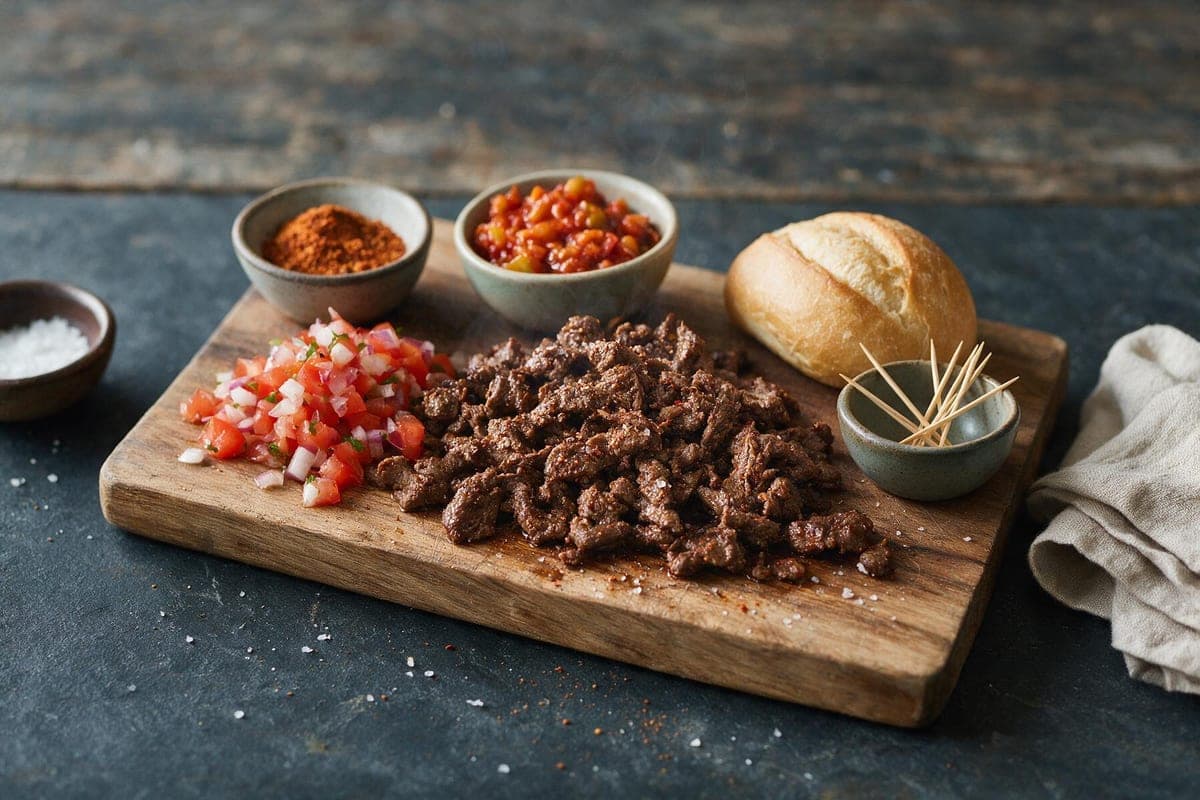
Kapana is Namibia's street meat: thin strips of beef cooked in minutes on a metal plate over a wood fire, seasoned with salt and a chile-spice mix, and eaten standing up with a fresh salsa of onion, tomato and vinegar. At home we cannot replicate the fire, so this is kapana-style: beef sliced thin, seared hard in a smoking cast-iron skillet, tossed in the seasoning and piled on a board with the salsa and a pot of chakalaka, the spicy vegetable relish of beans, peppers, carrots and curry spice that goes with grilled meat across southern Africa. Pap or bread rolls on the side.
Why it's on our list
Namibia's best-known dish is arguably a street-market experience rather than a recipe, and I like the idea of a dinner that is really a platter and a pile of napkins. What I want to learn is how far a hot cast-iron pan can get me toward open-flame flavor, and how to make chakalaka, a relish I have read about for years. It is weeknight-feasible because the beef takes five minutes once the pan is hot, and everything else is chopping. As written it is a warming plate for adults; I will set some beef aside before the chile seasoning goes on, and take my son's chakalaka from the pot before the chile is added.
Field notes · Origin & culture
Kapana is grilled beef sold in Namibia's open-air markets, most famously at the Single Quarters market in Katutura, the township on the edge of Windhoek. Vendors cook small pieces of fresh beef on a metal plate welded to a stand over a wood fire, selling by the piece and competing loudly for customers, each insisting his meat is the best; buyers taste before they buy and eat with their fingers, dipping into a vinegar-sharp salsa of onion and tomato and a chile-salt mix, often with a vetkoek (fried dough) alongside. Kapana stalls are a social space where Namibians of every background meet, and the trade is a low-capital business for young people. Chakalaka is South African in origin and is eaten across the region, including Namibia, where braai culture and German-influenced bread and beer sit beside indigenous staples like oshifima porridge. Our version is home cooking, not a market stall.
Noteworthy ingredients
- Beef for quick cooking: Sirloin, flank or flat-iron steak sliced thin against the grain cooks in minutes and stays tender. Kapana vendors use whatever fresh beef they have; a tender steak is our shortcut.
- Kapana spice: Vendors use a salt-and-chile mix, generally with paprika and sometimes dried garlic or coriander. Ours is salt, chile flakes, paprika, garlic powder and ground coriander; a packaged "braai spice" from a South African grocer is a close substitute.
- Chakalaka base: Canned baked beans in tomato sauce are the usual shortcut in southern Africa, not a compromise; mild curry powder provides the characteristic spice.
- White maize meal for pap: At African groceries or online; fine white cornmeal works. Soft bread rolls are an equally honest side in Namibia.
Prep — 20 min
- If making pap, bring 4 cups water with 1 teaspoon salt to a boil, whisk in 1 cup maize meal and cook 5 minutes; beat in the second cup until stiff, then cover on the lowest heat and let it steam 15 minutes.
- Make the kapana spice: mix 1 1/2 teaspoons salt with the chile flakes, paprika, garlic powder, coriander and 1/2 teaspoon black pepper.
- Slice the steak thin (1/4 inch) against the grain into bite-size strips. Pat dry and toss with 1 tablespoon oil and 1/2 teaspoon salt only; the spice goes on after cooking.
- Salsa: finely dice 1 onion and 2 tomatoes, toss with the vinegar, a pinch of salt and the herbs if using. Set aside.
- Chakalaka vegetables: dice the second onion and the bell pepper; grate the carrots; dice the remaining 2 tomatoes; mince the garlic. Slice the chile if using.
Cook — 20 min
- Chakalaka: Heat 1 tablespoon oil in a saucepan over medium. Cook the onion 4 minutes, add the garlic and bell pepper for 2 minutes, then the curry powder for 30 seconds. Add the carrots and tomatoes and cook 5 minutes until soft. Stir in the baked beans and simmer 5 minutes. Spoon out a mild portion for my son's plate, then add the sliced chile and simmer 3 minutes more. Season with salt.
- Beef: Heat a cast-iron skillet over high heat until it smokes. Add 1 tablespoon oil and half the beef in a single layer; do not stir for 60–90 seconds so it chars, then toss and cook 1 minute more until browned but still juicy. Tip onto a board and repeat with the rest. Batches keep the pan hot enough to sear rather than stew.
- Set aside a small pile of beef for the mild plate. Sprinkle the rest generously with the kapana spice and toss while hot, so the salt and chile stick.
Serving
Kapana is served on a board, not a plate: pile the spiced beef in the middle, put the salsa and the kapana spice in bowls alongside, and let everyone pick with fingers or toothpicks, with a bowl of chakalaka and a slab of pap or a bread roll each. My son's plate gets the unspiced beef, the mild chakalaka and the salsa, which has no heat, and the spice bowl stays within reach if he wants to try a pinch. Leftover beef is good cold in a sandwich; the chakalaka keeps a week and is better on day two, spooned on eggs or toast.