Dinner night · North Korea
Pyongyang-style Naengmyeon
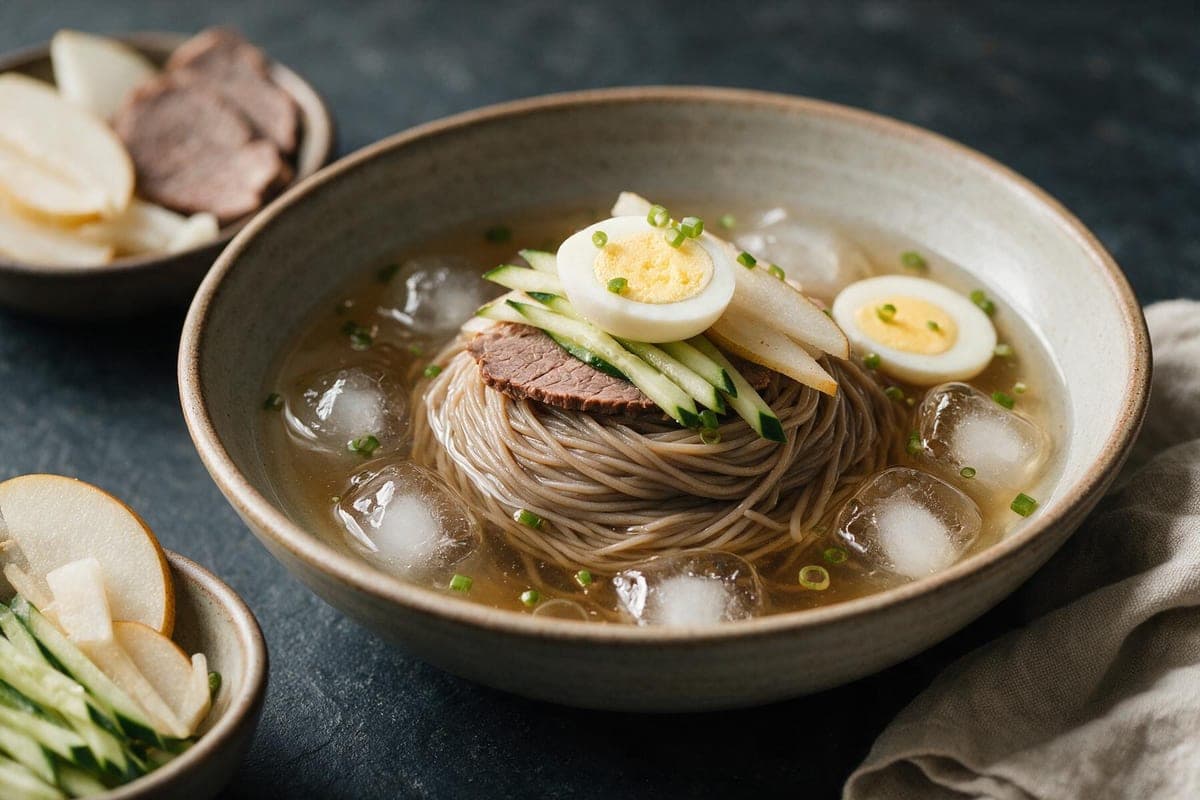
Chilled buckwheat noodles in an icy, clean beef broth with sliced brisket, cucumber, pear and a half egg: the famous cold-noodle dish of Pyongyang, made with a one-hour broth and store-bought noodles.

- Prep
- 20 min
- Cook
- 60 min
- Total
- 80 min
- Serves
- 2 adults + 1 child; the broth recipe makes a little extra
- Budget
- $18–$28
Pyongyang naengmyeon is a bowl of thin, springy buckwheat noodles in a very cold, very clear beef broth, topped with slices of the brisket that made the broth, cucumber, crisp Korean pear, pickled radish and half a boiled egg. The broth is barely seasoned on purpose; the flavor is clean and faintly sweet, and each eater sharpens it at the table with vinegar and a dab of hot mustard. In Pyongyang the broth might be beef or pheasant blended with the brine of dongchimi, a radish water-kimchi; this version makes a quick brisket broth, chills it in an ice bath, and adds a splash of radish-kimchi brine if there is a jar in the fridge. The dried naengmyeon noodles come from a Korean grocery and cook in three minutes.
Why it's on our list
A cold soup for dinner is not something we have ever made, and I am curious whether my son will find a bowl of icy noodles delightful or baffling. What I want to learn is restraint: the whole dish depends on a broth that is clear and understated, skimmed carefully, chilled until almost slushy, and then seasoned by each person rather than by the cook. It is weeknight-feasible because the broth simmers unattended for most of an hour, the toppings are just slicing, and the noodles take three minutes at the end; it is also a dinner for a hot evening when no one wants the oven on. There is no heat unless you add the mustard.
Field notes · Origin & culture
Naengmyeon ("cold noodles") is associated with the northern half of the Korean peninsula, where buckwheat grows well in the cool climate, and Pyongyang naengmyeon is the best-known style: buckwheat noodles in a chilled beef or pheasant broth, often blended with dongchimi brine. Korean food historians date the dish to the Joseon period at least, and it was originally a winter food, eaten with kimchi brine so cold that an old nickname, deoldeori, refers to shivering. It is often contrasted with Hamhung naengmyeon, a chewier, spicier style from the northeast made with potato-starch noodles. Pyongyang's Okryu-gwan restaurant, open since 1960, is the dish's most famous address, and the style is also widely cooked in Seoul by families with northern roots. Vinegar and mustard are added by the eater, and some diners sip the broth before touching the noodles.
Noteworthy ingredients
- Naengmyeon noodles: Dried bundles labeled naengmyeon or "buckwheat cold noodles" at H Mart or any Korean grocery; most mix buckwheat with wheat or starch, so they are not gluten-free. Soba is a softer last-resort substitute.
- Beef brisket: A 1-lb flat piece makes both broth and topping. Simmer gently so the broth stays clear.
- Korean pear: Big, round and crisp; a firm Bosc pear is a fine substitute.
- Korean mustard (gyeoja): Hot English mustard powder mixed with water works in its place.
- Radish-kimchi brine (optional): A few spoonfuls gives the broth its traditional tang; without it, lean harder on the vinegar.
Prep — 20 min
- Put the brisket in the large pot with 8 cups cold water, the halved onion, smashed garlic, sliced ginger, 2 scallions and half the radish in chunks. Bring to a boil, skim the foam, then lower to a bare simmer.
- While the broth cooks, peel and slice the pear into thin half-moons and hold them in water with a squeeze of vinegar so they do not brown. Cut the cucumber into thin matchsticks.
- Slice the remaining radish paper-thin and toss with 1 tablespoon vinegar, 1/2 teaspoon sugar and a pinch of salt for a quick pickle.
- Boil the eggs 9 minutes, cool in cold water, peel and halve.
- Mix 1 tablespoon mustard powder with 1 tablespoon water and let it sit 10 minutes to develop, or set out the gyeoja. Slice the last scallion thin.
Cook — 60 min
- Simmer the brisket gently, uncovered, 50–55 minutes, skimming once or twice, until a fork slides in easily. Lift the meat out, wrap in foil and refrigerate so it firms for slicing.
- Strain the broth into a bowl, discarding the vegetables. Season with 1 tablespoon soy sauce, 2 tablespoons vinegar, 1 teaspoon sugar and salt to taste; it should be clean and only lightly savory. Add 1/4–1/2 cup radish-kimchi brine if using.
- Set the bowl into a larger bowl of ice and water and stir occasionally for 20 minutes, until thoroughly cold; skim any fat that sets on top. Move it to the freezer for the last 10 minutes so ice crystals just begin to form.
- Bring a big pot of water to a boil. Cook the noodles according to the package, usually 2–3 minutes, stirring so they do not clump. Drain and rinse under cold running water, rubbing the noodles until they are cold and slick. Drain well.
- Slice the chilled brisket thin across the grain.
Serving
Twist a nest of noodles into each deep bowl and ladle the icy broth around them, adding a few ice cubes if it is not truly cold. Arrange sliced brisket, pear, cucumber, pickled radish and a half egg on top and scatter scallion. Put the vinegar and mustard on the table and let each person stir in a spoon of vinegar and a small dab of mustard; I'll let my son taste the broth plain first, since the plain bowl is already the mild one. Scissors at the table for the long noodles are normal. Leftover broth keeps three days and the brisket two; cook noodles fresh each time, since they turn gluey when stored.