Dinner night · Republic of the Congo
Liboke Fish Parcels with Rice
Congo River fish baked in a leaf (or foil) parcel with tomato, onion, pepper, garlic and ginger, so it steams in its own juices; a 45-minute oven dinner.
- Prep
- 20 min
- Cook
- 25 min
- Total
- 45 min
- Serves
- 2 adults + 1 child, one parcel each
- Budget
- $18–$28
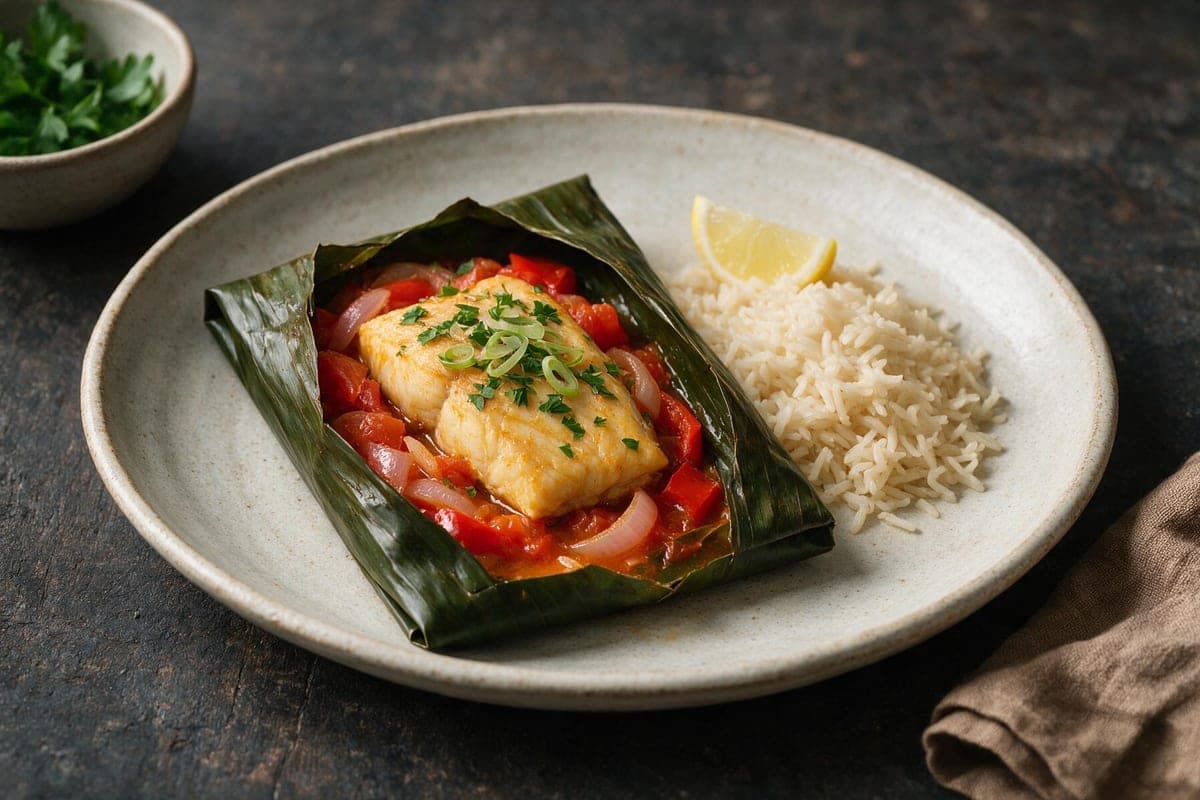
Liboke (plural maboke) is both a dish and a method from the Congo River basin: fish, most often the big river perch called capitaine, or catfish, is laid on a banana leaf with sliced tomato, onion, bell pepper, garlic, ginger and chile, folded into a tight parcel and set over coals or in an oven until the fish steams in its own juices and the vegetables collapse into a sauce. Opening the parcel at the table releases a cloud of ginger-scented steam. It is eaten with chikwangue (fermented cassava bread) or rice; this version uses rice, firm white fish fillets and either banana leaves from the freezer case or a foil-and-parchment parcel.
Why it's on our list
The two Congos share a river and a lot of food, and I want our Brazzaville night to be a dish that comes from that river rather than a generic stew. Liboke fits: it is cooked in Brazzaville and Kinshasa alike and is the dish most associated with Congolese fish. The technique I want to learn is leaf-parcel steaming, which Southeast Asian and Mexican cooking also use, so it will pay off more than once; the fish cannot dry out, and the vegetables become the sauce without a pan. It is weeknight-feasible because everything is assembled cold in ten minutes and goes in the oven while the rice cooks, with almost nothing to wash. Each person gets a parcel, so my son's has no chile and ours do.
Field notes · Origin & culture
French Wikipedia describes liboke as a Congo Basin dish and cooking method, prepared in banana leaves and cooked in an oven or over an open grill, found in both the Republic of the Congo and the Democratic Republic of the Congo, especially along the Congo River; the usual seasonings are tomatoes, onions, bell peppers, garlic and ginger, and fish (particularly capitaine, the Nile perch) is the most popular filling, though beef and other meats are also wrapped. The word is Lingala, the trade language of both banks of the river between Brazzaville and Kinshasa, and the plural is maboke. Congolese staples around the parcel are cassava in several forms, especially saka-saka (pounded cassava leaves) and chikwangue, plus plantain, rice and peanuts; poulet moambe, chicken in palm-nut sauce, is the region's other great dish. Fillings and heat vary by cook and by what the river gives, so this is one practical version.
Noteworthy ingredients
- Firm white fish fillets: Capitaine (Nile perch) is sometimes sold frozen at African markets; otherwise use tilapia, catfish, cod or halibut. Catfish is closest in spirit to the river fish.
- Banana leaves: Frozen in one-pound packets at Latin and Asian markets. Thaw, wipe, and pass each leaf quickly over a burner to make it pliable. Heavy-duty foil lined with parchment works fine and changes only the aroma.
- Fresh ginger: Used generously; it is what makes a liboke taste Congolese rather than Mediterranean. Do not swap for dried.
- Bell pepper and tomato: They give up their juice in the sealed parcel and become the sauce. Slice thin so they cook in the time the fish takes.
- Bouillon cube: A crumbled Maggi cube is standard in Congolese kitchens; a little goes in each parcel.
Prep — 20 min
- Heat the oven to 400°F. Start the rice: rinse 1 1/2 cups rice and cook with 2 1/4 cups water and a pinch of salt by the package timing.
- Pat the fish dry. Season both sides with salt, black pepper and the juice of half a lemon.
- Slice the tomatoes, onion and bell pepper thin. Mince the garlic and grate the ginger; mix them together with the oil and the crumbled bouillon cube into a paste. Slice the chile thin and keep it separate. Chop the parsley.
- If using banana leaves, thaw them, wipe clean, cut into three 12-by-16-inch rectangles and pass each quickly over a burner flame until glossy and flexible. If using foil, cut three 16-inch squares of heavy-duty foil and lay a square of parchment on each.
Cook — 25 min
- Lay a bed of onion slices in the center of each leaf or parchment. Set a fish portion on top and spread a third of the garlic-ginger paste over it. Cover with tomato and bell pepper slices, a little salt, and chile slices on the adult parcels only. Add a squeeze of lemon to each.
- Fold the leaf over the fish from both long sides, then fold the ends under to make a snug packet; tie with string if it wants to open. For foil, bring the edges together and crimp tightly so no steam escapes.
- Set the parcels on a sheet pan and bake 22–25 minutes for fillets about 1 inch thick, 18 minutes for thin tilapia. The parcels will puff and the leaves darken. On a grill, cook over medium heat with the lid down for about the same time; that is the traditional method.
- Open one parcel carefully, away from your face: the fish should flake and read 140°F, and the vegetables should have slumped into a juicy sauce. Reseal and bake 5 more minutes if not.
Serving
Put a parcel on each plate with a mound of rice beside it and let everyone open their own, which is half the fun; scatter parsley or green onion into the open packet and squeeze lemon over. The juice pooled in the leaf is the sauce, so spoon rice into it. My son's parcel is the one without chile; I'll pass extra sliced habanero for the adults. Liboke is best the night it is made, but leftover fish and vegetables keep two days and make a good cold rice salad with lemon.