Dinner night · Rwanda
Rwandan Brochettes with Ibirayi
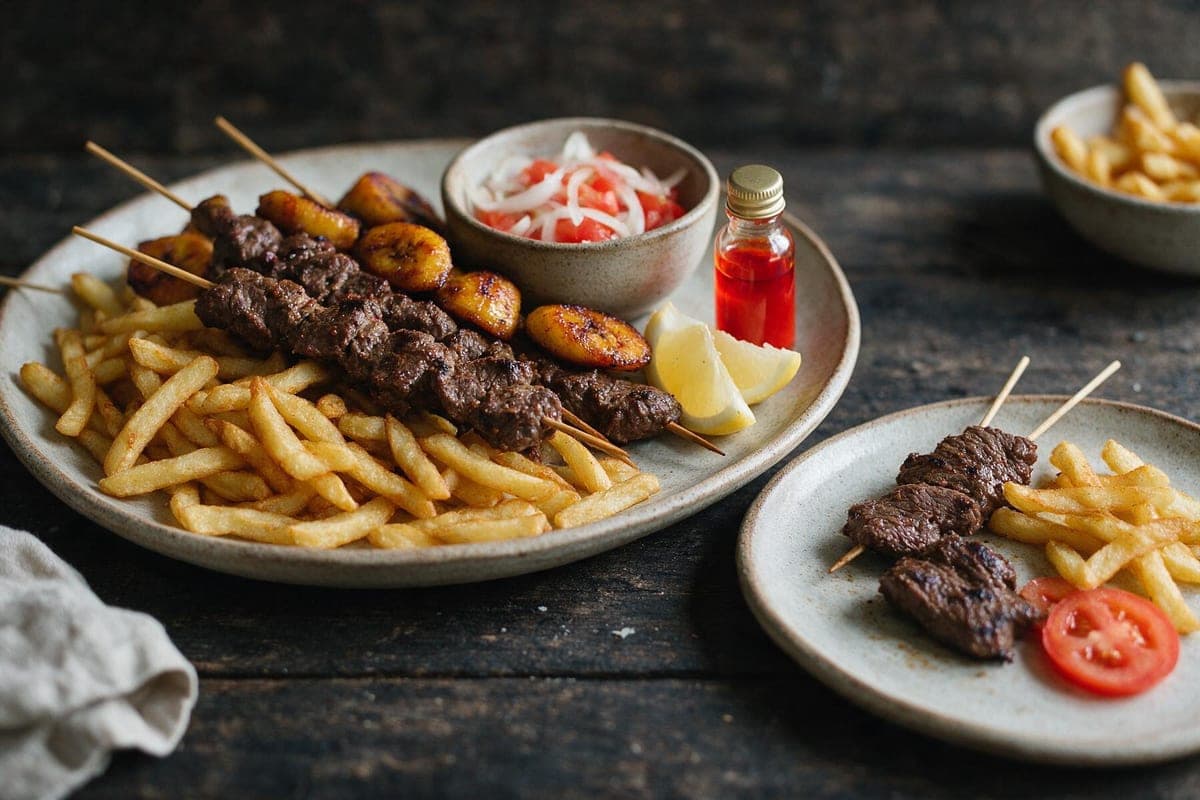
Kigali's favorite evening meal: skewers of marinated beef (or goat) grilled or broiled, with crisp fried potatoes, raw onion and tomato, and chile oil.
- Prep
- 20 min
- Cook
- 35 min
- Total
- 85 min
- Serves
- 2 adults + 1 child; about 6 skewers
- Budget
- $16–$26
Brochettes are the food Rwandans eat out in the evening: cubes of meat, most often goat, marinated with onion, garlic and salt, threaded onto skewers with slivers of onion and grilled over charcoal until the edges char. They come with ibirayi, which is simply fried potatoes, and sometimes fried plantain, with raw onion and tomato on the side and a few drops of fiercely hot chile oil for those who want it. This version uses beef, since goat is not in every supermarket, and cooks the skewers under the broiler, which comes closer to charcoal than a skillet does.
Why it's on our list
In Rwanda, eating out means brochettes and a cold drink at a bar with a charcoal grill out front, and I want our Rwandan night to be that meal. The thing to learn is how to get a real char on skewers indoors, using a very hot broiler and a dry marinade so the meat sears rather than steams. It is weeknight-feasible because the marinade takes five minutes in the morning, the potatoes fry while the skewers broil, and the sides are raw vegetables. My son likes meat on a stick and fries, so this one looks like an easy sell, with the chile oil reserved for the adult plates.
Field notes · Origin & culture
Brochettes (the French name is a legacy of Belgian administration) are the most popular food when eating out in Rwanda, usually goat, though beef, pork, fish and even tripe are grilled the same way; in rural areas vendors raise the goats themselves and serve the meat with roasted bananas. Ibirayi is the Kinyarwanda word for potatoes, introduced in the colonial era and now among the most popular staples in a cuisine otherwise built on beans, plantains (ibitoke), sweet potatoes, cassava and sorghum. The bar order of brochettes with fried potatoes, raw onion and a squeeze from a small bottle of chile oil (Akabanga is the famous Rwandan brand) is as close to a national dish as the country has. Urwagwa, a banana beer, is the traditional drink; Rwanda is also known for excellent coffee and tea.
Noteworthy ingredients
- Beef sirloin or goat: Sirloin or top-round cut into 1 1/4-inch cubes cooks fast and stays juicy. Halal butchers and many international markets sell goat; if you use it, cut small and marinate overnight, since goat is leaner and tougher.
- The marinade: Grated onion, garlic, salt, pepper, a little oil and often lemon or ginger. Grating the onion rather than chopping it lets its juices tenderize the meat.
- Potatoes for frying: Russets or Yukon Golds cut into thick fries; soaking and drying them makes them crisp. A bag of frozen fries baked on a sheet pan is an honest shortcut.
- Chile oil: Akabanga, sold in small dropper bottles, is extremely hot and available online and in some African grocers; a few drops of any very hot chile oil does the same job at the table.
Prep — 20 min
- Marinate the meat: grate half of one onion and the ginger into a bowl, add the minced garlic, 1 1/2 teaspoons salt, 1 teaspoon black pepper, the paprika, cumin, 2 tablespoons oil and the juice of half the lemon. Toss with the beef cubes and refrigerate at least 30 minutes, ideally several hours or overnight.
- If using bamboo skewers, soak them in water for 30 minutes so they do not burn.
- Cut the potatoes into 1/2-inch-thick fries, soak in cold water 10 minutes, then drain and dry thoroughly on a towel. Slice the plantain into 1/2-inch diagonal pieces if using.
- Cut the remaining onion into wedges, then separate into petals; some will go on the skewers and some, sliced thin, into the salad. Slice the tomatoes. Toss the thin onion and tomato with salt, lemon juice and chopped herbs if using.
Cook — 35 min
- Heat 2 cups oil in a heavy pot or deep skillet to 325°F (a cube of potato should bubble steadily). Fry the potatoes in two batches for 5–6 minutes until pale and soft; lift out onto a rack. (This first fry can be done while the meat marinates.)
- Set the oven broiler to high with a rack 4 inches below the element. Thread the beef onto skewers, 5–6 cubes each, with an onion petal between every cube or two; leave a little space so the meat browns rather than steams. Lay the skewers on a foil-lined sheet pan.
- Broil the skewers 5–6 minutes, turn, and broil 4–5 minutes more, until charred at the edges and 135–140°F inside for medium; goat should go a few minutes longer. Rest 5 minutes.
- While the skewers broil, raise the oil to 375°F and fry the potatoes a second time, 3–4 minutes, until deep golden and crisp. Salt immediately. Fry the plantain slices 2 minutes per side in the same oil, if using.
- Taste a piece of meat and sprinkle with more salt if needed. Squeeze lemon over the skewers.
Serving
Pile the fries on a platter with the skewers on top, the plantain alongside and the tomato-onion salad in a bowl, with lemon wedges and the chile oil at the table, the way Rwandan bars serve them. My son's plate is two skewers slid off the stick, fries and plain tomato, with no chile anywhere near it; the adults add Akabanga one drop at a time, because it is genuinely fierce. Leftover meat keeps two days and is good sliced cold or warmed in a skillet; fries do not keep, so eat them all.