Dinner night · Saudi Arabia
Chicken Kabsa
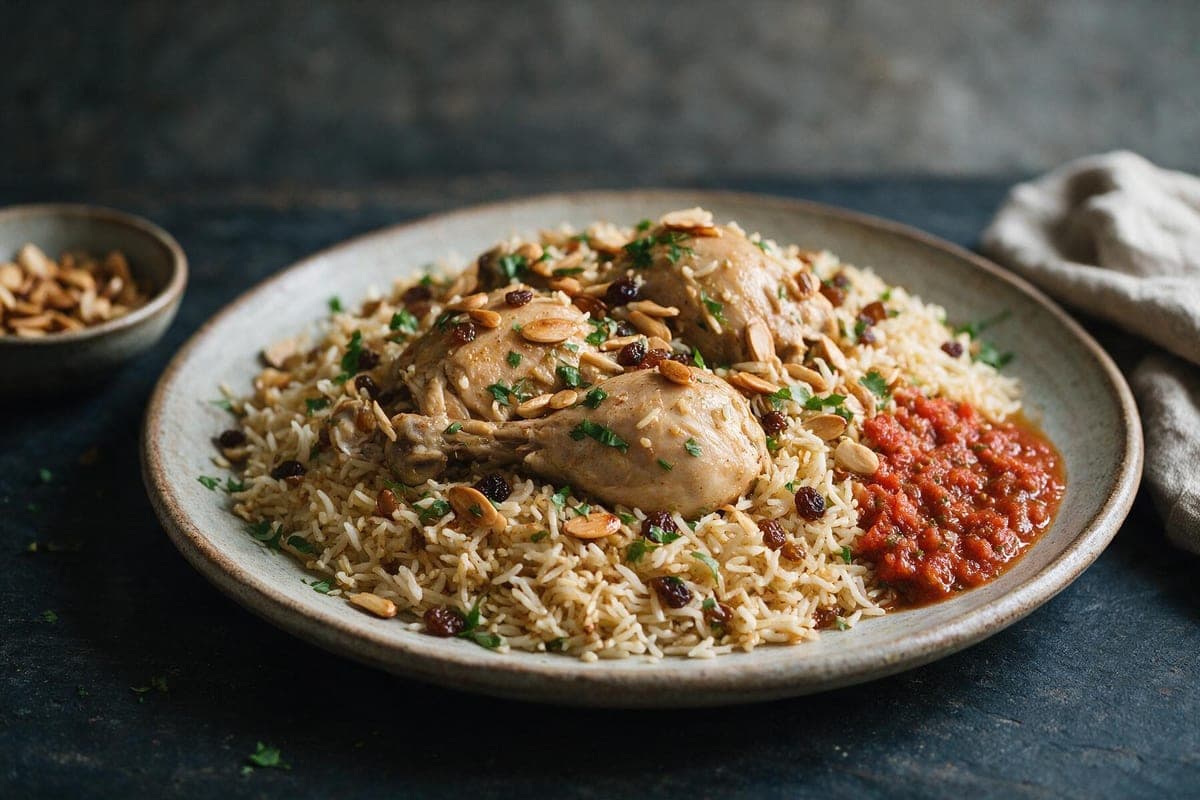
Saudi Arabia's national rice: chicken simmered with whole spices and dried lime, then the broth cooks the basmati, finished with toasted nuts, raisins and a tomato-chile daqqus on the side.

- Prep
- 20 min
- Cook
- 60 min
- Total
- 80 min
- Serves
- 2 adults + 1 child, with rice left over for lunch
- Budget
- $15–$24
Kabsa is a one-pot rice dish in which the chicken makes its own stock first. Bone-in pieces simmer with onion, tomato, garlic and whole spices, including cinnamon, cardamom, cloves, black pepper and the puckery dried lime called loomi, until the broth is deeply flavored. The chicken comes out to brown, and basmati goes into the same pot to absorb the broth. It is served on a platter under the chicken with toasted almonds, raisins, and daqqus, a tomato-garlic-chile sauce each person spoons on to taste. The spicing is fragrant rather than hot.
Why it's on our list
Kabsa is the plate at the center of a Saudi table, served to guests, at Friday lunch and at every Eid, and it is the dish most often named when people describe Saudi food. The technique I want is the classic Gulf rice method: build a spiced stock with the meat, then cook the rice in exactly enough of it that every grain is seasoned and separate. Dried lime is the ingredient I am most curious about; it is sour, smoky and unlike anything in my pantry. It is weeknight-feasible because, though it takes 80 minutes, the active work is about 20 and the rest is a pot simmering on its own. The heat is all in the daqqus on the side, so my son's plate is rice and chicken, and the adults add sauce.
Field notes · Origin & culture
Kabsa (kabsah) is a mixed rice dish of the Arabian Peninsula, generally considered the national dish of Saudi Arabia and claimed in some form across the Gulf states, where the related machboos is the everyday name. Its exact origin is debated: it is variously attributed to Bedouin cooking in the Najd region of central Saudi Arabia, to influence from Yemeni mandi, or to an older exchange of rice-and-meat dishes across the Indian Ocean trade. The name is usually linked to the Arabic verb for pressing or packing, for the way rice and meat are packed into one pot. In 2021 the Saudi Ministry of Culture promoted kabsa as national heritage. Spice blends, dried lime and the nut-and-raisin garnish vary by region and family; this is a home version, not the one true recipe.
Noteworthy ingredients
- Loomi (dried black lime): Whole limes boiled in brine and sun-dried until black, with a sour, faintly smoky flavor. Middle Eastern groceries and online spice shops carry them; pierce them with a knife before adding. Substitute 1 teaspoon ground loomi, or the zest and juice of 1 lime added at the end.
- Whole spices: Cinnamon stick, green cardamom pods, cloves, black peppercorns and a bay leaf go into the stock whole and come out before serving. Ground kabsa or baharat blend works if that is what you have; use 2 teaspoons.
- Basmati rice: Rinse until the water runs clear and soak 20 minutes so it cooks evenly and does not clump.
- Bone-in, skin-on chicken: The bones make the stock worth having. Thighs and drumsticks, or a whole chicken in quarters.
- Tomato paste and fresh tomato: They color the rice its reddish gold.
Prep — 20 min
- Rinse the rice several times and soak it in cold water for 20 minutes.
- Pat the chicken dry and season generously with salt. Slice the onions thin, dice 3 tomatoes, and grate the carrot. Smash 2 garlic cloves and mince the other 2. Pierce the dried limes with the tip of a knife.
- Daqqus: blend 2 tomatoes with the minced garlic, the chile (seeded if you like), a pinch of salt, a squeeze of lemon and a few cilantro leaves into a loose salsa; simmer 5 minutes if you prefer it cooked and smoother.
- Dice the cucumber for a simple salad; dress with lemon and salt before serving.
Cook — 60 min
- Heat 2 tablespoons oil in a Dutch oven over medium-high heat. Brown the chicken skin-side down 5 minutes, turn and cook 2 minutes more, then move to a plate.
- Lower to medium, add the onions with a pinch of salt and cook 6–7 minutes until soft and golden. Stir in the smashed garlic, tomato paste, cumin, turmeric, whole spices and dried limes for 1 minute until fragrant.
- Add the tomatoes and carrot, cook 2 minutes, then return the chicken and add 3 1/2 cups water and 1 1/2 teaspoons salt. Bring to a boil, cover, lower the heat and simmer 25 minutes until the chicken is cooked through.
- Lift the chicken onto a sheet pan. Measure the broth: you need 3 cups for 2 cups of rice; save any extra, or add hot water if short. Drain the rice and stir it into the pot. Bring to a boil, cover tightly, reduce to the lowest heat and cook 15 minutes. Turn off the heat and let it steam, covered, 10 minutes more.
- Meanwhile, brush the chicken with oil and brown it under the broiler 5–8 minutes until the skin is crisp and spotted dark. Toast the almonds in 1 tablespoon oil in a small pan until golden, add the raisins for 30 seconds until they puff, and set aside.
- Fluff the rice with a fork, pulling out the whole spices and dried limes as you find them. Taste for salt.
Serving
Spread the rice on a wide platter, lay the chicken on top, and scatter the almonds, raisins and chopped cilantro over everything. Bring the daqqus, salad and lemon wedges to the table so each person spoons on sauce to taste; the shared platter is traditional, though plates work fine. My son's plate is rice, chicken and salad, with the daqqus kept with the adults. Leftovers keep three days; reheat the rice covered with a tablespoon of water, and crisp the chicken in a hot oven. Extra broth makes a good soup base.