Dinner night · Serbia
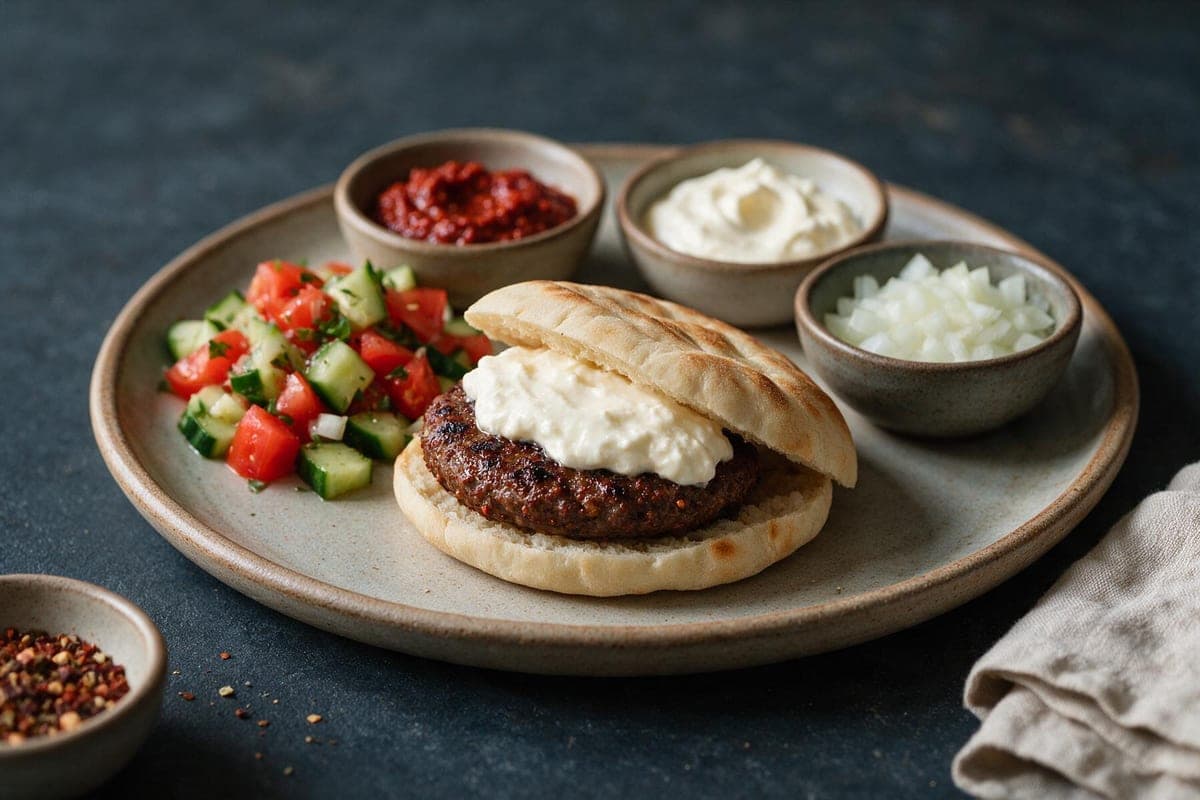
Pljeskavica with Kajmak and Lepinja
Serbia's big, spiced grilled beef patty tucked into soft flatbread with creamy kajmak, raw onion and ajvar: a burger night with a Balkan accent that comes together in a skillet in about 40 minutes.

- Prep
- 20 min
- Cook
- 20 min
- Total
- 40 min
- Serves
- 2 adults + 1 child, with one patty left for lunch
- Budget
- $20–$30
Pljeskavica is the Serbian grilled meat patty: a wide, thin disc of seasoned ground beef and pork, cooked hard and fast until the edges crisp, then served either on a plate with sides or stuffed into lepinja, a soft, chewy flatbread. The traditional partners are kajmak (a rich, slightly tangy dairy cream somewhere between clotted cream and fresh cheese), raw onion and ajvar, the roasted red pepper relish. This version cooks the patties in a ripping-hot cast-iron skillet instead of over charcoal, uses a quick stand-in for kajmak, and swaps in whatever soft flatbread the supermarket has. A chopped tomato-cucumber salad on the side keeps it from being all meat and bread.
Why it's on our list
We already know our family likes burgers, so a dish that is recognizably a burger but tastes different is an easy way to bring a new country to the table without a fight. What I want to learn is how much the seasoning changes things: there is no ketchup here, just paprika, garlic, black pepper and a little baking soda, which Serbian cooks use to keep the meat tender and springy. It is weeknight-feasible because the only real work is mixing and shaping, and the sides are assembly, not cooking. I plan to shape one small plain patty for my son and let the adults pile on the onion and ajvar.
Field notes · Origin & culture
Pljeskavica is one of Serbia's national dishes and is eaten across the former Yugoslavia, from Bosnia and Herzegovina to Montenegro and North Macedonia. The name comes from a verb meaning "to clap" or "to slap," for the way the patty is flattened between the palms. It shares a lineage with ćevapi, the little grilled sausages of the same Ottoman-influenced grilling tradition, but pressed into a disc. The southern city of Leskovac is the dish's acknowledged capital: it hosts a huge grill festival, Roštiljijada, every late summer, and "Leskovačka pljeskavica" has been a legally protected name in Serbia since 2008. Kajmak, lepinja, onion and ajvar are the standard accompaniments; urnebes, a spicy cheese spread, is a popular extra.
Noteworthy ingredients
- Beef-and-pork blend: Serbian pljeskavica is often a mix of beef with pork or lamb. Ground beef alone is fine, but a 2:1 beef-to-pork mix gives the juicier, more traditional result. Ask the meat counter, or buy both and combine.
- Kajmak stand-in: Real kajmak is not sold in most US supermarkets. Beat together softened cream cheese, a little butter and sour cream with a pinch of salt; it gets you surprisingly close in flavor and richness. Some Balkan markets and larger international grocers do carry imported kajmak in tubs.
- Ajvar: The roasted red pepper and eggplant relish is in the international aisle at many large supermarkets and at any Eastern European market. Choose "mild" unless everyone likes heat. Substitute: roasted red peppers blended with a little olive oil and garlic.
- Lepinja: The proper bread is a thick, puffy flatbread. Thick pita, Greek-style pocketless pita or soft ciabatta rolls are the best substitutes.
- Sweet paprika: Not smoked. Hungarian or any plain sweet paprika works.
Prep — 20 min
- Make the kajmak stand-in: beat cream cheese, butter, sour cream and a pinch of salt in a small bowl until smooth and fluffy. Refrigerate.
- Grate half an onion on the coarse side of a box grater and mince the garlic. Put both in a large bowl with the beef, pork, paprika, baking soda, 1 1/4 teaspoons salt, 1/2 teaspoon black pepper and the sparkling water.
- Mix with your hands for a full 2 minutes, until the meat turns sticky and pale. This kneading is what gives pljeskavica its bouncy texture. Cover and refrigerate for at least 10 minutes while you prep the rest.
- Chop tomatoes and cucumber into small dice; slice the remaining 1 1/2 onions thinly for serving. Chop parsley. Toss tomato, cucumber, a handful of parsley and a few onion slices with vinegar, a pinch of salt and a squeeze of lemon; crumble cheese over if using.
- Divide the meat into 4 portions. Flatten each between wet palms into a thin disc about 6 inches wide and barely 1/2 inch thick. They should look too big for the bread; they shrink. Make one smaller, simpler patty for a child if you like.
Cook — 20 min
- Heat a cast-iron skillet or grill pan over high heat until it just starts to smoke. Brush the pan with oil.
- Lay in 2 patties. Cook 3–4 minutes without moving them, until the underside is deeply browned and the edges are crisp. Flip and cook 3 minutes more, to 160°F. Transfer to a plate and repeat with the remaining patties.
- While the second batch cooks, warm the flatbreads: 30 seconds per side in a dry skillet, or wrapped in foil in a 300°F oven for 5 minutes.
- If you like, dip the cut side of each warmed flatbread briefly in the fat left in the skillet, which is how many Serbian grill stands do it.
- Let the patties rest 2 minutes. Split or fold the bread, spread with a thick layer of the kajmak stand-in, add a patty, and top with onion slices and a spoonful of ajvar.
Serving
Serve each pljeskavica in its bread with the tomato-cucumber salad alongside and the ajvar, kajmak and extra onion in bowls so everyone builds their own. For a mild plate, give a child a smaller patty with kajmak only; the patties are not spicy, so the heat decision is really about raw onion. Leftover patties keep 3 days refrigerated and reheat well in a skillet.