Dinner night · Slovakia
Bryndzové Halušky
Slovakia's national dish: soft potato dumplings in a tangy sheep-cheese sauce with crisp bacon on top, made with a supermarket feta stand-in in 45 minutes.

- Prep
- 20 min
- Cook
- 25 min
- Total
- 45 min
- Serves
- 2 adults + 1 child; very filling
- Budget
- $12–$18
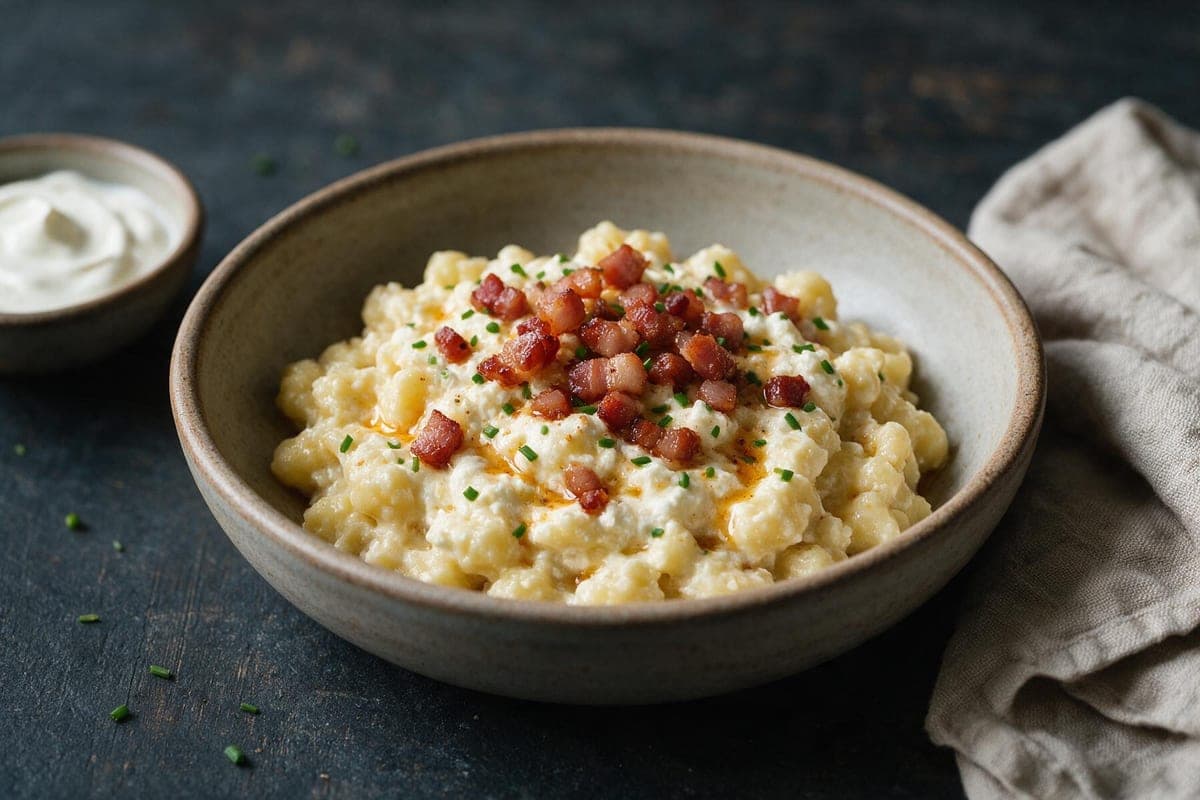
Bryndzové halušky are small, irregular potato dumplings, somewhere between gnocchi and spätzle, boiled and tossed in a sauce of bryndza, a soft, salty, tangy sheep's-milk cheese, then topped with crisp cubes of smoked bacon and a spoonful of its fat. That is the whole dish. It is rich, sour, salty and deeply satisfying, the Slovak answer to macaroni and cheese, and a plate of it is a national emblem. Real bryndza is hard to find in the US, so this version blends feta with sour cream to land close to its flavor and texture.
Why it's on our list
This is one of the few national dishes anywhere that costs about twelve dollars to make and needs nothing but potatoes, flour, cheese and bacon. I want to learn the dumpling technique, which is less about kneading than about scraping a loose dough off a board into boiling water in little ragged pieces, and I want to know whether a feta-and-sour-cream blend gets anywhere near the sharp, barnyard tang Slovaks describe. It is also the kind of dinner my son can help with: grating potatoes, scraping dumplings, counting bacon bits. It sits firmly in the "potato comfort" category that our collection has almost none of.
Field notes · Origin & culture
Bryndzové halušky is widely regarded as the national dish of Slovakia and is rooted in the shepherding culture of the country's mountains. Bryndza, a soft sheep's cheese, has been made in the Carpathian region for centuries; its spread is associated with the Wallachian shepherds who settled in what is now Slovakia from around the fifteenth century, and the first bryndza factory opened in Detva in 1787. The dish belongs to the salaš, the summer sheepfold where shepherds made cheese and ate halušky from a shared pan. The village of Turecká, near Banská Bystrica, has hosted an annual halušky festival and cook-off since 1995. The same dumplings also appear with sauerkraut and bacon (strapačky), and the fried-cheese neighbor from Czechia is as popular in Slovakia as at home.
Noteworthy ingredients
- Bryndza substitute: Bryndza is salty, spreadable, tangy sheep's cheese. The usual stand-in is a block of sheep's-milk feta (Bulgarian or Greek, the creamier the better) mashed with full-fat sour cream until spreadable. Some Eastern European grocers carry imported Slovak or Polish bryndza; if you find it, use 8 oz and skip the sour cream.
- Starchy potatoes: Russets, grated raw, give the dough its texture. Do not use waxy potatoes or boiled ones.
- Smoked slab bacon: Slovak slanina is thick, heavily smoked pork belly cut into cubes. Thick-cut smoked bacon from the supermarket, diced, is close; pancetta is too mild.
- Flour: Just enough to bind the grated potato into a soft, spoonable dough. Add it gradually; too much makes the dumplings gummy.
Prep — 20 min
- Dice the bacon into 1/3-inch cubes. Set aside.
- Crumble the feta into a bowl and mash it with the sour cream and a grind of pepper until it is a thick, slightly lumpy spread. Taste: it should be sharp and salty. Leave it at room temperature so it melts easily later.
- Peel the potatoes and grate them finely on the small holes of a box grater (or in a food processor fitted with the fine grating disc, then pulsed a few times with the blade). You want a wet, almost pulpy mash, not shreds.
- Stir in 1/2 teaspoon salt and the egg, then add the flour a quarter cup at a time, stirring with a spoon, until you have a thick, sticky batter that slowly falls off the spoon in a lump. Stop adding flour as soon as it holds; different potatoes take different amounts.
- Put a large pot of water on to boil with 1 tablespoon salt.
Cook — 25 min
- While the water heats, cook the bacon in the skillet over medium heat for 8–10 minutes, until crisp and the fat has rendered. Turn off the heat and leave the bacon in its fat.
- Make the dumplings. The classic method: spread a third of the dough on a small wet cutting board, hold it over the boiling water, and use a knife to scrape small pieces (about the size of a fingertip) into the pot, dipping the knife in the water to keep it clean. The easier method: push the dough through a spätzle maker, a coarse colander or a potato ricer with the largest holes straight into the water. Work in two or three batches so the pot is not crowded.
- The dumplings sink, then float. Once they float, give them another 1–2 minutes, then lift them out with a slotted spoon into a warm bowl. Repeat with the remaining dough.
- Add the hot dumplings to the cheese mixture in two additions, stirring gently after each so the heat melts the cheese into a creamy coating. If it seems dry, loosen with a tablespoon or two of the dumpling cooking water.
- Rewarm the bacon over medium heat for a minute so it sizzles.
Serving
Spoon the halušky into shallow bowls and top each with bacon cubes and a drizzle of the hot bacon fat; chopped chives or dill on top are not traditional everywhere but are common and welcome. Pass extra sour cream. There is no spice to manage, but the cheese sauce is tangy, so I'll mix my son's portion with a little more sour cream to soften it and let the bacon do the convincing. For a vegetarian plate, skip the bacon and brown a sliced onion in 2 tablespoons butter until deep gold, then spoon that over instead. Leftovers keep two days; reheat in a skillet with a splash of water so the sauce loosens, or fry them crisp in butter the way Slovak households do with the next day's halušky.