Dinner night · Somalia
Baasto iyo Suugo
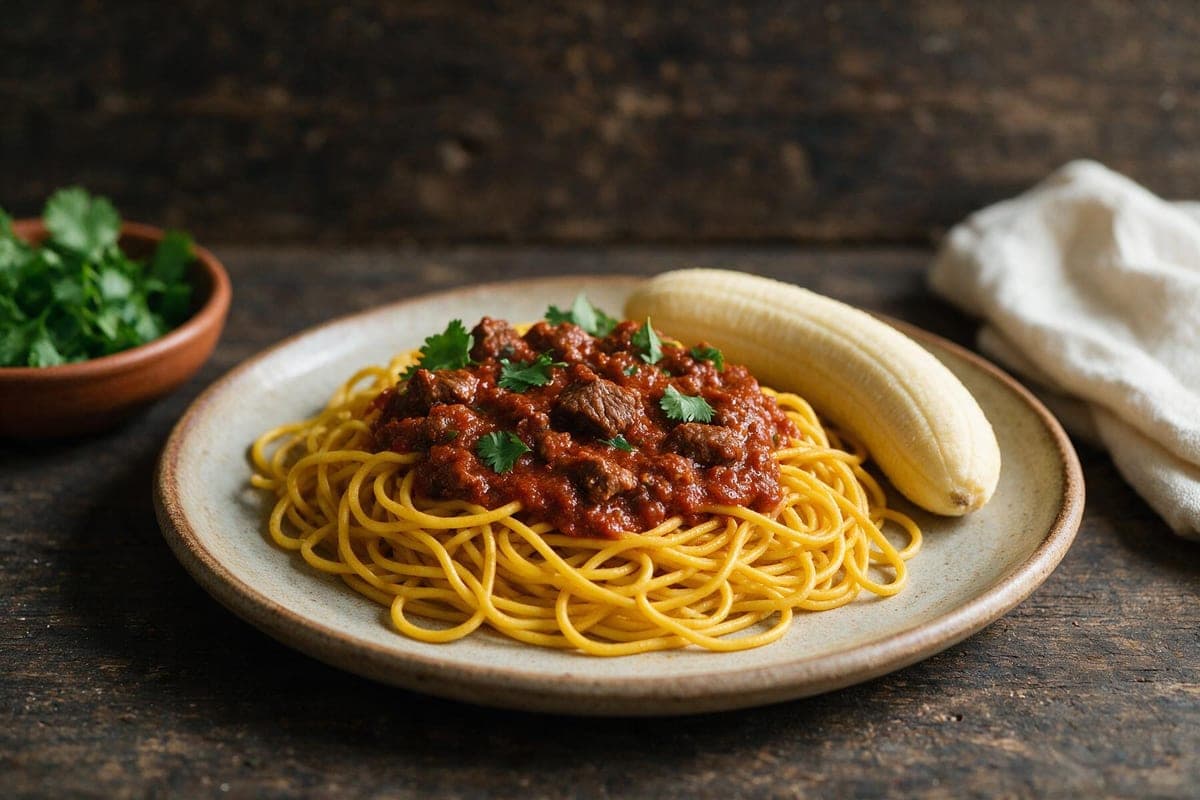
Somali spaghetti with suugo suqaar, a tomato sauce of diced beef warmed with xawaash spice and cilantro, with a banana on the side, in 40 minutes.

- Prep
- 15 min
- Cook
- 25 min
- Total
- 40 min
- Serves
- 2 adults + 1 child, with sauce left over
- Budget
- $14–$22
Baasto iyo suugo is Somali spaghetti and sauce, and the sauce is what makes it Somali: suugo suqaar, small cubes of beef cooked with onion, garlic, bell pepper and tomato, seasoned with xawaash, the Somali spice blend of cumin, coriander, cardamom, cinnamon, cloves, black pepper and turmeric, and finished with a handful of cilantro. The pasta is cooked soft and tossed or topped with the sauce, and the plate is often served with a peeled banana, which is eaten in bites between forkfuls. It is a weeknight dish in Somali homes and in the Somali diaspora from Minneapolis to London, and it is about as easy as pasta gets.
Why it's on our list
Spaghetti is already the most reliable dinner in our house, so a version with a story and a new spice blend is an easy way to put Somalia on the map without a fight at the table. What I want to learn is xawaash, which I can mix from spices we already own, and the habit of serving fruit alongside a savory plate; I am curious whether my son will accept the banana or treat it as dessert. It is weeknight-feasible in the most literal sense: a 25-minute meat sauce while the pasta boils. The heat is minimal, so the one plate I keep mild is barely different from the others.
Field notes · Origin & culture
Pasta arrived in Somalia during the Italian colonial period in the south, which ran from the late nineteenth century until 1941 (with a trusteeship period after the war), and it stayed, becoming an everyday lunch dish, especially in Mogadishu and the south. Somalis made it their own with suugo, a tomato sauce built on xawaash, the spice blend whose name means "essentials" and which has been called the garam masala of Somalia. Spaghetti is frequently eaten with a banana, a habit that is distinctly Somali, and a playful plate called "federation" layers spaghetti and rice together under the same stewed meat. Somalis traditionally eat with the right hand, twirling the pasta without a fork, though forks are common today. Recipes vary by family; this is a mainstream home version.
Noteworthy ingredients
- Xawaash: The spice blend is the heart of the dish. Mix it from cumin, coriander, cardamom, cinnamon, cloves, black pepper and turmeric (quantities below); it keeps for months in a jar. Pre-mixed xawaash is sold online and in Somali and East African groceries.
- Beef for suqaar: Suqaar means small diced meat. Use sirloin or chuck cut into 1/2-inch cubes; sirloin is quicker and more tender, chuck needs 10 extra minutes.
- Bell pepper and cilantro: Both are standard in suugo and give it a fresher taste than an Italian ragù.
- Bananas: Buy ripe but firm ones. Serving one with the plate is traditional; it is not a garnish, it is part of the meal.
Prep — 15 min
- Make the xawaash: stir together the cumin, coriander, cardamom, cinnamon, turmeric, cloves and black pepper in a small bowl. You will use about 2 teaspoons; save the rest.
- Cut the beef into 1/2-inch cubes, pat dry and season with salt and 1 teaspoon of the xawaash.
- Dice the onion, bell pepper and tomatoes. Mince the garlic. Chop the cilantro, stems and all. Slice the jalapeño if using and set aside.
- Put a large pot of salted water on to boil for the pasta.
Cook — 25 min
- Heat the oil in a large skillet over medium-high. Add the beef in a single layer and sear 3–4 minutes, stirring once or twice, until browned on most sides. Move it to a plate.
- Lower the heat to medium. Add the onion with a pinch of salt and cook 5 minutes until soft, then the garlic and bell pepper for 2 minutes more.
- Stir in the tomato paste and the remaining 1 teaspoon xawaash and cook 1 minute until the paste darkens and the spices smell toasted.
- Add the diced tomatoes, crushed tomatoes, crumbled bouillon if using, 1/2 cup water and the beef with its juices. Bring to a simmer, cover partly and cook 15 minutes (25 if you used chuck), stirring now and then, until the beef is tender and the sauce is thick.
- Meanwhile, cook the spaghetti until tender; Somali cooks take it a little past al dente. Drain, keeping a cup of pasta water.
- Stir most of the cilantro into the sauce, taste, and adjust salt. If it is very thick, loosen with a splash of pasta water.
Serving
Pile spaghetti on each plate and spoon the suugo over the top, or toss the pasta in the pan with half the sauce and spoon the rest over, as many families do. Scatter the remaining cilantro and set a whole peeled banana beside each plate; the sweetness really does work against the warm spice. The sliced jalapeño goes in a dish on the table so adults can add heat; my son's plate is simply sauce and pasta, and the banana may be the selling point. Leftover sauce keeps three days and freezes well; it is also good spooned over rice.