Dinner night · Sudan
Dama with Gurasa
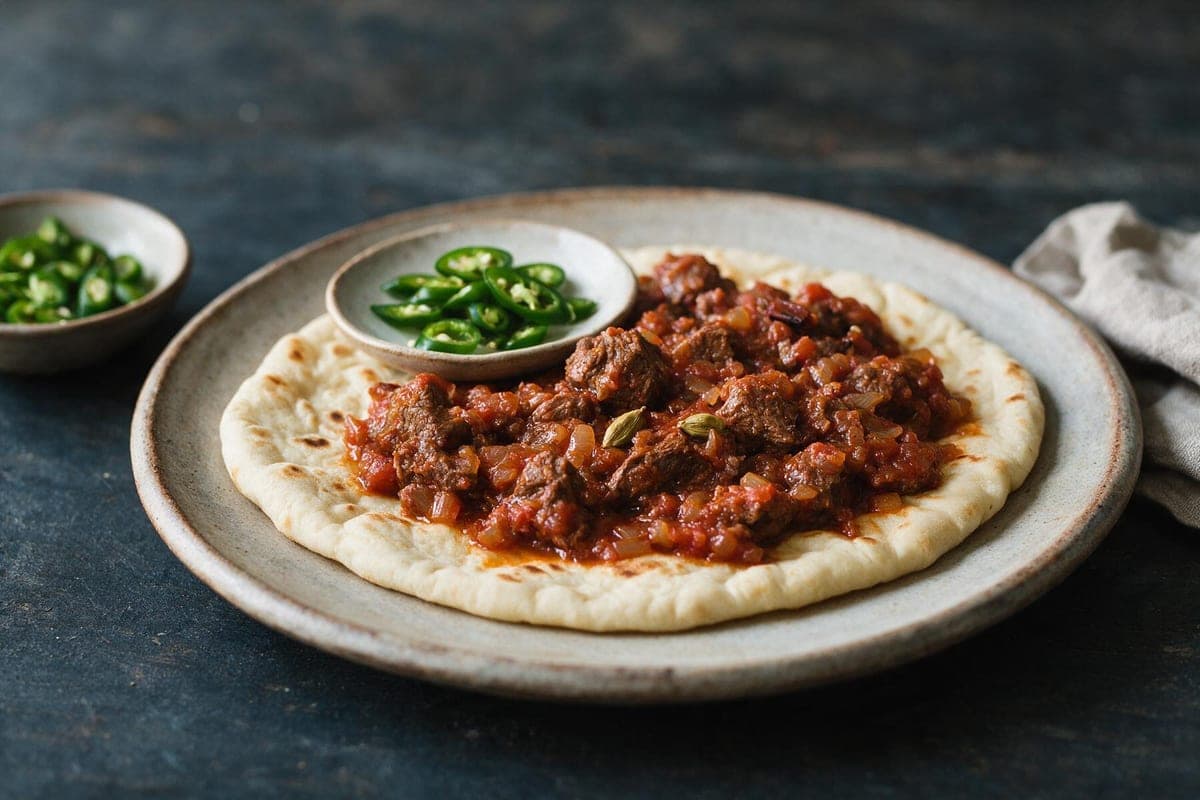
Sudanese tomato-and-onion beef stew, warmed with cardamom and cinnamon, spooned over soft skillet flatbread: one pot and one pan, about an hour.
- Prep
- 15 min
- Cook
- 50 min
- Total
- 65 min
- Serves
- 2 adults + 1 child, with stew left over
- Budget
- $15–$24
Dama is a Sudanese stew of beef (or lamb) cooked down with a great deal of onion, tomato paste and fresh tomato until the sauce is thick, glossy and deep red, seasoned with cardamom, cinnamon and black pepper, sometimes with green pepper and a little chile. It is spooned over gurasa, a thick, soft, pancake-like wheat flatbread cooked in a skillet, and the two together, gurasa be dama, are one of Sudan's best-known comfort dinners. The stew is simple and tomato-forward; the warm spice tells you where you are.
Why it's on our list
I want a Sudanese dinner on our map, and this is the one that keeps coming up as the dish Sudanese families eat on an ordinary evening. Two things I want to learn: the Sudanese way of building a stew on a mountain of slowly cooked onion and tomato paste, and gurasa, which is a quick batter bread rather than a kneaded dough. The stew simmers unattended for 40 minutes while the bread cooks, and it is gentle enough that my son's plate is the same as ours, with any chile added at the table. It also gives us a potato variation (dama be potaatas) for a second night.
Field notes · Origin & culture
Dama (sometimes written dammaa) is a home stew from Sudan, where meals are built around breads and stews eaten from a shared tray: kisra, the thin fermented sorghum flatbread; gurasa (also gorraasa), the thicker wheat-flour pancake common in the north and around Khartoum; and a family of stews called mullah, many thickened with okra or dried okra powder. Dama is the plain tomato-and-meat member of that family, and gurasa be dama is a standard pairing in Sudanese households and in the diaspora. The cardamom and cinnamon reflect Sudan's long trade ties across the Red Sea and down the Nile. Recipes vary by household, with potatoes, green pepper or extra chile depending on who is cooking; this is a mainstream version.
Noteworthy ingredients
- Onions, a lot of them: Two large onions cooked slowly until soft and sweet give the stew its body. Do not rush this step.
- Tomato paste: Sudanese cooks use it generously, cooking it in the fat until it darkens; it is what makes the sauce glossy rather than watery.
- Cardamom and cinnamon: Whole pods and a cinnamon stick are traditional; ground works (1/2 teaspoon cardamom, 1/4 teaspoon cinnamon).
- Beef chuck: Cut into 1-inch cubes; it needs 40–45 minutes to turn tender. Lamb shoulder is the other traditional choice.
- Gurasa batter: Flour, water, salt and a pinch of baking powder, poured into a nonstick skillet and cooked on one side until set, like a thick crepe. No yeast, no rising.
Prep — 15 min
- Pat the beef dry and season with 1 teaspoon salt and plenty of black pepper.
- Dice the onions finely; slice the bell pepper into strips; dice the tomatoes; mince the garlic. Lightly crush the cardamom pods so they split.
- Make the gurasa batter: whisk 2 cups flour, 1/2 teaspoon salt and the baking powder with about 2 cups water until smooth and the consistency of thick pancake batter. Let it rest while the stew cooks.
- Slice the chile thin if using and chop the herbs.
Cook — 50 min
- Heat 2 tablespoons oil in a Dutch oven over medium-high. Brown the beef in two batches, 3–4 minutes per batch, and set it aside.
- Lower the heat to medium, add the remaining oil and the onions with a pinch of salt, and cook 10–12 minutes, stirring often, until very soft and golden. This slow start is the stew.
- Add the garlic, cardamom, cinnamon and cumin and stir 1 minute. Add the tomato paste and cook 2–3 minutes, stirring constantly, until it darkens to brick red.
- Add the diced tomatoes, bell pepper, the beef and its juices and 2 cups water. Bring to a simmer, cover, and cook 40–45 minutes, stirring occasionally, until the beef is tender and the sauce is thick enough to mound on bread. Uncover for the last 10 minutes if it needs to reduce. Taste and adjust salt.
- Meanwhile, cook the gurasa: heat a 10-inch nonstick skillet over medium. Brush lightly with oil, pour in about 2/3 cup batter and swirl to cover the pan in a layer about 1/4 inch thick. Cover and cook 3–4 minutes until the top is set and dry and the bottom is pale golden; gurasa is traditionally cooked on one side only, but you can flip it for 30 seconds if the top looks wet. Stack the breads under a towel; you should get 4–5.
- Fish out the cinnamon stick and any cardamom pods you can find. Squeeze a little lemon into the stew and stir in the herbs if using.
Serving
The Sudanese way is to lay the gurasa on a large platter and spoon the dama over the top so the bread soaks up the sauce; everyone eats from the shared platter with their right hand, tearing bread to scoop the stew. At our table I will do a shared platter for the adults and a plate for my son with bread and stew side by side, the same food with less mess. The sliced chile goes in a small dish; the stew itself has no heat beyond black pepper. Leftover dama keeps three days and is excellent over rice or with a fried egg; gurasa is best fresh but reheats in a dry skillet.