Dinner night · Switzerland
Zürcher Geschnetzeltes-style Pork with Rösti
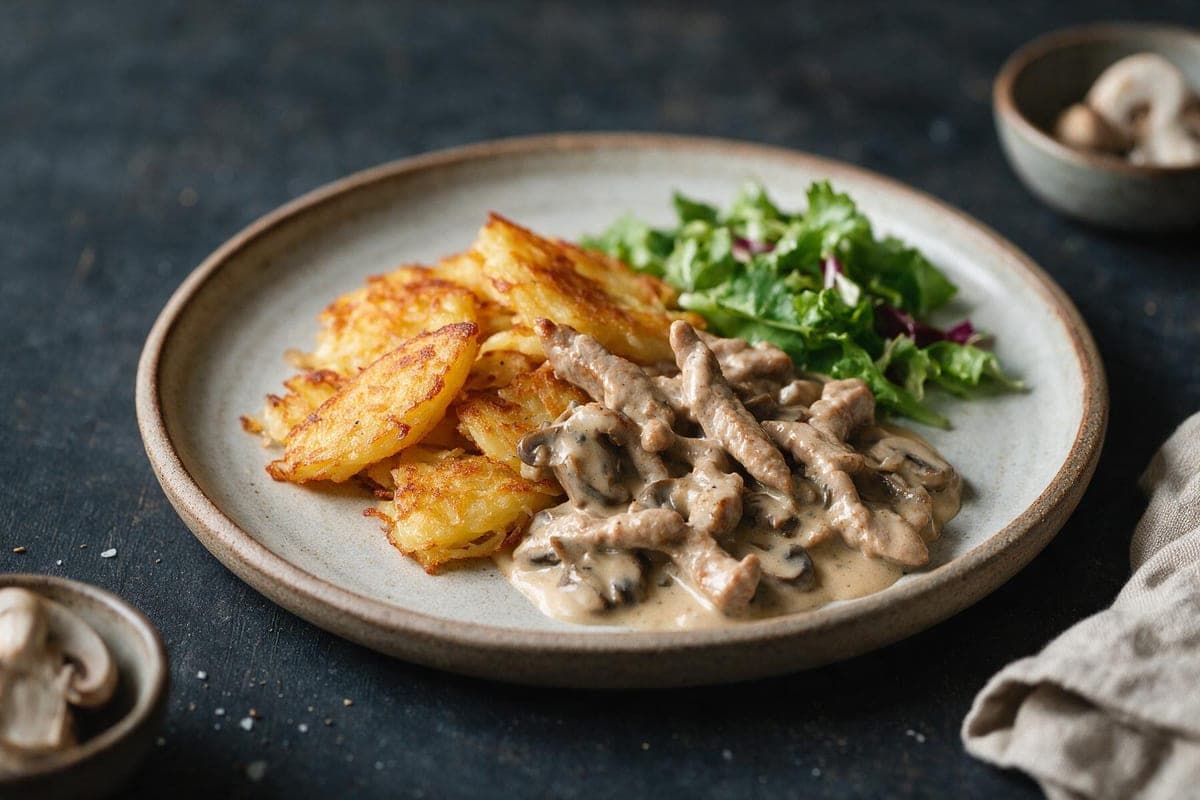
Zurich's creamy white-wine-and-mushroom sauce over quick-seared strips of pork, with a crisp golden potato rösti to catch it, in about 50 minutes.

- Prep
- 20 min
- Cook
- 30 min
- Total
- 50 min
- Serves
- 2 adults + 1 child
- Budget
- $20–$30
Zürcher Geschnetzeltes ("Zurich-style sliced meat") is thin strips of meat flash-seared and finished in a sauce of white wine, cream, stock and sliced mushrooms, served with rösti, the crisp Swiss potato cake. The traditional meat is veal; we are using pork tenderloin, which is easier to find, far cheaper, and cooks the same way, so the title says "-style." The sauce is pale, savory and glossy, and the rösti is golden and crackly on the outside with soft shreds inside.
Why it's on our list
I want to learn two real techniques here: a proper rösti, which is just potatoes, fat, patience and the courage to flip, and a quick pan sauce built from the fond left by searing meat. Both will carry over to a dozen other dinners. The dish is also mild, creamy food that should be an easy win for my son without boring the adults. It fits a weeknight because the meat cooks in under five minutes; the rösti is the only part that needs attention. Switzerland has always been fondue and chocolate in our heads, so a real sit-down Swiss dinner is overdue.
Field notes · Origin & culture
The dish is first recorded by name in a Zurich cookbook from 1947, listing sliced veal, white wine, cream and demi-glace, though sliced-meat dishes were cooked in the region well before that; the cream-and-mushroom version most people know is a twentieth-century refinement that spread from restaurant kitchens into homes. Classic recipes often include sliced veal kidney alongside the veal, which most home cooks and tourists now leave out. Rösti, grated potatoes fried into a cake, began as a Bern farmers' breakfast and became a Swiss-German staple; Swiss people even joke about the "Röstigraben," the "rösti ditch," as the cultural line between the German- and French-speaking parts of the country. Zürcher Geschnetzeltes with rösti is now on nearly every traditional menu in Zurich.
Noteworthy ingredients
- Pork tenderloin: Lean and tender, it slices thin and cooks in moments. Veal scaloppine is the traditional choice if you want to splurge; boneless chicken breast also works. Whatever you use, do not overcook it.
- Dry white wine: A Swiss Chasselas (sold as Fendant) is the regional match but rarely in US stores; use any dry, unoaked white such as pinot grigio or sauvignon blanc. For an alcohol-free version, use extra stock with a teaspoon of lemon juice.
- Heavy cream: Needed for a sauce that holds together; half-and-half is likely to curdle with the wine.
- Starchy potatoes: Many Swiss cooks par-boil potatoes the day before; for a weeknight, raw grated russets squeezed very dry make a fine rösti, and bagged shredded hash browns are a legitimate shortcut. A cornstarch slurry thickens the sauce without flour and keeps the dish gluten-free.
Prep — 20 min
- Peel the potatoes and grate them on the large holes of a box grater. Put them in a clean kitchen towel and wring hard over the sink until no more water comes out; this is the single most important rösti step. Season with 1 teaspoon salt.
- Trim the silverskin from the tenderloin and slice it into strips about 1/4-inch thick and 2 inches long. Pat dry and season with salt and pepper.
- Slice the mushrooms. Finely dice the onion or shallots. Chop a handful of parsley. Zest the lemon and set the zest aside.
- Stir the cornstarch into 2 tablespoons of the cold stock.
- Dress the greens with a little oil, vinegar, salt and pepper and set aside.
Cook — 30 min
- Start the rösti first. Heat the clarified butter or oil in a 10-inch nonstick skillet over medium. Add the potatoes, press them into an even cake with a spatula, and cook undisturbed for 12–15 minutes until the bottom is deep golden and the edges crisp. Slide onto a plate, add another knob of butter to the pan, invert the cake back in, and cook the second side 10–12 minutes. Keep it warm in a low oven if it finishes early.
- While the first side cooks, heat the oil and 1 tablespoon butter in a second large skillet over high heat. Sear the pork in two batches, 1–2 minutes per batch, just until browned on the outside and still pink inside. Move to a plate; it will finish in the sauce.
- Lower the heat to medium-high. Add 1 tablespoon butter and the mushrooms; cook 4–5 minutes until browned. Add the onion and cook 2 minutes more.
- Pour in the wine and let it bubble down by half, scraping up the browned bits, about 2 minutes. Add the stock and the cornstarch slurry and simmer 2 minutes.
- Stir in the cream, the lemon zest and a pinch of paprika; simmer gently 3–4 minutes until the sauce coats a spoon.
- Return the pork and its juices to the pan and warm through for 1–2 minutes; do not boil hard or the meat toughens. Taste and adjust salt, pepper and a squeeze of lemon. Stir in most of the parsley.
Serving
Cut the rösti into wedges and give each plate one or two, with the pork and plenty of sauce spooned alongside (not on top, so the rösti stays crisp) and the green salad on the side. Nothing here needs toning down for a child; if my son is wary of mushrooms, I can fish most of them out of his portion before plating. Leftover pork and sauce keep for two days; reheat gently over low heat. Rösti does not reheat well, so eat it the night you make it.