Dinner night · Tajikistan
Qurutob
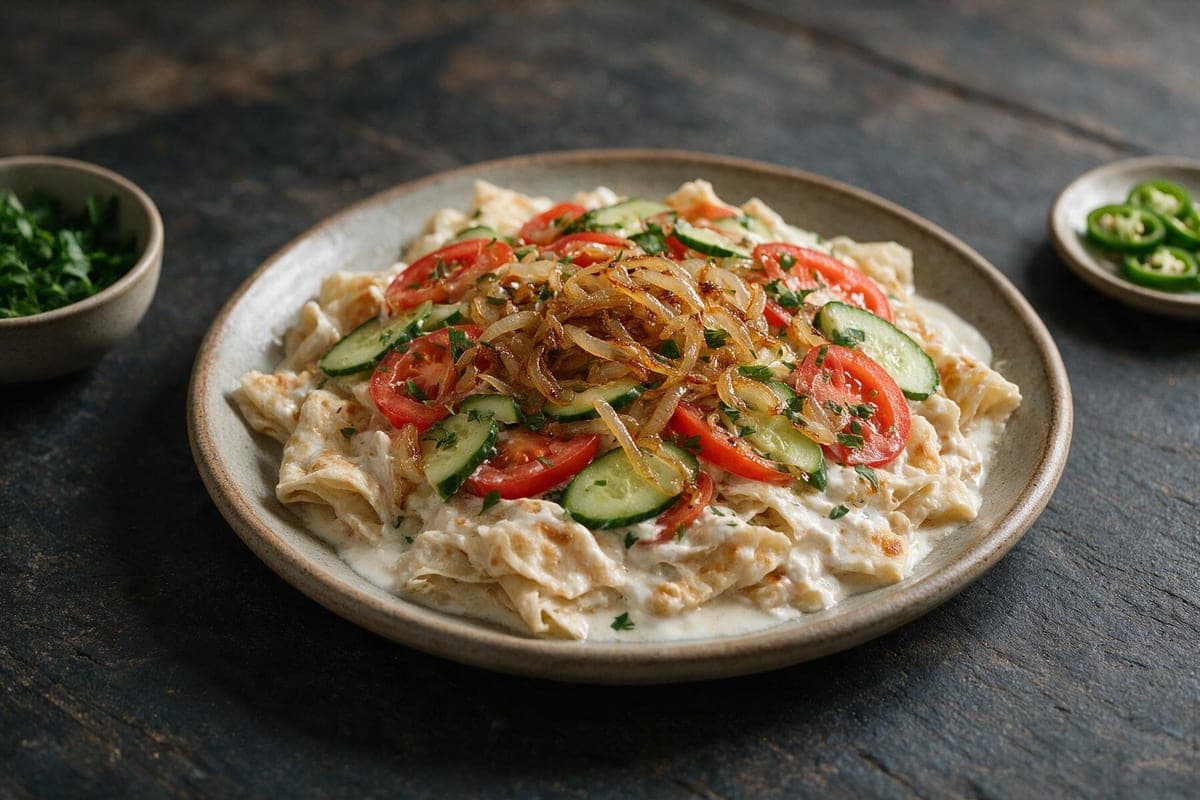
Tajikistan's national bread salad: torn flaky flatbread soaked in a warm, salty yogurt sauce, topped with onions sizzled in oil, tomato, cucumber and herbs, eaten with your hands from one platter. Vegetarian and on the table in 35 minutes.

- Prep
- 20 min
- Cook
- 15 min
- Total
- 35 min
- Serves
- 2 adults + 1 child; qurutob is a one-platter meal, best eaten right away
- Budget
- $12–$20
Qurutob is named for qurut, the rock-hard balls of salted, dried yogurt or whey cheese that Tajik herders have carried for centuries; dissolved in warm water they make a tangy, salty sauce, which is poured over torn pieces of fatir, a flaky layered flatbread, until the bread softens into something between a salad and a savory bread pudding. Over the top go onions fried in oil until sweet, with the hot oil poured on, then raw tomatoes, cucumber, sliced onion and a lot of fresh herbs. It is served on one big round platter and eaten with the hands. Qurut is nearly impossible to find in a US supermarket, so this version makes the sauce from Greek yogurt, sour cream and salt, and uses store-bought naan in place of fatir.
Why it's on our list
I want a Tajik dish that is unmistakably Tajik and not a Central Asian plov we have essentially already cooked, and qurutob is the one everyone names first. What I expect to learn is how a hot-oil-and-onion pour transforms a bowl of bread and yogurt: it is the same trick as hot oil over a Chinese noodle dish, and here it is the whole seasoning. It is weeknight-feasible in the extreme, thirty-five minutes with almost no real cooking, and vegetarian, which our map could use more of. Eating from a shared platter with our hands is the part my son will remember, and there is no heat unless someone adds the chile.
Field notes · Origin & culture
Qurutob is considered a national dish of Tajikistan and is especially associated with the south of the country, though it is served in Dushanbe and across the mountains. Its base is qurut, salted dried curd balls that keep for months without refrigeration, a staple of pastoral life across Central Asia; soaked in hot water, qurut becomes a sour, salty sauce. The bread is fatir, a flaky, layered flatbread, and the dish is finished with onions fried in oil, fresh vegetables and herbs; some versions add lamb or a scattering of hot pepper. Qurutob is communal by design, served on a single large wooden or ceramic platter and eaten by hand, often with a pot of green tea, which accompanies nearly every Tajik meal. Variations by region and household are many; this is one home version.
Noteworthy ingredients
- Qurut, and its substitute: Real qurut can sometimes be found at Central Asian or Afghan grocers (also sold as kurt or kashk); a few balls dissolved in hot water make the authentic sauce. Otherwise, whisk Greek yogurt and sour cream with warm water and salt until sour, salty and the thickness of heavy cream. A spoon of crumbled feta pushes it closer to qurut's sharpness.
- Fatir, and its substitute: The traditional bread is flaky and layered. Store-bought naan, warmed and torn, is the closest common substitute; frozen paratha, cooked crisp, is even closer in texture.
- Onions and oil: Tajik cooks use cottonseed or flaxseed oil; a neutral oil works. Half the onions are fried and poured on with their hot oil; the other half go on raw.
- Herbs: Cilantro, dill and a little basil or green onion, in generous handfuls.
Prep — 20 min
- Warm the naan in a 350°F oven or on a dry skillet until pliable and lightly crisp at the edges, then tear into rough 2-inch pieces onto the serving platter.
- Halve and slice two onions thin for frying. Slice the third into very thin half-rings and rinse under cold water for the raw topping.
- Chop the tomatoes into bite-size chunks. Slice the cucumbers into thin half-moons. Roughly chop the cilantro and dill; slice the basil or green onions. Slice the chile thin and keep it apart.
- Make the sauce: whisk the Greek yogurt and sour cream together, then whisk in 1 cup warm water a little at a time until it is the thickness of heavy cream. Season with 1 teaspoon salt and black pepper; it should taste distinctly salty. Crumble in the feta if using.
Cook — 15 min
- Heat the oil in the skillet over medium-high heat. Add the sliced onions with a pinch of salt and fry, stirring, 8–10 minutes, until golden brown and sweet with crisp edges. Keep the onions and oil together in the pan.
- Warm the yogurt sauce in the small saucepan over low heat, stirring, until warm to the touch, 2–3 minutes; do not let it simmer or it will separate.
- Pour the warm sauce evenly over the torn bread and let it sit 2 minutes. Press down gently with a spoon so the bread drinks it up; it should be soft but not swimming.
- Spoon the fried onions and all their hot oil over the top; the oil should sizzle against the yogurt. Pile on the tomatoes, cucumbers, raw onion rings and all the herbs. Finish with a squeeze of lemon.
Serving
Set the platter in the middle of the table and let everyone eat from it with their hands or spoons, working from the edge toward the center the way Tajik families do; put a stack of napkins beside it and pour green tea into small cups. The dish is not spicy, so my son's share is the same as ours, and the sliced chile stays on a saucer for anyone who wants heat. Qurutob is at its best in the first fifteen minutes, when the bread is soft but still has some chew; it does not keep, so make only what will be eaten and pour any leftover sauce over tomorrow's roasted vegetables.