Dinner night · Tanzania
Mchuzi wa Samaki
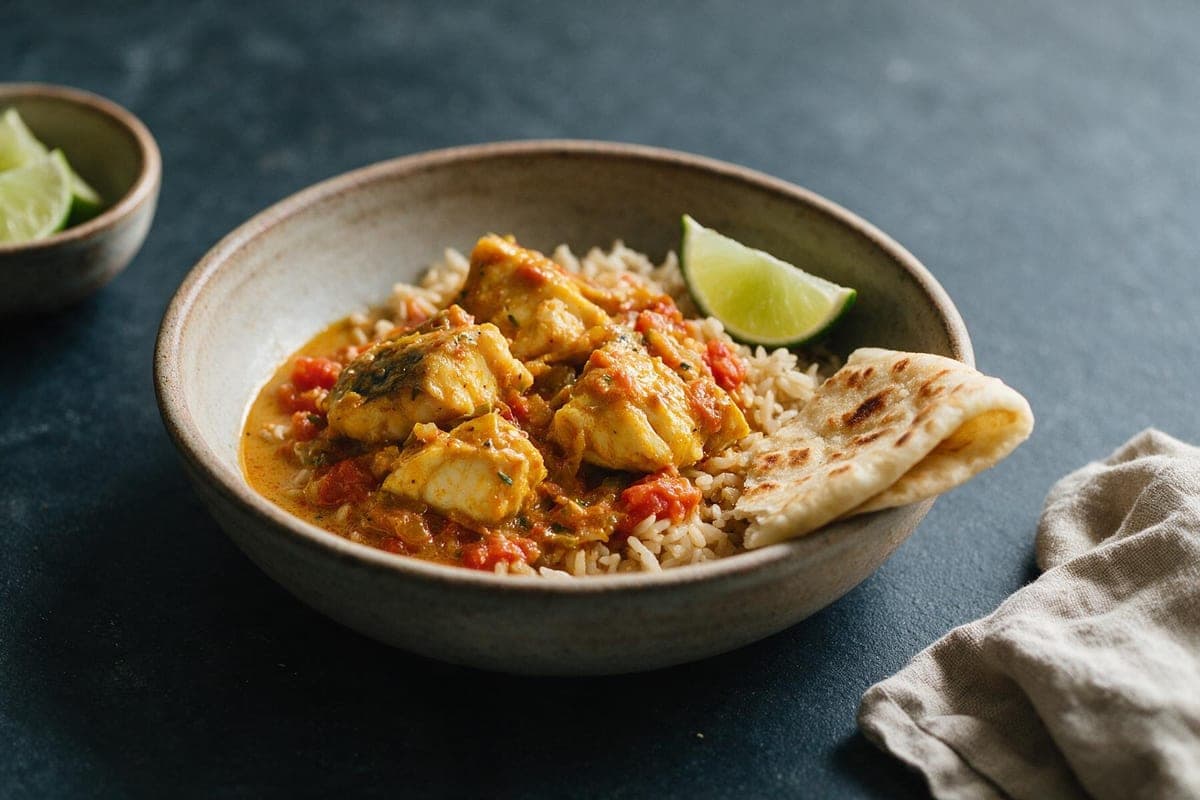
Swahili-coast fish curry: firm white fish simmered in a coconut, tomato and turmeric sauce with a tamarind-lime edge, over rice, in about 40 minutes.

- Prep
- 15 min
- Cook
- 25 min
- Total
- 40 min
- Serves
- 2 adults + 1 child
- Budget
- $18–$28
Mchuzi is the Swahili word for a sauce or stew, and samaki is fish, so mchuzi wa samaki is simply fish in sauce: the everyday coconut fish curry of Tanzania's Indian Ocean coast. Onion, garlic and ginger are softened, tomato and turmeric go in, then coconut milk, and chunks of firm white fish poach gently in the sauce for the last ten minutes. A little tamarind or lime gives it a sour lift that keeps the coconut from feeling heavy. It is eaten with rice, chapati or ugali, and it is the kind of dish a coastal cook makes without measuring anything.
Why it's on our list
Our launch recipes lean hard on chicken, and this is the first fish dinner I want to add: a one-pan curry where the fish takes ten minutes and cannot really overcook if I watch it. I want to learn the Swahili pantry, which sits at a crossroads of African, Arab and Indian cooking, with coconut, turmeric, cardamom and tamarind in one pot. It is weeknight-feasible because the sauce comes together while the rice cooks, and the chile stays on the side, so my son eats the same curry with a milder bowl. Frozen cod or tilapia and a can of coconut milk do most of the work.
Field notes · Origin & culture
Mchuzi wa samaki belongs to the Swahili coast, the stretch of Tanzania that runs from Tanga through Dar es Salaam to the islands of Zanzibar and Pemba. Coastal Tanzanian cooking is noticeably spicier and more coconut-rich than the mainland's, a legacy of centuries of Indian Ocean trade that brought Arab, Persian and Indian merchants, and with them cardamom, cloves, cinnamon and chile; Zanzibar itself became famous as a clove-growing island in the nineteenth century. Fish curries like this one are home food rather than a single codified recipe: some cooks use more tomato, some add tamarind, some finish with cilantro, and the fish is whatever came off the boats that morning. Inland, the same sauce is made with chicken or beans. Our version is a mainstream coastal style, not a claim to one definitive recipe.
Noteworthy ingredients
- Firm white fish: Cod, haddock, halibut or tilapia all work; you want pieces that hold together in a simmer. Frozen fillets, thawed and patted dry, are fine. Avoid flaky fish like sole, which disintegrates.
- Full-fat canned coconut milk: The sauce depends on it. Do not use the carton beverage or "lite" versions, which turn thin and watery.
- Tamarind concentrate: It gives the characteristic sour note. Look in the international aisle or an Indian grocer; if you cannot find it, use extra lime juice at the end.
- Turmeric and curry powder: Coastal cooks blend their own; a mild curry powder plus a little extra turmeric is a reasonable supermarket shortcut and keeps the color golden.
- Fresh chile (optional): One serrano, sliced, passed at the table. The sauce itself stays mild.
Prep — 15 min
- Start the rice: rinse 1 cup rice and cook with 1 3/4 cups water and a pinch of salt according to the package.
- Pat the fish dry and cut it into 2-inch chunks. Season with 1/2 teaspoon salt, 1/2 teaspoon turmeric and a little black pepper, and leave it on a plate while you cook the sauce.
- Dice the onion and tomatoes. Mince the garlic and grate the ginger. Zest one lime and juice it; cut the second into wedges.
- Chop the cilantro. Slice the chile thin if using, and keep it in a small dish for the table.
Cook — 25 min
- Heat the oil in a wide skillet over medium heat. Add the onion with a pinch of salt and cook 5–6 minutes until soft and lightly golden.
- Add the garlic and ginger and stir for 30 seconds, then add the curry powder, the remaining 1/2 teaspoon turmeric, cumin and cardamom. Stir for 20 seconds until fragrant; do not let the spices scorch.
- Add the tomato paste and diced tomatoes and cook 3–4 minutes, stirring, until the tomatoes slump and the mixture looks like a thick paste.
- Pour in the coconut milk, add the tamarind and 1/2 teaspoon salt, and bring to a gentle simmer. Cook 5 minutes so the sauce thickens slightly and the flavors come together. Taste and adjust salt.
- Lower the heat so the sauce barely bubbles. Nestle the fish pieces into it in a single layer, spoon a little sauce over the top, cover and cook 8–10 minutes until the fish is opaque and flakes when pressed. Do not stir; shake the pan gently if needed.
- Take it off the heat. Squeeze in the lime juice, sprinkle on the zest and most of the cilantro, and taste one more time for salt and sourness.
Serving
Spoon rice into bowls and ladle fish and plenty of sauce over it, with a lime wedge on the side. The sliced serrano and extra cilantro go in a small dish in the middle of the table, so adults can add heat and my son's bowl stays exactly as it came out of the pan. Chapati or warm naan from the store is a good extra for mopping. Fish curry does not love reheating, but leftovers will keep a day in the fridge; warm them gently with a splash of water and stop as soon as the sauce is hot, before the fish toughens.