Dinner night · Togo
Ayimolou with Grilled Chicken and Pepper Sauce
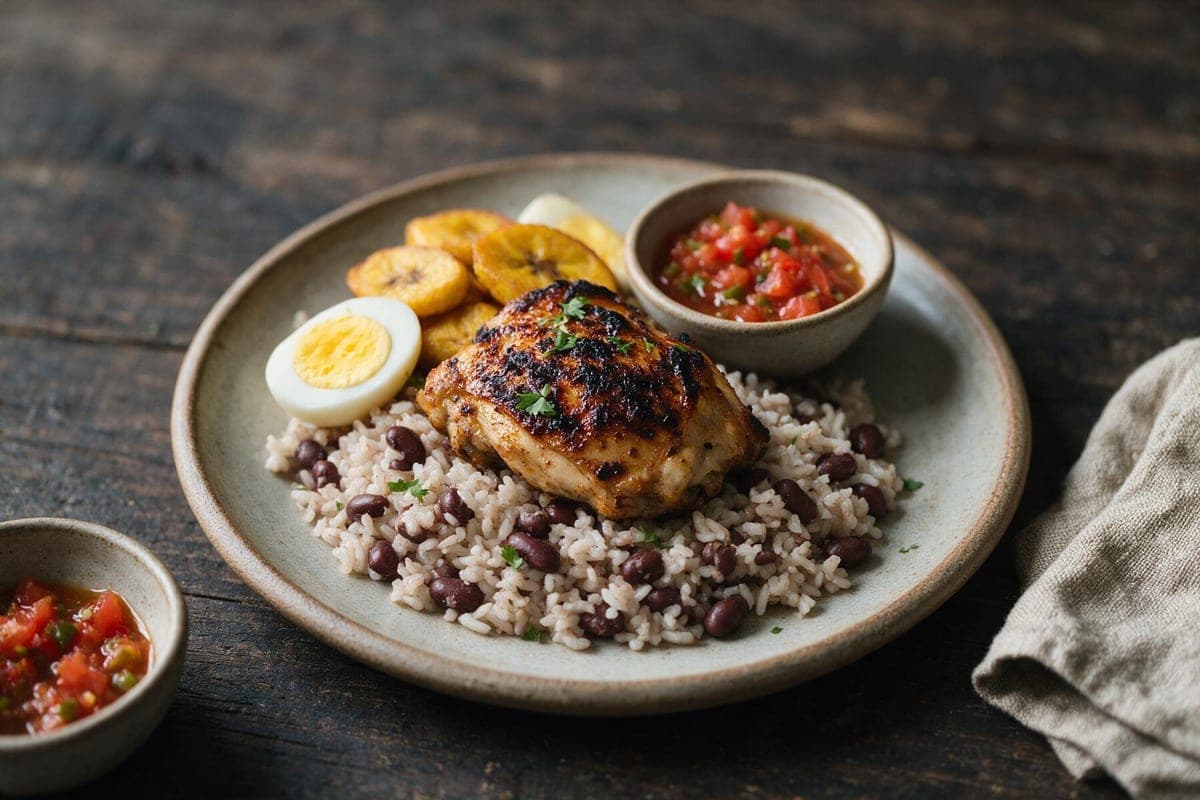
Togo's rice-and-beans street plate with broiler-charred chicken and a fresh tomato-chile sauce on the side: one pot of beans and rice, one sheet pan.
- Prep
- 20 min
- Cook
- 45 min
- Total
- 65 min
- Serves
- 2 adults + 1 child, with rice and beans left over
- Budget
- $14–$22
Ayimolou is rice and beans cooked together in one pot, the beans tinting the rice a pale brown, seasoned simply with onion, salt and a little oil. On its own it is plain, which is the point: it is the base for what goes on top. In Togo that usually means grilled chicken rubbed with garlic and ginger, a spoonful of fresh red pepper sauce made from tomato, onion and hot chiles, and extras like fried plantain or a hard-boiled egg. Our version broils the chicken instead of grilling it over charcoal and keeps the pepper sauce in a bowl so each plate gets the heat its eater wants.
Why it's on our list
Togo is a thin strip of a country between Ghana and Benin, and its food is almost never written about in English, so I want it on our map on its own terms rather than as a footnote to its neighbors. Ayimolou appealed to me because it is a street-stall lunch that is also a complete weeknight dinner: a pot of rice and beans, chicken, a sauce. What I want to learn is the rice-and-beans method, where the rice finishes in the bean liquid, and the fresh style of pepper sauce West African cooks keep on the table. It is weeknight-feasible because the pot and the sheet pan work at the same time, and it is cheap enough to scale if friends come over.
Field notes · Origin & culture
Ayimolou (also ayimolu) is the Ewe-language name for rice cooked with beans, a staple across southern Togo and especially in Lomé, where it is sold from street stalls and roadside kiosks from midday on; in the north a similar dish goes by ouatché, a name it shares with Ghana's waakye, and the Beninese atassi is a cousin. The beans are typically black-eyed peas or small red beans. It is eaten with whatever the stall offers: grilled or fried chicken (koklo mémé is Togolese grilled chicken with chile), fried fish, hard-boiled egg, fried plantain, gari, spaghetti, and always a spoonful of hot pepper sauce. Togolese cooking, like its neighbors', builds most meals around a starch (akoumé, a cornmeal paste, is the most common) and a sauce; ayimolou is one of the few dishes where the starch arrives already seasoned.
Noteworthy ingredients
- Black-eyed peas: The usual bean; they cook in 30–40 minutes from dry without soaking. Two cans, drained, are a legitimate shortcut, and small red beans work too.
- Long-grain rice: Jasmine or any long-grain white rice. Parboiled rice is common in Togo and holds up well to the bean liquid.
- Fresh chiles for the sauce: A habanero or Scotch bonnet gives the fruity heat West African pepper sauce is known for; a jalapeño makes a gentler sauce. The chile is the point of the sauce, so keep it rather than skip it, just on the side.
- Fresh ginger and garlic: The chicken rub is little more than these two with oil and salt. Keep the rub mild; the sauce carries the heat.
- Ripe plantain (optional): One, sliced and fried, is the traditional extra that gives a child something sweet beside the beans.
Prep — 20 min
- If using dried black-eyed peas, rinse and put them in a heavy pot with 5 cups water and 1/2 teaspoon salt. Bring to a boil and simmer, partially covered, 30–35 minutes until tender but not falling apart. (Canned: skip to the rice step in Cook.)
- Grate half the ginger and mince 3 garlic cloves; stir with 2 tablespoons oil, 1 teaspoon salt, 1/2 teaspoon black pepper and the paprika. Pat the chicken dry and rub it all over; set aside while the beans cook.
- Dice one onion. For the pepper sauce, roughly chop the tomatoes, the second onion, the remaining 2 garlic cloves, the rest of the ginger and the chile (seeds removed for less heat).
- If using, peel the plantain and slice into 1/2-inch diagonals. Put the eggs on to hard-boil (10 minutes), then cool and peel.
Cook — 45 min
- Heat the broiler to high with a rack 6 inches from the element. Arrange the chicken skin-side up on a foil-lined sheet pan and broil 12–14 minutes until the skin is dark and blistered; turn and broil 8–10 minutes more, until the thickest piece reads 165°F. If the skin darkens too fast, drop the rack one level.
- Meanwhile, finish the ayimolou: drain the tender beans, reserving the liquid. Heat 1 tablespoon oil in the same pot over medium and cook the diced onion 4 minutes. Add the rinsed rice and stir 1 minute. Add the beans, 2 1/4 cups bean liquid (topped up with water as needed) and 1 teaspoon salt. Bring to a boil, cover tightly, lower the heat and cook 18 minutes. Rest 5 minutes, then fluff. (Canned beans: use water.)
- Make the pepper sauce: blend the tomatoes, onion, garlic, ginger and chile to a coarse purée. Heat 1 tablespoon oil in a small skillet over medium-high and cook the purée 8–10 minutes, stirring, until it thickens and loses its raw-onion smell. Season with salt and a squeeze of lime. (Many Togolese stalls serve this sauce raw; a brief cook mellows the onion for a family table.)
- If using the plantain, fry the slices in 1/4 inch of oil over medium-high, 2–3 minutes per side, until golden. Drain and salt.
Serving
Pile ayimolou on each plate, set a piece of chicken on top, and arrange plantain slices and half an egg alongside. The pepper sauce goes in a bowl in the middle of the table: adults take a spoonful over the rice and chicken; my son's plate stays sauce-free, or gets a dab if he is curious. Chopped parsley or cilantro is not traditional but welcome. Leftover ayimolou keeps four days and reheats well in a skillet with a splash of water, excellent with a fried egg. The pepper sauce keeps a week and improves after a day.