Dinner night · United States — Louisiana
Chicken and Sausage Jambalaya
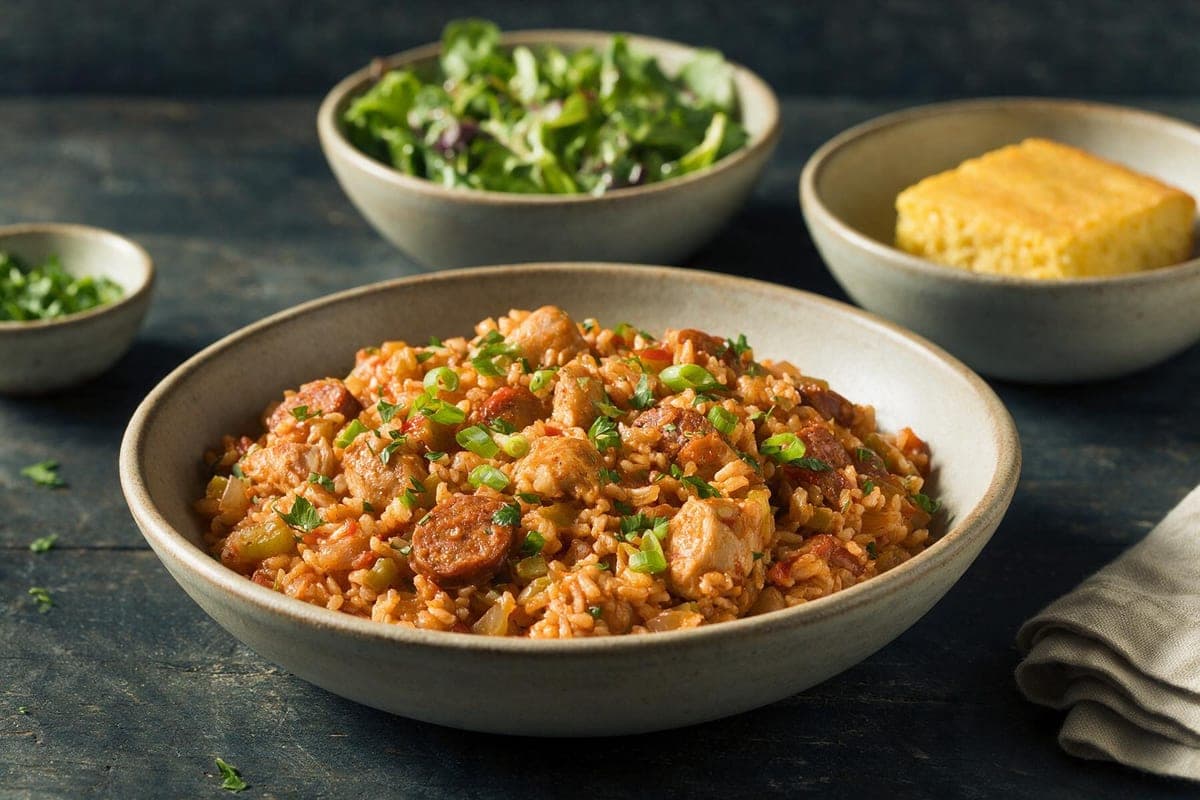
Louisiana's one-pot rice dinner: andouille, chicken thighs and the "trinity" of onion, celery and bell pepper simmered into Creole-style red rice, with the cayenne held back for the table.

- Prep
- 20 min
- Cook
- 50 min
- Total
- 70 min
- Serves
- 2 adults + 1 child, with generous leftovers
- Budget
- $18–$26
Jambalaya is rice cooked in the same pot as everything that flavors it: browned andouille and chicken thighs, a long-sautéed base of onion, celery and green bell pepper, garlic, tomatoes, stock, bay and thyme. The rice absorbs the liquid and the rendered sausage fat, so every grain tastes of the whole pot. This version leans Creole, with tomatoes, and keeps the cayenne gentle; hot sauce on the table does the rest. One pot, about 70 minutes, and enough for lunch tomorrow.
Why it's on our list
The United States needs a dish on our map that belongs to a specific place and tradition, not a generic burger, and Louisiana's food is the clearest example of an American regional cuisine with its own history and vocabulary. Jambalaya is the one I want to learn: browning in stages, building the "trinity" base, then cooking rice in the flavored liquid without stirring is the skill behind paella and pilaf too. It is weeknight-feasible because once the rice goes in there is nothing to do for 25 minutes, and every ingredient is at any supermarket. I will keep the pot mild and pass the hot sauce, since andouille already carries some heat.
Field notes · Origin & culture
Jambalaya comes from Louisiana, where Spanish, French, West African, Caribbean and Indigenous cooking met in the eighteenth and nineteenth centuries. It is often compared to paella, and Spanish rule over Louisiana from 1763 to 1800 is a plausible route for the one-pot meat-and-rice idea, though the dish is distinctly its own. Two broad styles exist: Creole or "red" jambalaya, associated with New Orleans, includes tomatoes, which the port city had easy access to; Cajun or "brown" jambalaya from the rural prairies and bayous skips tomatoes and gets its color from deeply browned meat. The town of Gonzales calls itself the Jambalaya Capital of the World and holds a festival every spring. Ingredients vary with what is on hand, from shrimp to game, which is part of the point.
Noteworthy ingredients
- Andouille sausage: A coarse, smoky, peppery pork sausage; most supermarkets stock a version near the kielbasa. Smoked kielbasa substitutes with a little less heat.
- The "trinity": Onion, celery and green bell pepper in roughly 2:1:1, the Louisiana answer to mirepoix. Cook them until truly soft; much of the flavor comes from here.
- Long-grain white rice: Jambalaya wants grains that stay separate. Skip short-grain, jasmine or parboiled; plain long-grain is traditional and right.
- Creole seasoning: A blend of paprika, garlic, onion, oregano, thyme, cayenne and salt; Zatarain's and other Louisiana brands are in the spice aisle. Mix your own if you prefer, and go light on cayenne for a family pot.
Prep — 20 min
- Slice the andouille into 1/4-inch coins. Cut the chicken into 1-inch pieces and toss with 1 teaspoon of the Creole seasoning and a pinch of salt.
- Dice the onion, celery and bell pepper small. Mince the garlic. Slice the scallions and chop the parsley for the end.
- Measure the rice (no need to rinse). Have the tomatoes, stock, thyme and bay leaves at the stove.
Cook — 50 min
- Heat the oil in a Dutch oven over medium-high heat. Add the andouille and cook 4–5 minutes, stirring now and then, until browned and the fat has rendered. Lift it out to a bowl with a slotted spoon.
- Add the chicken to the fat in a single layer and brown 2–3 minutes per side; it does not need to be cooked through. Move it to the bowl with the sausage.
- Lower the heat to medium. Add the onion, celery and bell pepper with 1/2 teaspoon salt and cook 8–10 minutes, scraping up the browned bits, until very soft and beginning to color. Add the garlic, the remaining Creole seasoning, thyme and cayenne; stir 1 minute.
- Add the tomatoes with their juice and cook 2–3 minutes until they thicken slightly. Stir in the rice and toast it in the vegetables for 1 minute.
- Pour in the stock, add the bay leaves, and return the sausage, chicken and any juices. Stir once, bring to a boil, then cover, reduce to the lowest heat and cook 22–25 minutes without stirring.
- Check: the rice should be tender and the liquid absorbed. If still wet, cover and cook 5 minutes more; if dry but firm, add 1/4 cup hot water and cover again. Rest off the heat, covered, 5 minutes. Discard the bay leaves, fluff gently, fold in most of the scallions and parsley, and taste for salt.
Serving
Spoon the jambalaya into wide bowls and scatter the rest of the scallions and parsley on top. Put the hot sauce on the table; the pot itself is only gently warm from the andouille and a small pinch of cayenne, so my son can eat it as it is, and I can shake Crystal over my own bowl. A green salad with a sharp vinaigrette is the usual company, and cornbread would not be wrong. Leftovers are famously better the next day: keep up to three days refrigerated and reheat in a covered skillet with a splash of stock.